Abstract
Yassir has a real trust problem in recent reviews: late food, missing items, failed payments, weak support, driver cancellations, and app freezes. But this is a marketplace, not just software, so a solo builder should not try to clone the super app; the only plausible wedge is a narrow, manually operated food-ordering product in one city.
Background
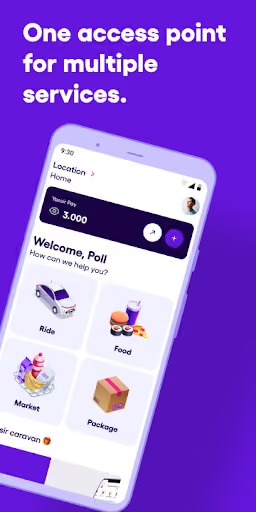
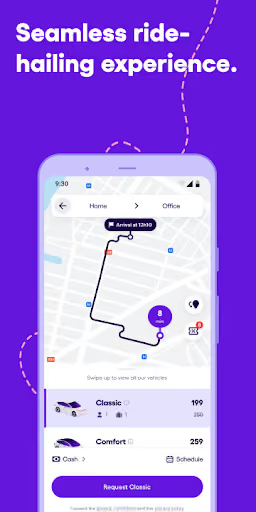
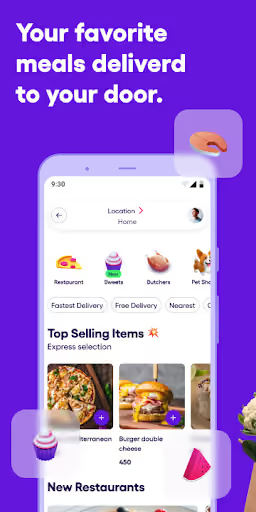
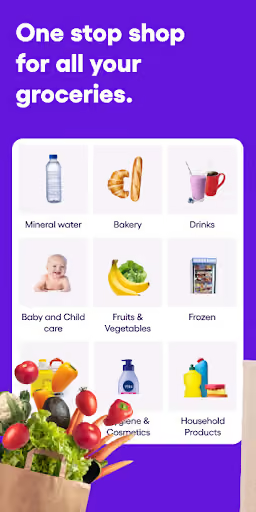
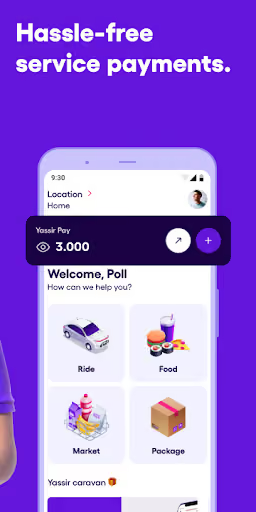
Yassir - Ride, Eat & Shop is a free super app for ride-hailing, food delivery, grocery delivery, payments, wallet top-ups, promos, and support. The listing says it works across 58 cities with more than 150,000 partners, and the Play Store install figure given is 21,599,744.
What it does
One app for rides, restaurants, groceries, wallet payments, promo codes, and support.
What changed
Reviews describe a service that feels less dependable: orders take too long, refunds stall, drivers cancel or negotiate, and recent updates leave some users unable to open or log into the app.
Why it is soft
The pain is public and specific, but the moat is operational: drivers, couriers, restaurants, local payments, support, and city-by-city supply.
Strengths
Yassir is not a strawman. It still has a 4.0★ lifetime rating, a large install base, broad service coverage, cash and card options, wallet payments, promo behavior, and enough supply that some reviewers still praise fast grocery delivery or say rides are great. A new entrant would start with none of the driver, restaurant, payment, or consumer trust Yassir already has.
Existing habit
The install figure shows Yassir has already trained many users to open it for daily transport and delivery.
Multi-service bundle
Rides, food, groceries, and wallet payments reinforce each other; a competitor with only one service has less natural frequency.
Promos still matter
Even negative reviews mention discounts and promos, which means price incentives still pull users back despite frustration.
Market gap
The gap is large, but it is mostly a service-operations gap, not a simple feature gap. The most common complaint cluster is unreliable food and grocery delivery; the next clusters are weak support/refunds, ride-driver trust and pricing behavior, and app/payment breakage.
Late or stuck delivery
Reviewers describe hour-plus waits, cold food, wrong ETAs, orders stuck in preparation, and no useful cancel option.
Missing items and refunds
Several users say items were missing, marked incorrectly, charged anyway, or refunded only slowly or not at all.
Drivers and ride trust
Ride complaints mention cancellations, unsafe driving, fare negotiation, refusal to accept promo-priced trips, and failed scheduled airport rides.
App and payment failures
Users report frozen login screens, update breakage, failed card payments after money is taken, Huawei issues, and location/store availability bugs.
Trash experience. Drivers that work legit are little to none existing. Work times are very precise, you won't find service most of the time. Spoiled drivers that don't work in traffic for example city centers. Either you carefully select your drivers and supervise them or this app is doomed to failure Edit: I wish I could give it a 0 rating because now people scam others by stealing Yassir cash instead of giving them rides. Develop a brain and implement an anti Yassir cash theft system
its the slowest delivery app, slow custom support, and slow everything. it tells you that you will receive your food in 10 minutes than it takes more than 2 hours to actually do so. there is no way to cancel order so you are stuck waiting anyways. its faster if you call up the restaurant you want and see of they have their own delivery
App is frozen on first screen pls fix this bug ,ever since I did the latest update the app isn't opening in my phone at all and it's frozen on logging screen ,i tried reinstalling it but nothing works .
- Do not clone the super app. A ride, food, grocery, and wallet marketplace is too operationally heavy for a part-time solo builder; start with food ordering in one dense city or neighborhood.
- Make cancellation and refunds the product promise. The strongest wedge is not more restaurant choice; it is clear order status, a visible cancel window, missing-item proof, and a published refund rule.
- Use partner-owned fulfillment first. Avoid building a courier fleet at launch by onboarding restaurants or stores that already deliver, then compete on verification, communication, and dispute handling.
Build complexity
Estimated, not derived: one developer, part-time, no funding, no paid acquisition. This assumes a narrow v1: Android app plus lightweight admin for a single-city food ordering marketplace using restaurant-owned delivery, not a full Yassir clone.
| Workstream | Weeks |
|---|---|
| Customer app: menu browse, cart, order status | 4.0 |
| Restaurant/admin portal: accept, update, mark unavailable | 3.0 |
| Refund, cancellation, missing-item flow | 3.0 |
| Payments, receipts, basic walletless checkout | 3.0 |
| Notifications, support inbox, audit trail | 2.0 |
| Play listing, QA, onboarding first partners | 3.0 |
| Total | 18.0 |
Expected revenue
Estimated, not derived: month-12 revenue assumes no paid acquisition, a small local wedge, and a simple $1.00 per completed order service fee equivalent rather than a subscription. The funnel is deliberately conservative because supply, trust, and local operations are the constraint.
| Month 12, monthly | ||
|---|---|---|
| Installs | 1,200 | |
| Activated | 500 | First order attempt |
| Retained | 200 | Repeat monthly users |
| Paid | 800 | Completed paid orders |
| Revenue | $800 | $1.00/order service fee |
Biggest challenges
The hardest parts are not the app screens. A single part-time builder must recruit reliable restaurants, create enough local demand to matter, handle disputes fast, integrate payments safely, and avoid promising delivery reliability without controlling couriers.
Marketplace cold start
Users will not install for empty menus, and restaurants will not care without users; this loop is slow without sales work.
Operational liability
Missing food, wrong items, refunds, and failed delivery still land on your support inbox even if the restaurant delivers.
Payments and trust
The reviews show users are highly sensitive to money being taken without delivery; payment failure handling must be boringly reliable.
AI angle
There is a modest but genuine AI angle: AI can make support triage and missing-item dispute handling cheaper for a solo operator, but it does not solve the core marketplace problem of restaurants, couriers, payments, and refunds.
Useful AI
Classify support messages, summarize order timelines, draft refund responses, and flag repeat missing-item patterns.
Not a moat
AI cannot make a driver arrive, force a store to pack correctly, or create local supply; it is an operations aid, not the reason to build.
Conclusion
Skip the full competitor. The complaints are real and painful, but Yassir’s weak spot is an operations-heavy marketplace, not an abandoned utility app. Build only if you are willing to run a narrow local food-ordering wedge manually; as a pure solo software play, this is a low-upside fight against a 21,599,744-install incumbent.
18 weeks
Time to v1
$1/order
Service-fee model
$800
Revenue at month 12
21,599,744 installs
Fact that decided it