Abstract
The user pain is severe: recent reviews repeatedly describe login loops, delayed verification, missing tickets, no wallet fallback, and poor game-day support. But MLB Ballpark is the official required ticket surface, so a solo developer cannot realistically build a true competitor; the only shippable wedge is a narrow companion that helps fans prepare, troubleshoot, and avoid being stranded.
Background
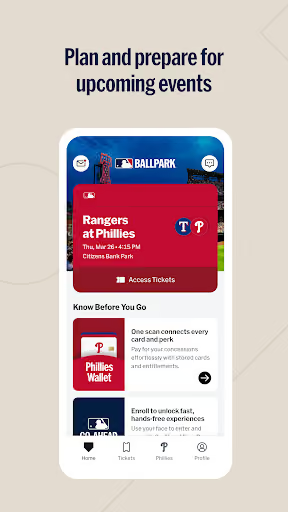
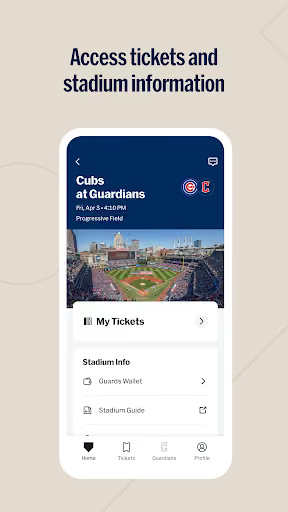
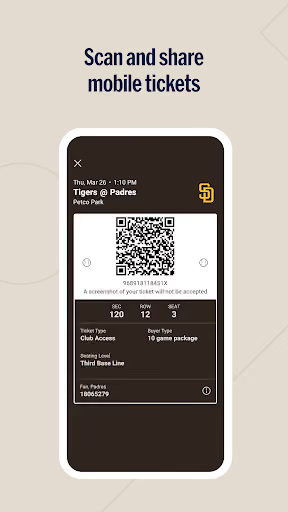
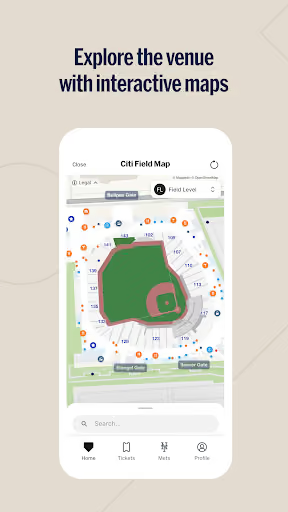
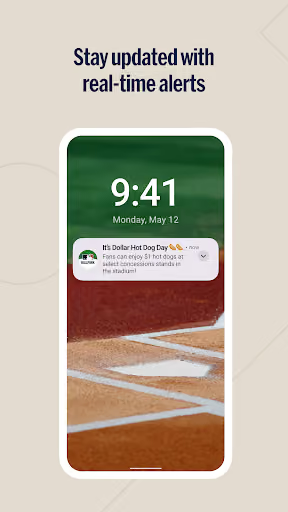
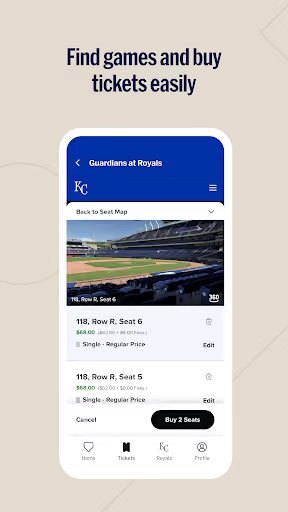
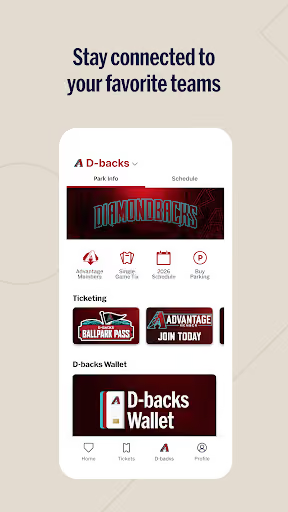
MLB Ballpark is the official MLB ballpark app for digital ticketing, check-in, offers, rewards, maps, schedules, directions, parking information, and, at select ballparks, food and merchandise ordering. It is free, has a 4.1★ lifetime rating, and shows 10,275,562 installs.
What it does
It centralizes tickets, transfers, ballpark maps, check-ins, rewards, parking, and some in-stadium ordering.
What broke
Recent reviewers describe authentication changes that send them back to “Get Started,” require repeated email/SMS codes, and block ticket access.
Why it is soft
Users are angry because the app is compulsory for paid tickets; that creates demand for a fallback, but also makes true replacement hard.
Strengths
This is not a weak incumbent in distribution. MLB Ballpark is official, free, installed at scale, and still works for some fans when account emails match and transfers go through. A competitor would start with no venue trust, no ticketing authority, and no default placement in the purchase flow.
Official channel
The description positions it as the official MLB companion, which matters more than feature quality for ticket entry.
Large installed base
10,275,562 installs create a habit and search presence a new solo app would not have.
Works for some users
A few positive reviews say transferred tickets scan fine or that cell-phone tickets have become fast and easy.
Market gap
The market gap is real, but it is mostly a reliability and fallback gap rather than an unmet feature niche a third party can freely enter.
Login and MFA loops
The most common complaint is being trapped in repeated email/SMS verification, password resets, external browser handoff, or the “Get Started” screen.
No trusted fallback
Reviewers ask for Google Wallet, printable tickets, cached tickets, or offline access when stadium connectivity or the app fails.
Forced app and data friction
Several users resent installing a separate app and providing personal information just to use a ticket they already paid for.
Game-day support failure
A smaller but painful cluster says bots, phone support, box-office lines, parking passes, vouchers, and transferred tickets fail when time matters.
can't transfer tickets to wallet. weird choice. instead i have to hope this dumb app doesnt log me out, encounter errors, tell me my credentials are wrong when they arent, etc. just let us put tickets in google wallet like every single other ticket purchase app on the planet.
This app is garbage. Downloaded it and I cannot accept the ticket. It either just stays on the screen with the app picture or if I do get the opportunity to login, it just loops me back to the get started page after every attempt. I have cleared the cache, force stop, and uninstalled a then reinstalled. if you are going to force people to use an app, make sure it works.
- Do not promise ticket replacement. Build a pre-game readiness companion that checks reminders, stores purchase context, links users to the right official surfaces, and walks them through fixes reviewers found.
- Make fallback expectations explicit. Cache event notes, order details, screenshots, and support steps where useful, but never claim a cached image will scan as a live MLB ticket.
- Win on privacy and calm UX. No account, no ads, no data harvesting; the product is a low-friction emergency checklist for people who distrust the required app.
Build complexity
Estimated, not derived: one developer, part-time, no funding, and no paid acquisition. This is for a companion app, not official MLB ticketing replacement, because the reviews show users are forced back to MLB Ballpark for entry.
| Workstream | Weeks |
|---|---|
| Android shell, local storage, privacy-first onboarding | 2.0 |
| Game-day checklist, reminders, and ticket-source notes | 1.5 |
| Offline pack for event details, links, and recovery steps | 1.0 |
| Troubleshooting flows for login, VPN, browser handoff, cache, and support | 1.5 |
| Billing, Play listing, disclaimers, and policy review | 1.0 |
| Device testing before baseball-stadium edge cases | 1.0 |
| Total | 8.0 |
Expected revenue
Estimated, not derived: the realistic solo-builder model is a free app with a $4.99/month optional Pro tier for multiple games, persistent reminders, and saved recovery packs. Conversion is weak because users still need the official free app.
| Month 12, monthly | ||
|---|---|---|
| Installs from organic search | 1,200 | |
| Activated checklist | 500 | 42% |
| Retained for future games | 180 | 15% |
| Paid at $4.99/month | 60 | 5% |
| Revenue | $300 |
Biggest challenges
The hardest part is not the Android app; it is that the valuable object is the actual ticket, and the facts here only show MLB Ballpark as the required access point. A solo builder risks building a polished helper that users only discover after they are already angry and that still cannot open the gate.
No default ticket access
Reviews say people are forced into MLB Ballpark; a third-party app would not be in the purchase or transfer flow.
Store trust problem
A brand-new app asking users to manage ticket-related information near game day must overcome fraud and safety skepticism.
Policy and trademark risk
The listing must avoid implying MLB affiliation while still being findable by people searching for MLB Ballpark problems.
AI angle
There is a modest AI angle, but not a transformative one. AI can turn messy symptoms into a guided troubleshooting flow using known review patterns such as VPN issues, Wi-Fi versus cellular, private browser handoff, expired verification codes, cache clearing, and support escalation. It cannot provide official ticket access.
Useful AI
A small support copilot can ask what screen the fan is stuck on and produce a concise checklist instead of a generic bot loop.
Hard limit
AI does not solve the actual moat: the ticket remains inside the official MLB Ballpark workflow.
Conclusion
Skip it. The complaint stream is loud enough to validate demand, but not enough to validate a solo-buildable competitor. Build only if you accept that the product is a small paid troubleshooting companion, not an MLB Ballpark replacement.
8 weeks
Time to v1
$4.99/mo
Optional Pro model
$300
Month-12 revenue
Forced app
Fact that decides it