Abstract
SeatGeek still has a 4.4★ lifetime rating, a free app, and 9,305,487 installs, so this is not a dead product. But the recent reviews repeatedly describe a dangerous failure point: people pay for tickets, then cannot reliably access, transfer, resell, refund, or resolve them before the event. A solo builder should not try to clone SeatGeek’s full marketplace; the opening is a narrower verified-in-hand resale app that makes delivery certainty the product.
Background
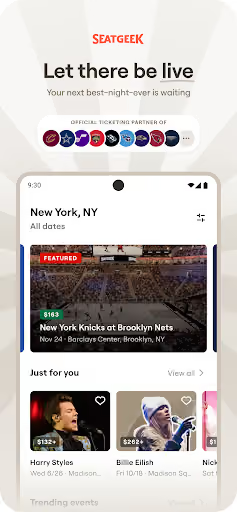
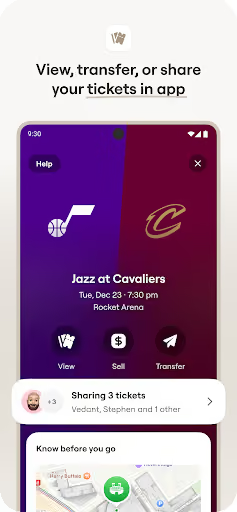
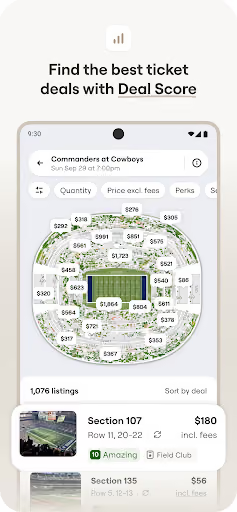
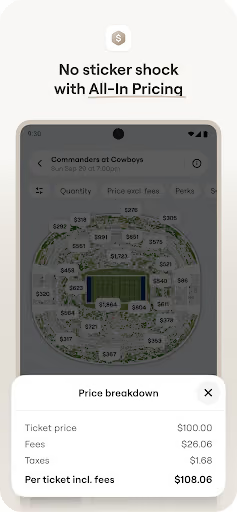
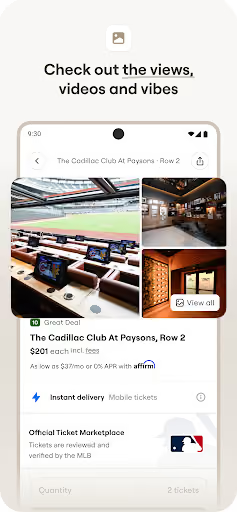
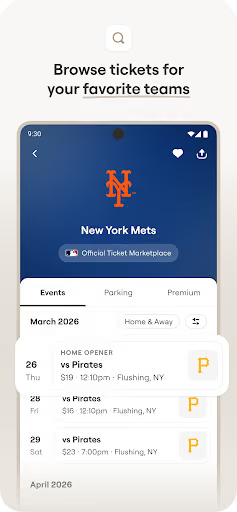
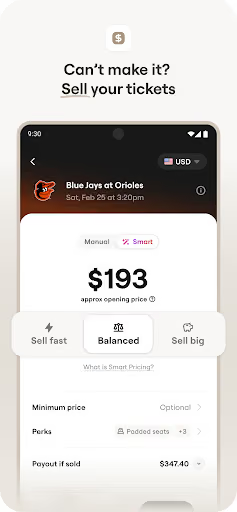
SeatGeek – Tickets to Events lets users buy and resell tickets for sports, concerts, festivals, Broadway and theater, with interactive seating charts, Deal Score, mobile tickets, ticket sending, resale tools, nearby event discovery and Google Pay or card checkout.
What it does
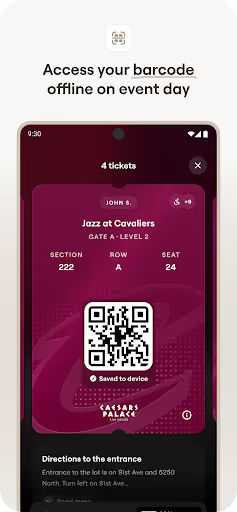
It aggregates live-event tickets, shows seating context, lets users buy or sell, and keeps mobile tickets inside the app for venue entry.
What changed
The review sample shows the post-purchase experience breaking down: delayed tickets, missing barcodes, wrong seats, forced app installs, resale friction, refund fights, and support loops.
Why it is soft
SeatGeek’s scale and partner ecosystem make a full clone hard, but also make urgent edge cases expensive to fix personally. A focused entrant can win trust by refusing unverified listings and supporting buyers when an event is imminent.
Strengths
Real demand
The install base proves a large audience already buys tickets this way; a new app would not be educating people that mobile ticketing exists.
Good core UX when it works
Positive reviewers still call the app easy to use, stress-free for buying and selling, and useful for sending tickets to friends or family.
Feature depth
Interactive seating charts, Deal Score, mobile tickets, resale pricing help and nearby discovery are serious incumbent features a competitor must consciously narrow around.
Market gap
The gap is not “make another ticket app.” It is “make a ticket app where the ticket is already verified, transferable, searchable and supportable before the buyer pays.”
Delivery certainty
The most common visible complaint is paid tickets not arriving, arriving late, showing blank or invalid forms, being held by sellers, or forcing buyers into another app before they can actually enter.
Human rescue
A recurring cluster asks for reachable support when money and event timing are involved, especially when chatbots loop, links fail, emails stall, or phone support is unavailable.
Exact seat and parking clarity
Reviewers complain about unclear seat numbers, generic images, parking lots too far away, missing parking buttons, aisle-seat mismatches, and weak search for section and row.
Seller payout and resale trust
Sellers describe listings that do not appear, expired listings, delayed payouts, held tickets, and no useful escalation when a resale workflow fails.
Horrible to find tickets in a particular section and row. My wife and I bought tickets. Later we had friends that said they would like to go with us. There is no way to enter your section and row to see tickets available there. You have to scroll through available tickets searching for your section and row. In filters it has sections, but not numbers, it has end zone, mid field, etc. You also can't enter exactly what you want in the search bar and have it find it for you. Horrible app.
should have seat numbers posted on listing -best offer option would help sells speed up -tickets should be INSTANTLY transfered once purchased. allowing seller to hold just in case they find a better price elsewhere, is not a customer friendly experience. already had 2 issues because of this and I had to switch to another app. the minute tickets are purchased, tickets should already be transferred within 5 mins
- Only allow verified-in-hand listings. The buyer’s core fear is not price; it is paying and still not having a usable ticket. Require proof of transferable inventory before a listing can go live, then auto-refund if delivery cannot complete quickly.
- Make event-day support a product feature. The reviews punish bot loops more than normal inconvenience. A narrow marketplace can afford human escalation for orders near showtime because it is not trying to support every venue and every category on day one.
- Over-spec the listing data. Show exact seat numbers where available, row filters, parking location, delivery status, transfer restrictions and wallet availability before checkout, because ambiguity is repeatedly turning into chargebacks, missed events and angry reviews.
Build complexity
Estimated, not derived: one developer, part-time, no funding and no paid acquisition. This assumes a narrow v1 for verified resale in a small initial event niche, not a full SeatGeek clone with official-team integrations, panoramic seating maps, or national inventory.
| Workstream | Weeks |
|---|---|
| Buyer/seller accounts + listings | 2.0 |
| Verified-in-hand transfer workflow | 3.0 |
| Search, filters, seat and parking detail | 2.5 |
| Checkout, refunds and payout ledger | 3.0 |
| Event-day support tooling + notifications | 1.5 |
| Android app QA + Play launch | 2.0 |
| Total | 14.0 |
Expected revenue
Estimated, not derived: the app is free to install and charges a marketplace fee only on successful verified orders. The month-12 funnel assumes organic search, venue/community posting and referrals, with an average fee of $60 per completed order.
| Month 12, monthly | ||
|---|---|---|
| Installs | 2,400 | |
| Activated | 1,200 | 50% |
| Retained | 360 | 15% |
| Paid orders | 80 | $60 avg fee |
| Revenue | $4,800 |
Biggest challenges
Cold-start trust and liquidity
The hardest part is not the Android UI; it is persuading buyers and sellers to trust a zero-review marketplace against SeatGeek’s 9,305,487 installs while still having enough verified inventory for the first niche.
Ticket verification without deep partners
Reviews describe tickets moving through SeatGeek, Ticketmaster, venue systems, email links, PDFs, parking passes and wallet flows, so a solo builder can get stuck proving a ticket is real and transferable before checkout without becoming a full primary-ticketing integrator.
Event-day operations
The wedge depends on human rescue near showtime, but that is exactly the least solo-friendly job: urgent support, refunds, replacement tickets, seller disputes, failed transfers and payout complaints can arrive when one part-time builder is offline.
AI angle
Document and vision models can extract seat, row, section and parking detail straight from an uploaded ticket or barcode, and flag duplicate or already-scanned tickets before a listing goes live — a real edge over manual listing entry.
Without AI
Sellers type seat and parking details by hand, so listings stay generic or wrong, and duplicate-ticket fraud is only caught after a buyer's ticket fails to scan at the gate.
With AI
A model reads the ticket image or barcode at listing time to populate seat/row/parking fields and check against known duplicates, feeding directly into the search and verified-in-hand transfer work already budgeted above.
Conclusion
Build it, but not as a full clone. SeatGeek’s weakness is clear, but its marketplace scale is not solo-builder friendly. The right play is a narrow verified-ticket resale wedge where the promise is simple: if the buyer pays, the ticket is already real, transferable and supportable.
14 weeks
Time to v1
$60 avg fee
Free app, per-order marketplace fee
$4,800
Revenue at month 12
Delivery trust
The deciding gap