Abstract
The user pain is obvious: buyers describe tickets arriving minutes before events, wrong seats, failed transfers, weak refunds, and confusing resale rules. But a direct StubHub clone is a network-effects, fraud, payments, and support business, not just an Android app. A solo builder’s realistic wedge is a narrow verified resale marketplace for one local category, with modest month-12 revenue.
Background
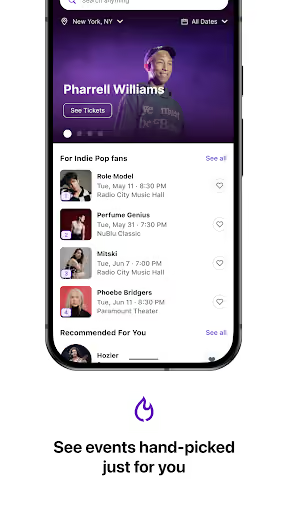
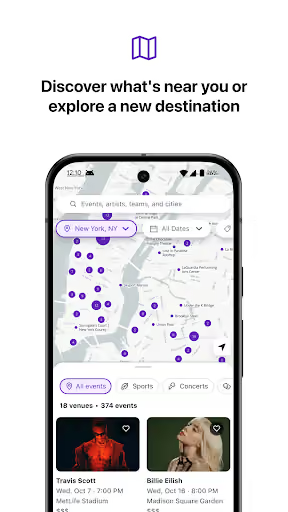
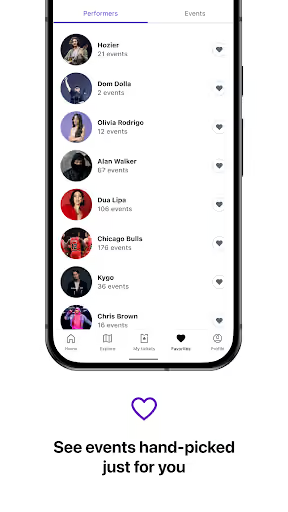
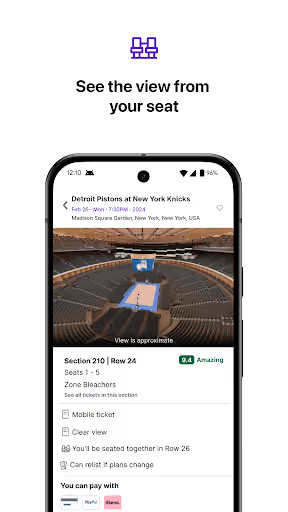
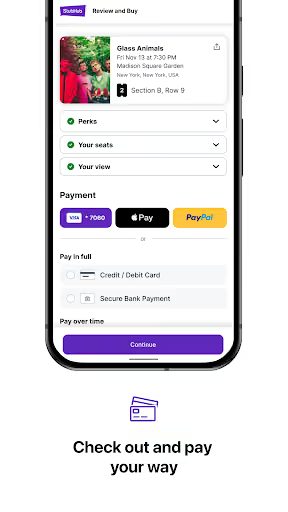
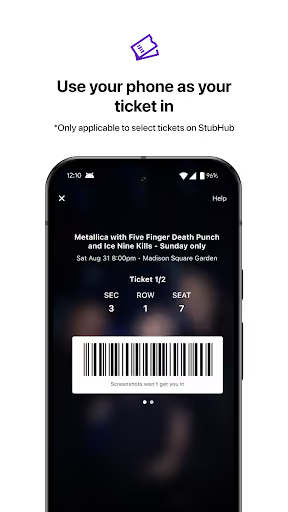
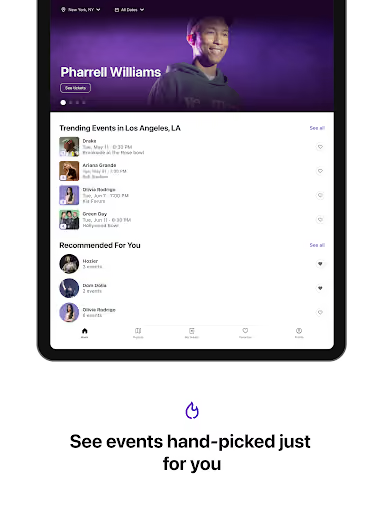
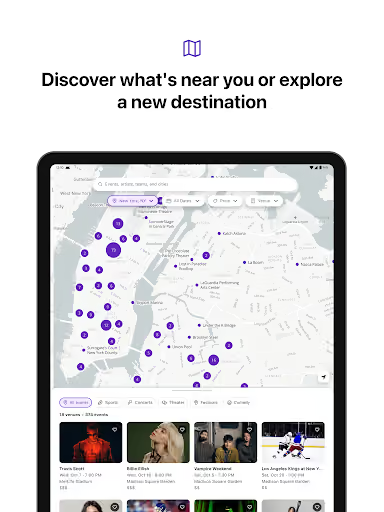
StubHub - Live Event Tickets is a free ticket marketplace with a 4.3★ lifetime rating and 11,324,994 installs as of 2026-08-05. The store pitch is massive supply, 50 million listings in 200+ countries, seat maps, payment options, resale, and a FanProtect Guarantee.
What it does
Lets users buy and sell tickets for concerts, sports, theatre, comedy, festivals, and parking, with filtering, seat previews, checkout, and resale tools.
What changed
Recent reviewers repeatedly describe confirmed orders that do not feel confirmed: late delivery, failed third-party transfers, wrong tickets, denied refunds, and resale penalties.
Why it is soft
Trust is the core product. When buyers believe payment does not equal a usable ticket, even a huge marketplace becomes vulnerable at the moment that matters.
Strengths
StubHub is not an easy target. The app still has a large install base, broad event coverage, brand recognition, existing buyer and seller liquidity, seat-map features, payment options, and at least some reviewers still report smooth checkout and successful delivery. A solo competitor starts with none of that supply, trust, or event coverage.
Supply moat
The store description claims more than 50 million listings across 200+ countries. A new entrant cannot replicate that catalog part-time.
Habit and brand
Over 11 million installs means many users still search StubHub first, even after bad experiences.
Functional wins
Some reviews say buying was easy, the app worked, notifications helped, and tickets arrived as expected.
Market gap
The gap is not discovery; it is confidence after purchase. The complaints cluster around delivery uncertainty first, then customer support and refunds, then transfer/resale friction, with pricing and parking surprises adding distrust.
Late or missing tickets
The most common complaint: buyers paid months ahead, then received tickets minutes before the event, after the event started, or not at all.
Guarantee and support gap
Reviewers describe escalations, chat loops, denied refunds, and support that resolves issues too late to save the event.
Transfer and resale friction
Users complain about forced third-party apps, inability to split tickets to friends, removed resale listings, and penalties when transfers fail.
Fees, parking, and seat mismatch
A smaller but important cluster says parking passes, seat sections, fees, and venue details were not what buyers thought they bought.
Beware - Stubhub will take your money for tickets, tell you they are yours, but never actually deliver them to you if the seller chooses not to release them. The seller is free to resell them for a higher price later while Stubhub strings you along telling you they will be in your account by the start time of the event! So buy with caution - according to Stubhub just because you paid for tickets doesn't mean you own them. It's deceptive and ridiculous.
Buying the tickets was easy and the show was great. However, the fact that I couldn't transfer any mobile tickets is ridiculous. I literally had to wait outside the venue until my friend showed because there was no way to transfer his ticket to him. It's 2026. I don't want to hear that its because of the venue, or that particular show. Figure it out. Until then I can't see myself using Stub Hub again unless I have to. A shame because its a great alternative to Ticketmaster otherwise.
- Do not clone global StubHub. Start with one local niche where you can manually recruit sellers and verify listings before they go live.
- Make verified possession the product. Require proof, show a delivery deadline, hold funds, and auto-refund if a seller misses the release window.
- Design for the gate, not the catalog. Ticket splitting, transfer status, parking clarity, and human escalation before event time matter more than endless event inventory.
Build complexity
Estimated, not derived: one developer, part-time, no funding, and no paid acquisition. This assumes a narrow local marketplace, not a full StubHub replacement with global supply and official venue integrations.
| Workstream | Weeks |
|---|---|
| Buyer and seller app basics | 5 |
| Verified listing and proof workflow | 4 |
| Checkout, payouts, refund ledger | 5 |
| Transfer evidence and support tooling | 4 |
| Admin review, moderation, fraud flags | 4 |
| Policies, testing, Play launch | 2 |
| Total | 24 |
Expected revenue
Estimated, not derived: assume a free app, organic local acquisition, and a marketplace fee model averaging $15 net revenue per completed paid order. Month-12 revenue is therefore thin unless the builder solves supply liquidity without paid ads.
| Month 12 funnel | Estimate | Assumption |
|---|---|---|
| Installs | 1,500 | Organic local search, referrals, event communities |
| Activated | 600 | Browsed, listed, or saved an event |
| Retained | 300 | Active around local event dates |
| Paid | 80 orders | $15 average net fee |
| Revenue | $1,200 | Month-12 monthly revenue |
Biggest challenges
The hard part is not the Android UI; it is marketplace trust under time pressure. A single part-time builder must recruit enough legitimate sellers, prevent fake listings, handle payment disputes, support buyers on event day, and survive fraud complaints in the Play Store.
Cold-start liquidity
Ticket marketplaces need both buyers and sellers at the same time. Without paid acquisition, this has to start painfully narrow.
Transfer dependence
Reviews mention Ticketmaster, FIFA, MLB Ballpark, Live Nation, and venue-specific flows. A solo app may still depend on systems it cannot control.
Event-day support
Users do not need a reply tomorrow; they need entry before the show starts. That is operationally brutal for one part-time person.
AI angle
There is no decisive AI angle here. AI can summarize support chats, flag suspicious screenshots, draft buyer updates, or help classify disputes, but it cannot create legitimate ticket supply, force third-party transfers to work, or replace event-day human accountability. Treat AI as back-office assistance, not the wedge.
Useful
Triage support cases, extract event details from screenshots, and prioritize orders close to start time.
Not enough
The reviews are about trust, refunds, transfers, and possession of tickets. AI does not remove those marketplace obligations.
Conclusion
Skip it. The market gap is real, but a StubHub competitor is too operational and network-driven for a solo part-time build. Only attempt a tiny verified local niche if you already have seller access and can personally handle event-day support.
24 weeks
Time to v1
10% fee
Marketplace model
$1,200
Revenue at month 12
11,324,994 installs
Incumbent scale to beat