Abstract
ReadEra Premium sits at 4.8★ with an unusually loyal following — many reviewers say they used the free version for years before paying, specifically to support the developer rather than out of necessity. Complaints are minor and scattered (TTS pronunciation, sync flakiness, dictionary UX), not a single dominant fumble. The format breadth this app supports (EPUB, PDF, MOBI, DOCX, CBZ/CBR, DJVU, and more) is itself a wide surface a solo builder would need to match, so this is a thin opportunity against a well-run incumbent.
Background
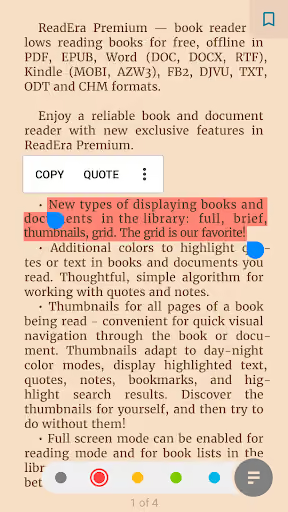
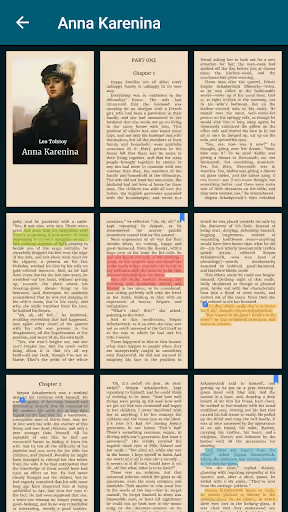
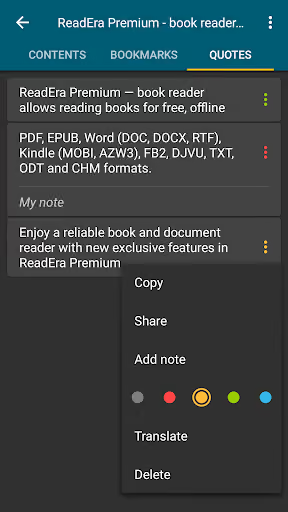
For years ReadEra Premium has been a one-time-payment ($14.99) ebook/document reader supporting a wide range of formats, with background text-to-speech, sync, and annotation.
What it does
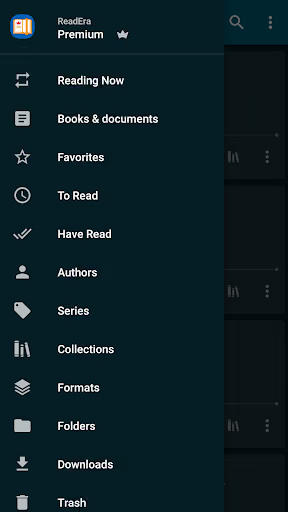
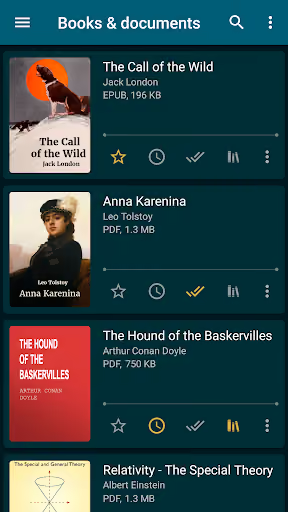
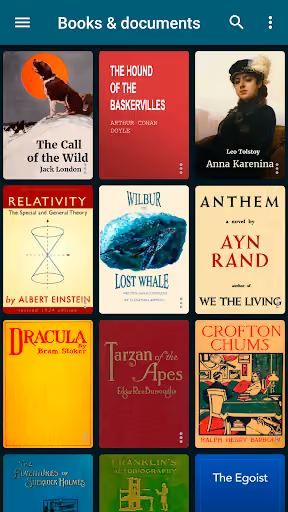
Finds, reads, and organizes books/documents across many formats, with TTS, Google Drive sync, and a personal dictionary.
What changed
Little. Most reviews are 4-5 star; complaints are feature requests (more highlight colors, better voices) or occasional sync glitches.
Why it is not very soft
No single complaint dominates — the frustration is spread thin across formats, TTS quality, and minor UX, none of it a clean wedge.
Strengths
Broad format support, a one-time (not subscription) price that reviewers explicitly praise, and years of accumulated polish. The lack of a subscription is itself a major differentiator that a new entrant would have to match, not exploit.
Market gap
The complaints that exist, grouped loosely — none large enough on its own to anchor a report.
TTS quality/robotic pacing
The most repeated wish: better pronunciation, pacing, and word-skipping control for text-to-speech.
Sync reliability
Occasional Google Drive sync failures and metadata loss on file renames.
Dictionary/organization UX
Personal dictionary entries aren't organized by book/series, and some navigation requests go unmet.
I am very disappointed after purchasing this application. I still have the free version of ReadEra on the same smartphone, and it actually found far more books on my device than this paid version! Furthermore, the Text-to-Speech mode works very poorly.
- If building here, narrow to one format and TTS quality. Matching ReadEra's full format breadth isn't realistic solo — a focused EPUB+TTS reader with a better voice engine is a smaller, honest wedge.
- Keep the one-time-price model. It's the incumbent's own strongest differentiator and reviewers are explicit about valuing it.
- Don't compete on breadth. Reader apps live and die on format coverage users already trust ReadEra to have.
Build complexity
Estimated for one developer, part-time, no funding. Reaching credible parity means supporting several document formats plus TTS and sync — real breadth, even scoped down.
| Workstream | Weeks |
|---|---|
| EPUB/PDF parsing + reader UI | 5 |
| Text-to-speech integration | 3 |
| Library scanning, collections, bookmarks | 3 |
| Cloud sync | 2 |
| Listing + billing | 1 |
| Total | 14.0 |
Expected revenue
Assumes a $9.99 one-time price undercutting the incumbent, into a market where most dissatisfaction is mild polish rather than switching-grade frustration.
| Month 12, monthly | ||
|---|---|---|
| Installs | 14,000 | |
| Activated | 5,600 | 40% |
| Paid | 120 | 2.1% |
| Revenue | $1,200 |
Biggest challenges
Format-parsing breadth (EPUB, PDF, MOBI, DOCX, CBZ/CBR, DJVU) is real engineering surface area with edge cases in every format — a narrower scope is the only realistic path, which limits how directly it competes.
AI angle
A modest angle: modern neural TTS voices are now a cheap API call and would directly answer ReadEra's most-repeated complaint (robotic, poorly-paced narration) without building a speech engine from scratch.
Conclusion
Skip it — or narrow it drastically. A well-run, format-complete incumbent with mild, scattered complaints and a real breadth moat.
14 weeks
Time to a narrow v1
$9.99
One-time
$1,200
Revenue at month 12
4.8★
Lifetime rating