Abstract
The reviews show a genuine reliability collapse around loading, lists, filters, checkout and forced updates, but a solo builder cannot realistically clone Wayfair’s catalog, pricing, delivery network, returns flow or buyer trust; the only practical wedge is a lightweight planning and comparison companion.





Background
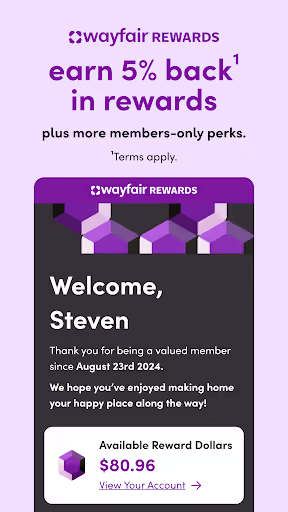
Wayfair - Shop All Things Home is a free home-shopping app with a 4.8★ lifetime rating and install snapshots rising from 40,667,901 on 2026-08-07 to 41,107,052 on 2026-10-21. The product promises app-only deals, recommendations, lists, order updates and delivery tracking.
What it does
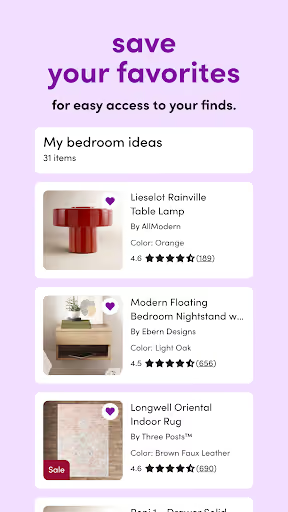
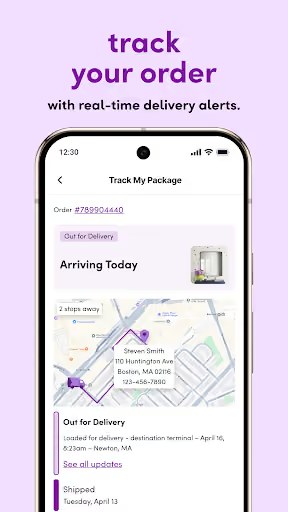
Lets shoppers browse furniture and decor, save items to lists, check out, track deliveries and get sale or price-drop alerts.
What changed
Recent reviewers describe forced updates, blank screens, images not loading, crashing, lost lists, broken checkout and inconsistent app-versus-web behavior.
Why it is soft
Users are not rejecting the idea of buying home goods online; several say they wanted to spend money but left for Amazon, Home Goods, desktop, mobile web or other stores when the app failed.
Strengths
Wayfair is still a strong incumbent: positive reviews praise selection, prices, shipping, easy ordering, customer support and repeat purchases. A new entrant would start without the marketplace inventory, product reviews, logistics, brand habit, app-only deals, financing context or delivery tracking that make Wayfair useful even when the app is frustrating.
Marketplace moat
The complaint is often “I want to buy but the app will not let me,” which means demand remains attached to Wayfair’s catalog rather than automatically transferring to a clone.
Habit and trust
The latest install snapshot is over 41 million, and some reviewers describe years of buying furniture, rugs, remodel items and household goods through Wayfair.
Market gap
The complaints cluster around app reliability first, then saved-state loss, bad discovery tools, and checkout or post-order trust. That is enough to build a useful companion app, but not enough to justify building a full retailer.
Broken browsing
The loudest theme is pages failing to load, images disappearing, freezes, crashes, update loops and blank screens while users are actively trying to shop.
Lost lists and carts
Several reviews mention saved lists, boards, carts, baskets or account state disappearing, failing to sync, or resetting when switching screens.
Filters, links and prices
Reviewers complain that filters ignore dimensions, materials, stock, price order or category context, and that app, web and device prices can differ.
Checkout and support
Address entry, credit-card payment, delivery communication, refunds and customer chat also show up as trust-breaking moments.
I just deleted my glowing review of the Wayfair app. All I wanted to do was buy lamps and I was forced to update the app. I complied. The app wouldn't work. Not to be deterred, I uninstalled and reinstalled the app that I have been using trouble free for years and now it doesnt work at all. Guess Amazon has lamps, right? Or I'll drop by Home Goods tomorrow. Fix the app or lose more customers. Grrrrrr. 😠
Add another isuue... I lost all the boards and can't see any saved items. App is not stable, keeps going back to home screen while on the lists page. Even in lists page, focus moves to the top instead of staying near the last visited item. When I try to view an item from Google search results, the Wayfair app opens with Home page, so have to manually search for the desired item.. Support team should test the app before releasing to the customers... NO CUSTOMER SUPPORT AFTER 5 DAYS.
Really, really, really glitchy. Every item I click on in a web search doesn't exist and my county has been changed to the UK, and it won't let me change it back (June 2026). It also crashes often, and I have to start my search all over again. My biggest peeve is when I click on an ad for an item and it brings me to the main web page, I then have to search for the item and hope I can find it.
- Do not clone the retailer. Build a home-shopping shortlist that saves Wayfair, Amazon, store-web and photo notes into stable room boards; the gap is reliability, not warehouse ownership.
- Make saved state sacred. Offline-first lists, carts-as-notes, measurements, stock notes and shareable boards directly answer the disappearing-list and reset complaints.
- Hand off checkout instead of owning it. Deep-link users back to the retailer when ready to buy, because payments, delivery, returns and customer service are the parts a solo builder cannot safely absorb.
Build complexity
Estimated, not derived: one developer, part-time, no funding and no paid acquisition. This is for a companion shortlist and comparison app, not a Wayfair marketplace clone.
| Workstream | Weeks |
|---|---|
| Android share sheet, manual product capture and deep-link saving | 2.0 |
| Offline room boards, notes, measurements and image attachments | 2.0 |
| Saved-item filtering, sorting and comparison views | 1.5 |
| Retailer web handoff, link health checks and price-note history | 1.5 |
| Account-light sync, paywall and Play Store listing | 2.0 |
| Beta testing and crash hardening | 1.0 |
| Total | 10.0 |
Expected revenue
Estimated, not derived: with no paid acquisition, assume a freemium app where basic boards are free and Pro is $4.99/month for unlimited boards, sync, comparison notes and exports. Month-12 revenue is intentionally modest because this is a companion tool beside a giant retailer.
| Month 12, monthly | ||
|---|---|---|
| Installs | 4,000 | |
| Activated | 1,600 | 40% |
| Retained at 30d | 800 | 20% |
| Paid | 240 | 6% |
| Revenue | $1,200 | $4.99/mo rounded |
Biggest challenges
The hard part is not building boards; it is earning trust when users expect a store, avoiding fragile scraping or unofficial catalog dependence, and convincing shoppers to add an extra planning step before they return to the retailer to buy.
No catalog API moat
A solo app should avoid pretending it has live Wayfair inventory, because incorrect price, stock or delivery claims would recreate the trust problem.
Cold-start store trust
Wayfair has a massive install base and years of buyer reviews; a new app asking to organize purchase decisions starts with zero proof.
Weak urgency
Many angry users can still switch to Wayfair web, desktop, Amazon or local stores without paying for a separate planning app.
AI angle
There is no decisive AI wedge here. AI could help tag saved items, summarize product pages, extract dimensions from copied text, or answer “which sofa fits this room?” inside a board, but the core complaints are reliability, saved-state integrity, filters, checkout and trust — mostly deterministic product engineering.
Useful but optional
AI-assisted tagging and comparison could make a shortlist app feel smarter than a plain notes app.
Not the unlock
It does not solve inventory, checkout, delivery, returns, support or Wayfair’s marketplace advantage, so it should not change the build or revenue estimate.
Conclusion
Skip the full competitor. Build only if you are comfortable making a small companion utility: the review gap is real, but Wayfair’s actual business is commerce infrastructure, not just an Android UI.
Time to v1
Pro companion model
Month-12 revenue
Latest install snapshot