Abstract
The reviews show a real patient-access failure after a portal transition: logins break, messages disappear, appointments and care teams go missing, and some devices are no longer compatible. But a true competitor cannot be built by a solo developer without UPMC integration, provider adoption, HIPAA-grade operations, and access to medical-record systems; the only realistic solo product is a small companion app for reminders, notes, screenshots, links, and outage workarounds.
Background
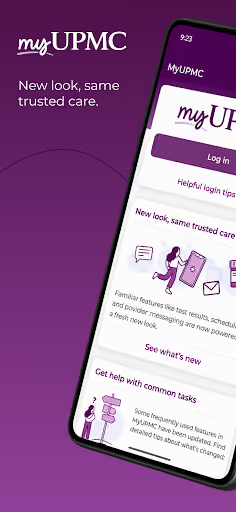
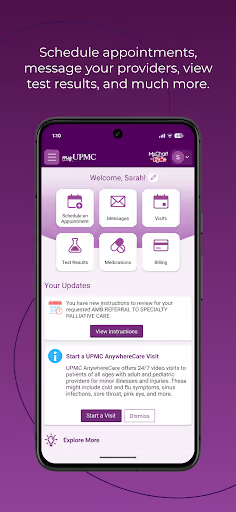
MyUPMC is UPMC’s free patient portal for scheduling appointments, messaging providers, viewing test results, paying bills, handling eCheck-In, accessing coverage information, and connecting to virtual care. It still has a 4.3★ lifetime rating and 918,051 listed installs on 2026-11-04, but recent reviews describe a broken transition around the new app, website, or Epic/MyChart-style experience.
What it does
It is the official front door for UPMC patients: appointments, messages, results, billing, forms, insurance, child accounts, and video visits.
What changed
Reviewers describe a recent upgrade or universal portal change that caused missing data, login lockouts, confusing navigation, device incompatibility, and forced verification steps.
Why it is soft
Patients need access urgently and many say the website still works better than the app, creating room for a non-official helper — but not a true replacement.
Strengths
This is not a weak product category: the app sits on top of a real healthcare network, an existing patient identity system, provider messaging, billing, test results, and appointment data. Positive reviews still praise it for keeping up with appointments, finding doctors, viewing records, messaging doctors, handling refills, seeing results, and doing video visits — capabilities a solo builder cannot reproduce without institutional access.
Official data access
MyUPMC is the source of truth for UPMC records, messages, bills, and scheduling. A third-party app would not have those permissions by default.
Retained patient habit
Even angry reviewers keep using it because they need care access, prescriptions, lab results, child accounts, and appointment details.
Still valuable when working
Several positive reviews call the app easy, thorough, helpful, and improved after the October update.
Market gap
The market gap is real, but it is mostly an operational and integration failure inside an official healthcare portal. Complaints cluster around broken access first, then missing clinical data, then the October redesign, with a smaller but serious set of device and accessibility issues.
Login, timeout, and server failures
The most common complaint is not taste; it is patients being unable to log in, stay logged in, connect to servers, create accounts, or open basic pages.
Messages, results, and appointments missing
Reviewers say they cannot access doctor messages, lab results, care teams, child records, billing information, appointment times, or current reminders.
Forced migration and redesign pain
October reviews mention the old app being easier, a cartoonish or clunky new interface, lost information, broken SMS links, and Epic/MyChart-style changes.
Compatibility and accessibility
A few users say the update made their phone, Chrome laptop, Kindle Fire, or older Galaxy device unusable; another calls out poor accessibility for vision-impaired users.
The app is useless. Can't access messages or results. Can't schedule an appointment. I get one of two messages. Either "session timed out" or " Can't connect to server". This becomes problematic for people who cannot call during UPMC business hours. UPMC is certainly making enough money that they should have a solid app and reliable tech system. Definitely hindering providing proper Healthcare access to their subscribers.
edit 3 years later- still does not work well at all. often I have to use the Internet browser instead. I never review apps but I had to come and express my frustration. A recent update really reduced the functionality of this app. Now vital functions like Test Results take many many tries to load, and they load in a webpage which clearly works worse. Nothing is more frustrating than needing to see important test results and having to reload 5 times, especially when it used to work INSTANTLY.
the new system is horrible. missing reminders, reminders for things that have already been done, no way to dismiss things already done, and no way to contact all my doctors. absolutely horrible. change it back.
- Do not pitch it as a MyUPMC replacement. A solo app cannot safely or legally recreate provider messaging, medical records, scheduling, billing, or video visits without official integration.
- Build an outage-proof companion instead. Support manual appointment storage, medication and refill reminders, care-team notes, billing-note tracking, document photo storage, and one-tap links to the portal website.
- Lead with accessibility and old-device support. Large text, simple navigation, offline reminders, printable summaries, and compatibility with older devices directly answer complaints the official app is unlikely to prioritize quickly.
Build complexity
Estimated, not derived: one part-time solo developer, no funding, no team, and no paid acquisition. This estimate is for a companion app that stores patient-entered reminders, notes, links, screenshots, and documents — not a true portal competitor with UPMC data access.
| Workstream | Weeks |
|---|---|
| Local profile, care-team, appointment, and reminder models | 2.0 |
| Accessible Android UI with large text and offline-first flows | 2.0 |
| Secure local document and screenshot vault | 2.0 |
| Portal-link shortcuts, notification reminders, export/print summary | 1.5 |
| Privacy policy, store listing, testing on older devices | 1.5 |
| Billing, onboarding, support docs | 1.0 |
| Total | 10.0 |
Expected revenue
Estimated, not derived: because the official app is free and required for real UPMC access, charge only for a helper layer. A realistic model is $5/month for family/caregiver features such as offline reminders, secure document storage, printable summaries, and multi-person tracking.
| Month 12, monthly | ||
|---|---|---|
| Installs | 300 | from organic search and complaint-led demand |
| Activated | 180 | 60% |
| Retained | 90 | 30% |
| Paid | 60 | $5/month |
| Revenue | $300 | MRR |
Biggest challenges
The hard part is not building reminders; it is staying out of the regulated, trust-heavy, official-portal lane while still being useful. Any claim that the app reads UPMC messages, pulls lab results, schedules appointments, or fixes login problems would create user trust, privacy, and review risk the builder cannot support.
No official data integration
Without UPMC access, users must enter or save information manually, which limits conversion and makes the app feel like a workaround.
Healthcare trust burden
Patients are handling sensitive medical data. A solo builder needs clear privacy boundaries, local-first storage, and conservative claims.
Store positioning risk
The app must not impersonate MyUPMC or imply affiliation. That makes discovery harder and paid acquisition is off the table.
AI angle
There is a modest AI angle, but it does not change the build or revenue estimate. AI could turn screenshots, discharge-paper photos, or copied portal text into structured appointment reminders, medication notes, and question lists for a doctor visit. That is genuinely useful for a companion app, but it cannot solve the core complaint: official portal access to messages, results, scheduling, and billing.
Useful AI feature
OCR and summarization can extract dates, phone numbers, medication names, and follow-up tasks from patient-supplied screenshots or paperwork.
Hard limit
AI cannot authenticate to UPMC, recover missing records, message a doctor, or guarantee medical accuracy, so it should stay assistive and clearly labeled.
Conclusion
Skip it. The complaints are serious and emotionally urgent, but the valuable product is the official portal itself, not an app shell. A solo builder can ship a small patient-access companion, yet it will be a workaround with thin revenue, not a real MyUPMC competitor.
Time to v1
Companion subscription
Month-12 MRR
Deciding constraint