Abstract
The May 2026 NJ TRANSIT app overhaul created a clear commuter pain point around schedules, DepartureVision, favorites, readability, login, and ticket access — but a solo builder cannot realistically replace the official ticketing system, so the viable product is a narrow schedule-and-alert companion, not a full competitor.
Background
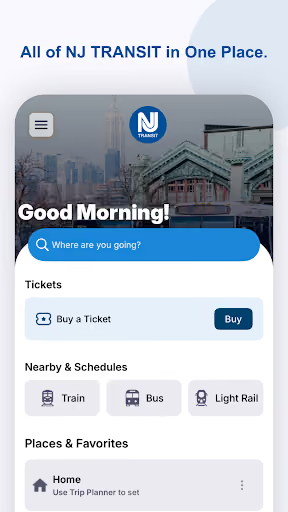
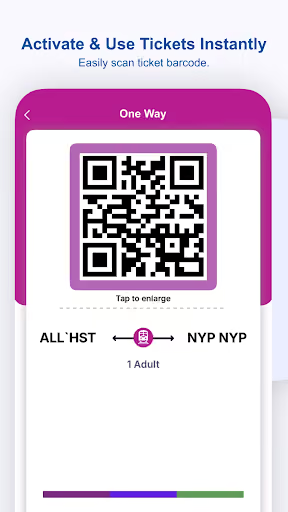
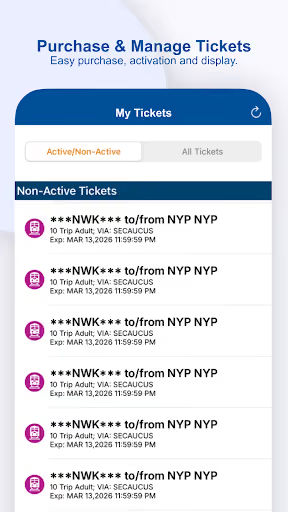
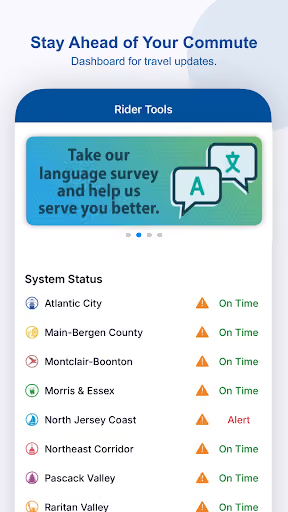
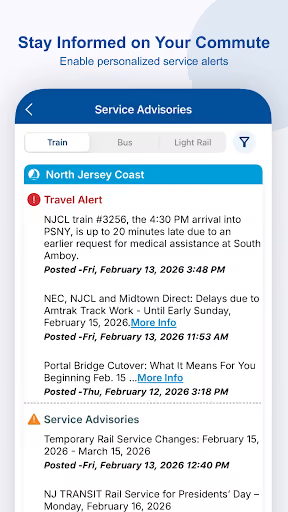
NJ TRANSIT Mobile App is the official free app for planning trips, buying and managing tickets, activating tickets, tracking rides, and receiving alerts across bus, rail, and light rail. It has a 3.0★ lifetime rating and went from 3,105,068 installs on 2026-08-06 to 3,153,218 installs on 2026-09-20.
What it does
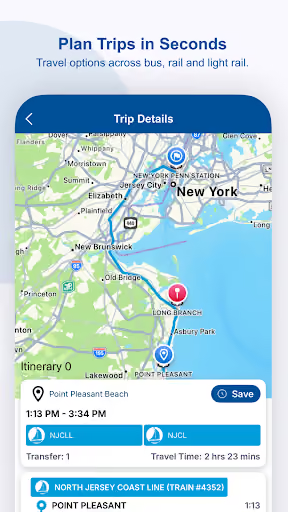
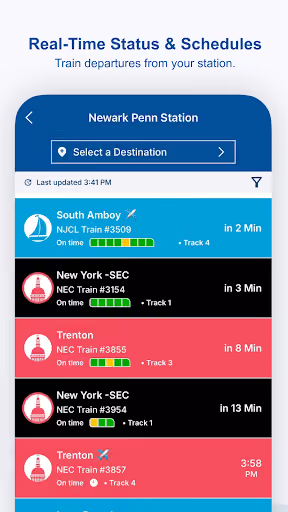
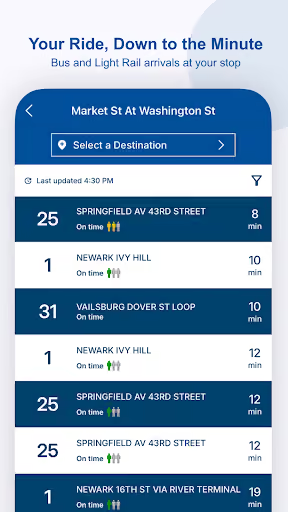
Trip planning, schedules, ticket purchase, stored tickets, activation, ride tracking, and service alerts in one official app.
What changed
Reviews describe a 2026 redesign that removed or buried old schedule flows, changed DepartureVision, lost favorites, made fonts smaller, and introduced login or ticket access failures.
Why it is soft
Commuters repeatedly ask for the old utility back: fast station-to-station schedules, visible departure times, one-tap favorites, readable text, and fewer surprises at boarding time.
Strengths
This is not a weak incumbent. It is the official app riders already need for mobile tickets, and some reviewers still say it works for buying tickets, Android password managers, trip planning, or zone selection. A solo builder would start with none of the official trust, ticket inventory, QR activation flow, or default commuter habit.
Official ticketing moat
The app sells, stores, and activates NJ TRANSIT tickets. The facts here do not show that an independent app can do the same.
Installed commuter habit
The install base is already above 3.1M in the provided data, and daily commuters are trained to open this app when boarding.
Some users saw gains
A few positive reviews praise the new trip planning or say the basics still work, so the backlash is not proof that every feature is broken for every rider.
Market gap
The market gap is real, but it is narrower than the review anger makes it look: users want commuter-grade schedule utility, while the most valuable official feature — mobile tickets — is difficult for an outsider to replace.
Schedules and DepartureVision regressed
The most common complaint is that full-day train schedules, future-day lookup, visible departure times, track/gate info, favorites, and manual refresh became harder, less readable, or unavailable.
Real-time trust broke
Light rail, bus, and train status are repeatedly described as inaccurate, stale, or impossible to refresh, which is especially painful when riders are deciding whether to run for a train or wait.
Ticket and login failures
Several reviewers describe missing tickets, forced re-login at activation, charges without tickets, password-reset loops, and new device compatibility problems.
Accessibility and comfort
Small fonts, no dark mode, bright white screens, buried favorites, and too many taps show a commuter usability gap a focused companion app could address.
The new "update" has completely ruined the app and has rendered it useless. It's impossible to do the most basic function of showing you a list of the train schedules. No one needed or wanted a trip planner! I just need to see the train options for the day. God forbid you try to look at the schedule later at night, otherwise it tells you that there aren't any trains left for the day and closes the whole thing. The app wasn't great before, and now it's just complete garbage. FIX THIS PLEASE!!
Glitch Cost Me Over $50 Three times when I purchased tickets for the train, the app ran my card and then crashed. It charged my account, but I did not recieve my train tickets. I tried to buy a round trip ticket twice, and after uninstalling and reinstalling the app, tried to buy a one-way ticket. None of them went through. Pissed. Still had to buy a paper ticket.
Horrific "upgrade" — entire app has become "plan your trip" when I just want the train schedule. The one feature the app needed, showing the TRACK NUMBER on the train schedule, is still not available. Needs 5 clicks to see the track number that should already be visible on the train schedule. Favorites are gone, now it uses GPS to detect some random place not near the train station. The existing tiny, unreadable fonts are even smaller now. 🤦
- Do not try to replace ticketing. Position the product as a schedule, favorites, and alert companion; sending users back to the official app for purchase avoids the strongest moat.
- Make the old commuter workflow the hero. One-tap saved stations, full-day schedules, future-day lookup, visible departure times, track/gate fields, and manual refresh directly answer the review clusters.
- Win on readability, not breadth. Large fonts, dark mode, no forced location prompts, and stable favorites are more realistic for a solo builder than matching every bus, rail, light rail, payment, and account edge case.
Build complexity
Estimated, not derived: one developer, part-time, no funding, no team, and no paid acquisition. This assumes a narrow Android v1 that helps riders find schedules and saved routes, not a licensed replacement for NJ TRANSIT ticket purchase or activation.
| Workstream | Weeks |
|---|---|
| Android shell, local storage, navigation | 1.5 |
| Station, route, favorites, and full-day schedule UX | 2.0 |
| Published PDF/website schedule import tooling | 2.0 |
| Best-effort alerts/status display with fallbacks | 1.5 |
| Accessibility: dark mode, large type, widgets | 1.0 |
| QA, Play listing, disclaimers, support workflow | 2.0 |
| Total | 10.0 |
Expected revenue
Estimated, not derived: free basic schedule lookup, with a $2.99/month optional Pro tier for saved commute boards, dark-mode widgets, offline schedules, and custom alerts. The month-12 funnel below is intentionally modest because the product cannot sell official tickets.
| Month 12, monthly | ||
|---|---|---|
| Installs | 2,500 | |
| Activated | 1,250 | 50% |
| Retained | 500 | 20% |
| Paid | 300 | 12% |
| Revenue | $900 | rounded |
Biggest challenges
The hard part is not drawing schedule screens; it is earning trust in a category where being wrong can make someone miss a bus or train, while staying clearly unofficial and avoiding any promise that the app can replace mobile tickets.
Ticketing cannot be cloned
Reviews about missing passes and payment failures are painful, but a solo builder has no shown path here to sell, validate, or activate official NJ TRANSIT tickets.
Data freshness risk
If schedule PDFs, website flows, or real-time fields change, a part-time builder becomes the support desk for stale transit information.
Cold-start trust
Commuters may still install the official app first because it is the place tickets live; the companion must be obviously useful before a stressful commute.
AI angle
There is a genuine but limited AI angle: AI can help parse timetable PDFs or messy schedule pages into structured station-to-station data faster than hand-building every table. It does not solve official ticketing, device compatibility, or whether NJ TRANSIT’s real-time status is correct.
Useful AI assist
Use document extraction to turn published schedules into normalized routes, then spot-check before release.
Do not oversell it
AI cannot guarantee live arrivals, cannot issue tickets, and should not be used to hallucinate train times.
Conclusion
Skip it. Skip a full competitor because the official ticketing moat is too strong for a part-time solo builder. A narrow schedule companion is buildable and could earn modest MRR, but it is a utility side project, not a venture-sized replacement for the NJ TRANSIT app.
10 weeks
Time to v1
$2.99/mo
Optional Pro companion
$900
Month-12 revenue
Official tickets
The deciding moat