Abstract
HelloFresh reviews show real frustration with cancellation, surprise charges, aggressive upsells, broken meal selection, missing recipe quantities, and weak support — but a solo builder cannot realistically clone the food sourcing, delivery, refunds, and brand trust behind a meal-kit marketplace.
Background
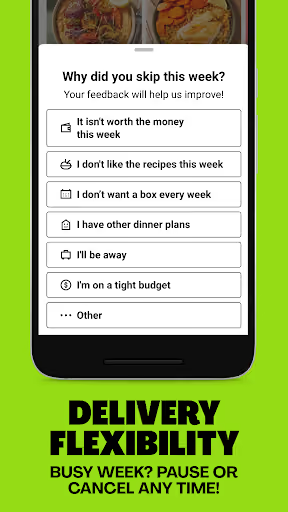
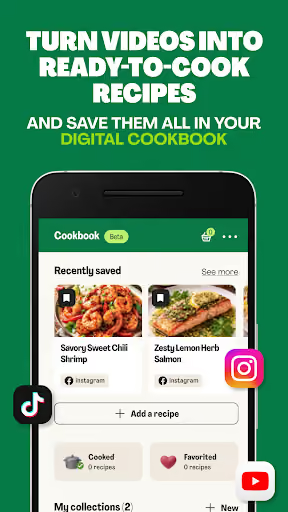
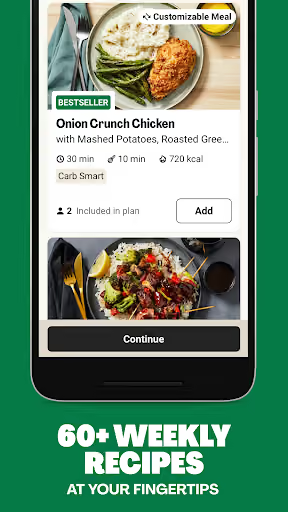
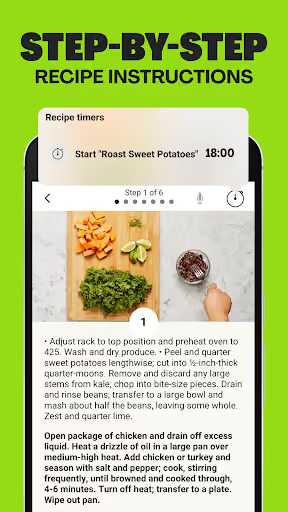
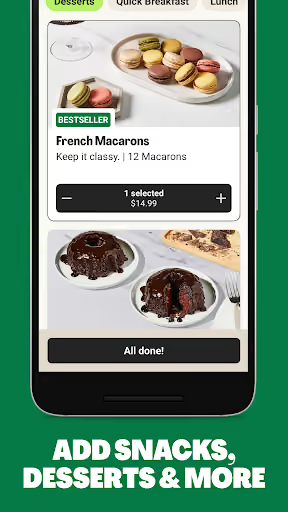
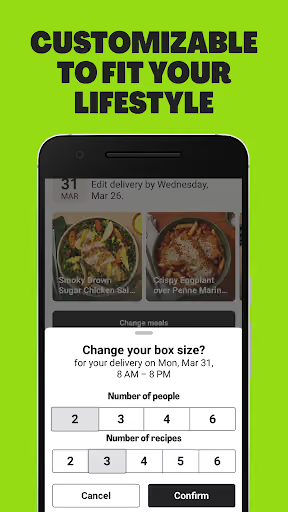
HelloFresh: Meal Kit & Recipes is a free Android app for managing weekly meal-kit deliveries, choosing recipes, skipping weeks, changing subscription details, and saving recipes in its Cookbook feature. The app still has a 4.5★ lifetime rating and the listed install snapshots show a very large installed base.
What it does
Meal selection, subscription management, delivery planning, recipe instructions, saved recipes, and customer support access for a weekly food-delivery service.
What changed
Recent reviews repeatedly describe a worse UI, more upsells, missing filters, broken loading, selection bugs, removed recipe quantities, and support flows that fail when photos or chat are needed.
Why it is soft
The app-side gap is clear, but the real business is perishable-food logistics. A solo builder can compete on recipe planning, not on delivering meal kits.
Strengths
This is not a dead product. Several unhappy reviewers still praise the recipes, convenience, variety, taste, and the idea of not planning dinner from scratch. Positive reviews mention fresh produce, useful meal planning, easy recipes, strong variety, and family habit. That means the pain is concentrated around trust, app UX, support, and service execution — not around whether people want dinner planning help.
Habit and brand
The app has a 4.5★ lifetime rating and listed installs above 17.9M, so a new app starts far behind on recognition and store trust.
Recipes still pull users back
Even critical reviews often say the recipes are good, the food can taste great, and the concept makes dinners easier.
Some app improvements land
A couple of positive reviews explicitly praise newer sorting, filters, recipe import, and meal-planning convenience.
Market gap
The review gap is real, but it splits into service problems a solo app cannot fix and software problems a solo app can partially absorb.
Cancellation, charges, refunds
The strongest complaint theme is trust: users say subscriptions are hard to cancel, boxes are charged after cancellation or browsing, refunds become credits, and reactivation or skipped weeks feel unsafe.
Broken app and upsell-heavy UI
Reviewers describe slow loading, crashes, inconsistent meal-selection state, scroll resets, update loops, null values, confusing layout, and promotional content crowding out basic order management.
Recipe ownership and filters
Several users want recipe quantities restored, recipe cards available when missing from boxes, keyword search, allergen filters, ingredient exclusions, spice labels, family voting, and cleaner recipe steps.
Support, delivery, quality
Late or wrong deliveries, missing proteins, rotten produce, failed photo upload, disconnected chat, and weak customer service appear often enough that the app becomes where operational frustration is vented.
Recipes are great but recipe cards often go missing from the delivery and when accessing the recipe from the app, quantities are no longer displayed. Not sure why this was removed as it used to be shown. As this means customer service needs to be contacted in order to obtain a digital version of the full recipe card with quantities.
The new UI for selecting meals has no order to them. Mixing the meals that cost more with the meals that come part of my paid subscription is just an attempt up sell which makes the UX combersome to navigate. And the extra non-meal cards "festive pairings" adds more noise. Edited: Somehow the app had regressed, now there are "null"s all over the place. Quality has dropped again, what a shame.
Good luck trying to cancel this service. It's super convoluted and for some reason there's not a button in the app that says "cancel subscription". You're supposed to be able to do it on their website but of course it never worked for me. I shouldn't have to call and talk to someone in this day and age.
- Do not clone meal-kit delivery. The biggest opportunity a solo builder can reach is a recipe-card, grocery-list, and weekly meal-planning app for people leaving subscriptions — not a perishable logistics company.
- Make trust the product. No forced account before browsing, no auto subscription, clear export, clear delete, local recipe ownership, and an obvious paid upgrade are the opposite of the cancellation and charge complaints.
- Win on recipe utility. Full ingredient quantities, printable recipe cards, keyword search, allergen and ingredient filters, spice labels, family voting, and grocery lists directly answer the software-side complaints.
Build complexity
Estimated, not derived: one developer, part-time, no funding, no team, and no paid acquisition. This estimate is for a narrow meal-planning and recipe-card app, not for food delivery, supplier operations, refunds, or customer support at HelloFresh scale.
| Workstream | Weeks |
|---|---|
| Recipe library, cards, quantities, print/share | 2.0 |
| Meal planner, grocery list, family voting | 2.0 |
| Search, allergen, ingredient and spice filters | 1.5 |
| Account-light sync, export, delete, settings | 1.0 |
| Payments, Play listing, onboarding, polish | 1.5 |
| Total | 8.0 |
Expected revenue
Estimated, not derived: month-12 revenue assumes organic discovery only and a freemium model with a modest paid plan around the value of reusable recipe cards, filters, grocery lists, and household planning. The ceiling is low because HelloFresh users primarily pay for delivered ingredients, not standalone software.
| Month 12, monthly | ||
|---|---|---|
| Installs | 1,800 | |
| Activated | 800 | people who save recipes or plan a week |
| Retained | 320 | people still planning meals |
| Paid | 160 | paid household features |
| Revenue | $800 | monthly recurring |
Biggest challenges
The hard part is not building cards and filters; it is positioning. If you claim to replace HelloFresh, users will expect food delivery, refunds, support, tracking, and quality control. If you position as a calm recipe-planning escape hatch, the market is smaller but actually buildable.
No logistics moat
A solo builder cannot match supplier sourcing, packaging, cold-chain delivery, missing-item credits, or customer service coverage.
Cold-start recipe content
Users complain because they like HelloFresh recipes. A new app needs enough useful recipes and imports to feel valuable on day one.
Acquisition without paid ads
The install base belongs to HelloFresh. Without paid acquisition, growth likely comes from search terms around recipe cards, meal planning, grocery lists, and subscription alternatives.
AI angle
There is a genuine but secondary AI angle: AI can make recipe capture and normalization cheaper, especially turning pasted links, screenshots, or photos of recipe cards into structured ingredients, quantities, steps, allergens, and grocery-list items. It does not solve the main business moat, so it should not change the build or revenue estimate.
Useful AI
Parse messy recipes into clean cards, infer grocery categories, flag likely allergens, rewrite steps as bullet points, and scale servings.
Not magic
AI cannot verify delivered food quality, cancel HelloFresh subscriptions, secure refunds, or replace the logistics network users are actually paying for.
Conclusion
Skip the direct competitor. Build only the narrow companion/escape-hatch version: recipe cards with quantities, filters, search, grocery lists, and household planning. The complaints are loud and specific, but the profitable core of HelloFresh is food delivery, and that is not a solo-builder app opportunity.
8 weeks
Time to v1
$5/mo
Freemium planning upgrade
$800
Month-12 revenue
17.9M+ installs
Incumbent scale decided it