Abstract
Tattooist has real demand: 618,552 installs, a 4.1★ lifetime average, and positive reviews from users who got a tattoo idea they loved. The opening is that recent reviewers repeatedly describe the first-run experience as paywalled, ad-heavy, hard to cancel, or simply broken before a useful design appears. A solo builder should not try to out-feature the full AR/template product; the wedge is a trustworthy tattoo idea generator that gives a real first result, handles failures fairly, and sells clear upgrades only after value is shown.
Background
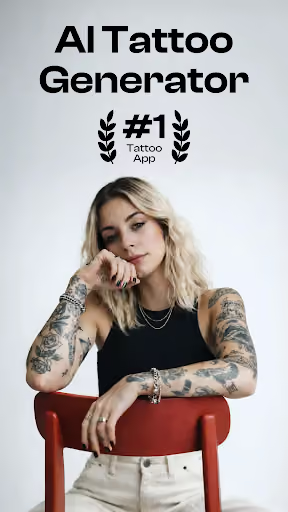
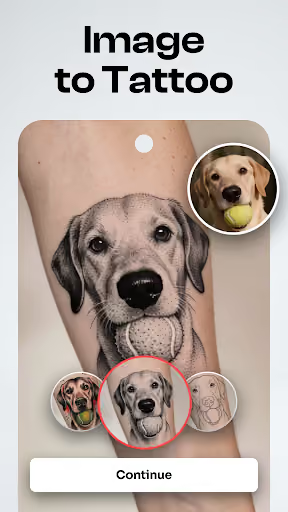
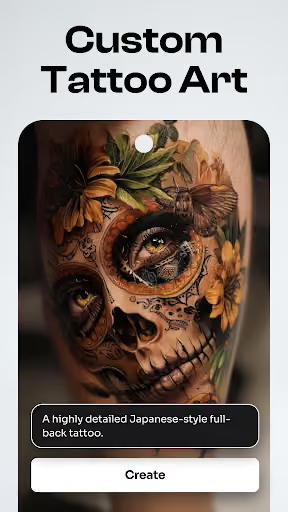
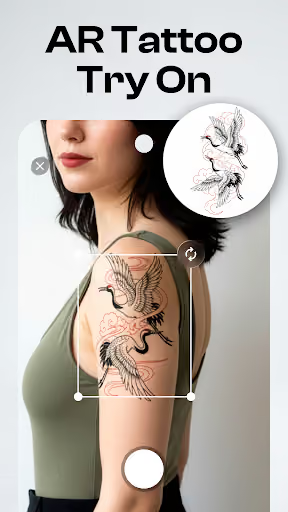
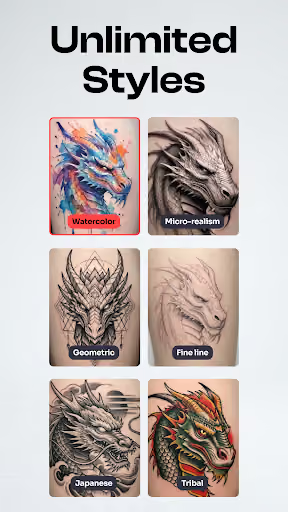
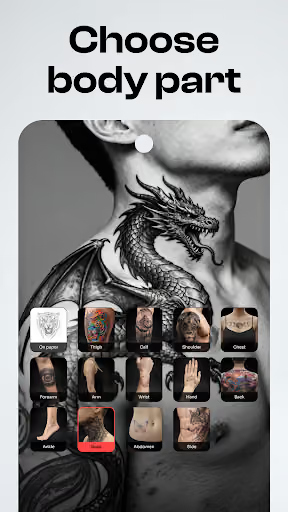
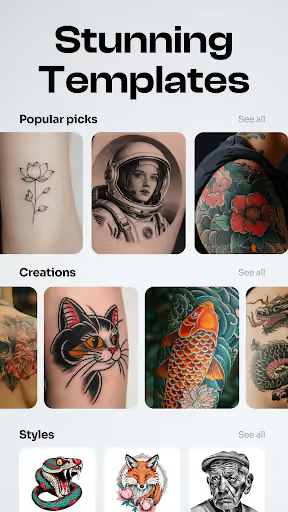
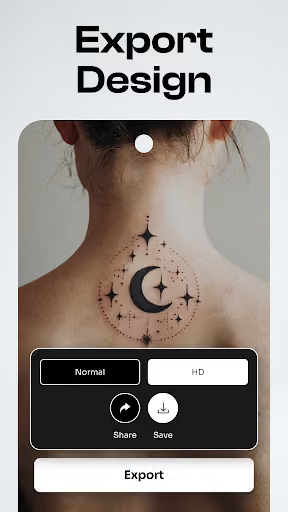
Tattooist: AI Tattoo Generator is a free Google Play app that turns prompts, photos, sketches, templates and placement choices into tattoo concepts, with body-part preview, AR try-on, saved creations and sharing. The reviews show a mismatch between that promise and the first session: users arrive from ads or the free listing, then hit subscriptions, ad gates, failed generations, or cancellation/refund frustration. That keeps the opening soft because a competitor can win on reliability and pricing clarity before matching every advanced preview feature.
What it does
Text-to-tattoo, image-to-tattoo, style exploration, body placement preview, AR try-on, templates, saved creations and export/share.
What changed
The user-visible failure is the commercial and onboarding flow: reviews complain about payment prompts, free trials, ads, locked outputs and errors before they can judge the product.
Why it is soft
The incumbent’s best features do not help if the first generated design fails, costs a credit, or creates billing distrust; a smaller app can compete by being predictable.
Strengths
The core magic can work
Several five-star reviews say the app translated a personal prompt into exactly the kind of tattoo image the user had imagined.
Tattoo-specific positioning
The listing is not a generic image generator; it speaks to placement, styles, reference images, stencils, artists, AR try-on and saved inspiration.
Demand is already proven
With 618,552 installs and a 4.1★ lifetime average, Tattooist has already shown that people search for and try this category.
Market gap
Trustless monetization
The most common complaint in this sample is not that tattoo generation is impossible; it is that users feel pushed into subscriptions, trials, ads or charges before they have seen enough value to trust the app.
Failed generations and wasted attempts
A recurring complaint is that creation returns an error, photo transform fails, or ad-watched/free attempts are consumed without producing a usable result.
Generic or weak prompt following
Reviewers ask for designs that actually follow detailed prompts, combine multiple ideas, handle simple fine-line requests, add color, and avoid bland or repeated outputs.
Missing tattoo workflows
A smaller but valuable ask is practical tattoo planning: cover-up suggestions from an existing tattoo photo, better body placement, and reliable image-to-tattoo transformation.
love this. wish it were free to look at ideas n pay if u find what u want done at tattoo shop. everything costs money or have to subscribe. i wish apps would give us consumers a break. i couldnt look at all my options bc they were locked so i wont use this app but i would love too. sorry
I give it 4 because unless u are an artist using it daily it's expensive. I initially downloaded because I thought I could upload a picture of my current neck tat and it would suggest a cover up based on user input. obviously it still does the suggestions without uploading a photo but that was the reason I got it. Anyway, does produce some nice detailed suggestions, usually 4 similar ones at a time. If you were sitting with a client you could come up with instant professional looking ideas.
- Give one real free generation before any paywall. The trust gap is created before value appears, so the competing flow should show at least one usable, export-watermarked result before asking for card details, a subscription, or an upgrade.
- Never spend a credit on an error. Failed generations, broken photo transforms and ad-watched attempts are a repeated pain point; a retry queue and automatic credit refund is a simple, visible way to be better.
- Build tattoo-specific controls before AR. Prompt mixing, fine-line/simple modes, color controls, cover-up intake and body placement mockups answer the concrete wants in the reviews faster than trying to clone every showcase feature.
Build complexity
Estimated, not derived: one developer, part-time, no funding and no paid acquisition. This v1 deliberately skips full AR and focuses on the review-driven wedge: trustworthy generation, photo/reference intake, placement mockups, clear pricing, and failure-safe credits.
| Workstream | Weeks |
|---|---|
| Prompt intake, styles, templates and onboarding | 1.5 |
| Image generation API, retries and credit handling | 2.0 |
| Reference photo, cover-up intake and body placement mockups | 2.0 |
| Gallery, export, sharing and watermarking | 1.0 |
| Billing, support copy, Play listing and QA | 1.5 |
| Total | 8 |
Expected revenue
Estimated, not derived: the model assumes a free first result, a $4.99 high-resolution design pack for casual users, and an optional $6.99/month Pro plan for artists or repeat planners. The month-12 funnel below uses blended paid-user revenue of about $7 in that month.
| Month 12, monthly | ||
|---|---|---|
| Installs | 4,800 | |
| Activated | 2,400 | 50% |
| Retained | 1,200 | 25% |
| Paid | 800 | 17% |
| Revenue | $5,600 |
Biggest challenges
Cold-start trust
The hardest non-technical hurdle is launching with no store trust against an incumbent that already shows 618,552 installs and a 4.1★ lifetime average. A solo builder has to make the listing, first-run flow and pricing feel safer before there are enough reviews to prove it.
Generation reliability
The product lives or dies on the first generated tattoo concept, but a part-time builder will likely depend on third-party image models that can return errors, generic art or poor prompt following. Retries, credit refunds and prompt-shaping are not polish; they are the main defense against recreating the same complaints.
Tattoo-specific judgment
Users are asking for cover-up help, body placement, fine-line simplicity, color control and mixed prompts, which require taste and tattoo-domain QA, not just an image-generator wrapper. Without artists, testers or support staff, the builder may get stuck validating whether outputs are actually useful before asking users to pay.
Billing is also a solo-operator risk: the opening is built on being more trustworthy than confusing trials, ads and cancellation flows, so refund handling and Play subscription clarity must be treated as product work rather than admin.
AI angle
The useful AI angle is not merely “generate tattoo images”; the incumbent already does that. The differentiator is a multimodal tattoo brief builder: take a user’s existing tattoo photo, desired symbols, placement and style, then have an AI critique the brief for tattoo constraints before image generation, which directly addresses cover-up, prompt-mixing and weak prompt-following complaints without requiring a human artist in the loop.
Conclusion
Build it. This is a good solo-builder wedge because the incumbent’s reviews are not just negative; they are specific about the replacement: show a real result first, do not charge on errors, make cancellation and pricing obvious, and improve tattoo-specific prompt control. The main risk is competition from generic AI tools, so the v1 must feel more like a tattoo planning assistant than another image-generator wrapper.
8 weeks
Time to v1
$4.99 / $6.99
Design pack plus optional Pro
$5,600
Revenue at month 12
618,552
Incumbent installs prove demand