Abstract
Mitu AI has a simple, viral promise: upload a photo, pick a prank template, and generate a shareable video. The review sample shows the fumble clearly: users say the first-run experience is buried under ads, then the actual generation step often asks for money or fails. A solo builder should not try to beat Mitu on model research; the opening is to ship the same prank-video loop with a clean first successful generation, transparent pricing, and quality gates before charging.
Background
Mitu AI: Prank Video Generator is a free-to-install Android app with a 4.3★ lifetime rating and 4,117,852 installs. The listing promises funny AI prank videos from photos, plus AI photo enhancement and object removal. The review stream does not complain that the idea is unwanted; it complains that ads, payment prompts, and failed outputs block the idea from being enjoyed.
What it does
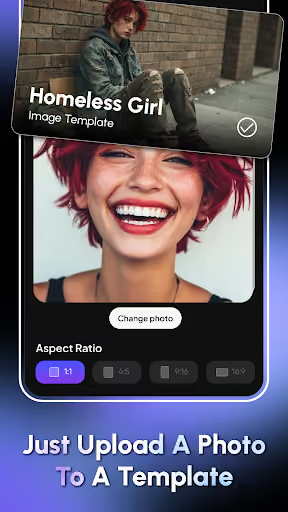
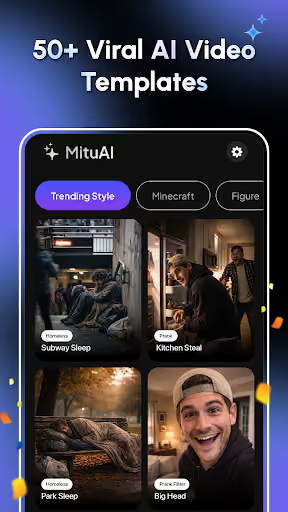
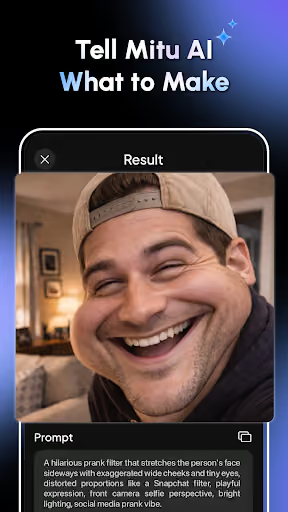
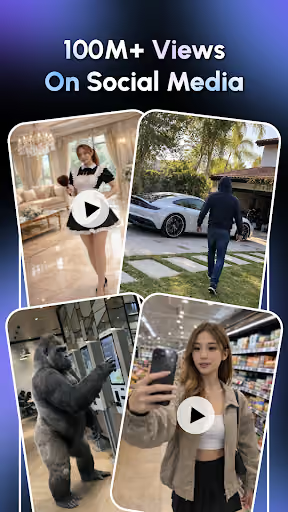
Users upload a photo, choose a playful template, generate a short AI prank video, then save or share it.
What changed
The fumble is the value exchange: reviews describe ads before basic setup, ads on nearly every tap, and paid prompts appearing when users try to generate.
Why it is soft
A rival does not need a bigger template catalog on day one. It needs to let users make one good video without feeling trapped, misled, or interrupted.
Strengths
Proven demand
More than 4.1M installs show that photo-to-prank-video is not a cold category; people are already searching for and trying this format.
Clear entertainment loop
The app’s core promise is easy to understand, social, and quick: one photo becomes a funny clip for friends or social media.
Some goodwill remains
A few reviewers still call the app good, creative, or promising, which means the backlash is not only about the concept. The experience around the concept is what is breaking trust.
Market gap
The complaints group into a few visible clusters from this review sample. This is not a measured survey, but the pattern is consistent enough to write a v1 spec around it.
Ads before value
The most common complaint is not ordinary ad dislike; reviewers say ads appear before language selection, after every tap, and before they can even try the generator.
Surprise payment at generation
A recurring complaint is that users installed a free app, watched ads, uploaded a photo, and then hit a premium or paid-video prompt when they expected to create something.
Bad or failed outputs
Another cluster says the result does not match the uploaded person, appears in the wrong language, reports a corrupted photo, or simply fails when generating.
Trust and safety discomfort
A smaller but serious cluster mentions bad ads, scam language, virus fears, and sketchy behavior. That creates room for a privacy-forward alternative with fewer ad-network surprises.
this is the worst app ever. why do U have to literally spend like 11€ just for one singular ai video also it's like a hive for ads. remove the pay to make all and remove the ads it's ruining the app..
The app is good and creative... Appreciate developer for his creativity and skill to use ai... BUT THERE IS IS SCOPE OF IMPROVEMENT IN ADS AND IMAGE PROCESSING 🥹
- Guarantee one successful free generation. The core complaint is that users cannot reach the promised prank video before ads or payment. Let the first clean output happen before any subscription ask.
- Remove interstitial ads from onboarding and creation. If monetization is needed, use subscription or credits, not ads on every tap. The market gap is speed and trust, so ad interruptions directly destroy the product.
- Refund failures automatically. When generation corrupts, misses the face, changes the person too much, or returns unusable text, the app should not consume a credit or trigger a paywall.
Build complexity
Estimated, not derived: one developer, part-time, no funding, and no paid acquisition. This assumes v1 uses existing AI generation APIs rather than training a video model from scratch.
| Workstream | Weeks |
|---|---|
| Template library + prompt design | 1.5 |
| Android upload, crop, preview, save/share | 2.0 |
| AI video API integration | 2.0 |
| Credits, billing, and transparent paywall | 1.5 |
| Failure handling, privacy, and moderation | 1.0 |
| QA, store listing, analytics | 2.0 |
| Total | 10 |
Expected revenue
Estimated, not derived: the funnel assumes organic discovery from a cleaner alternative to a 4.1M-install incumbent, no paid acquisition, three successful free generations, then a clear $4.99/month plan.
| Month 12, monthly | ||
|---|---|---|
| Installs | 12,000 | |
| Activated | 5,400 | 45% |
| Retained | 2,400 | 20% |
| Paid | 1,200 | $4.99/month |
| Revenue | $5,988 |
Biggest challenges
The hardest solo-builder problem is trust: a new app launches with no reviews against an incumbent that already has a 4.3★ lifetime rating and more than 4.1M installs, while users in this category are already suspicious of scams, bad ads, and fake-looking behavior. The second constraint is quality control without a team: if the AI video API returns identity drift, corrupted-photo errors, wrong-language text, or unusable renders, the builder has to absorb retries or refunds instead of pushing the failure onto users. A part-time builder also has to keep photo privacy, billing transparency, and ad-free onboarding clean enough to differentiate, because one sketchy permission prompt or surprise paywall would recreate the exact complaints that created the opportunity.
AI angle
The useful AI angle is quality control around generation, not just generation itself. A v1 can use AI preflight and postflight checks to detect missing faces, likely corrupted uploads, identity drift, unreadable text, or a failed render before charging a credit — directly addressing the review complaints about bad image processing and unusable outputs.
Before generation
Check that the uploaded photo has a usable face, enough resolution, and a template fit, then ask for a better photo before wasting the user’s free generation.
After generation
Score the output for obvious failure and automatically retry or refund the credit when the result is not shareable.
Conclusion
Build it. The opening is not a mysterious feature gap; users are spelling out a better bargain: fewer ads, no surprise paywall, and usable outputs. The risk is API cost and crowded AI novelty apps, but a clean first-run experience is enough differentiation for a focused solo v1.
10 weeks
Time to v1
$4.99/mo
After 3 successful free videos
$5,988
Revenue at month 12
Ads
The deciding complaint