Abstract
AppBlock is a screen-time and app/website blocker with 10.3M+ installs and a 4.68★ rating — reviewers credit it with real, measurable drops in phone use. Recent reviews describe premium features re-gated behind a new subscription for people who already bought a one-time unlock, account/login bugs blocking activation entirely, and blocks a determined user can trivially bypass.
Background
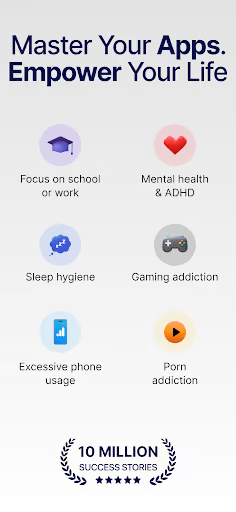
With over 10 million installs and reviewers who credit it with cutting hours off their daily screen time, AppBlock - Block Apps & Sites is a genuinely effective focus tool undercut by trust and reliability gaps.
What it does
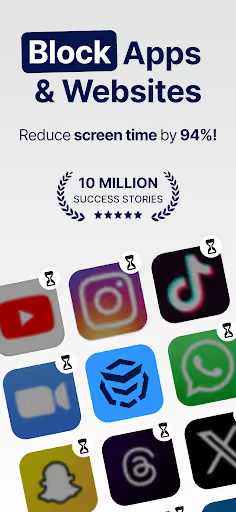
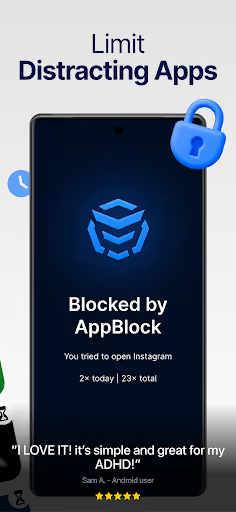
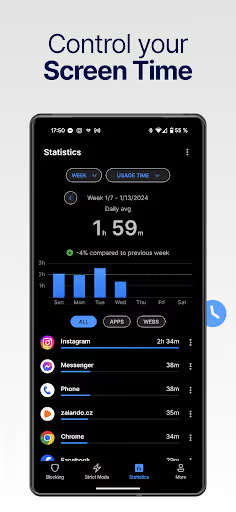
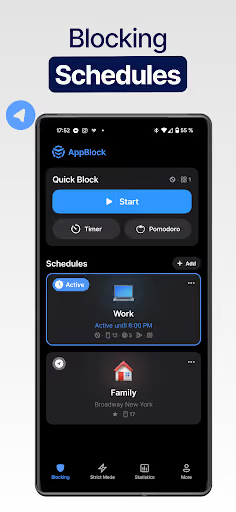
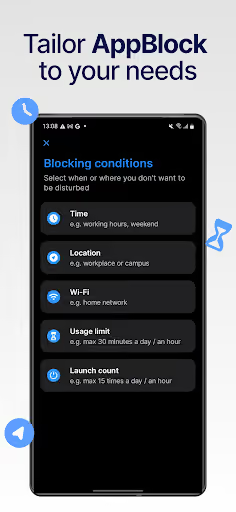
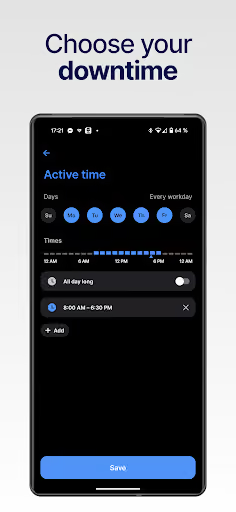
Blocks selected apps, websites, and keywords on a schedule to reduce screen time and doomscrolling, with per-hour limits and focus sessions.
What changed
Reviewers who bought a one-time unlock describe core functionality like the allow-list later moved behind a new subscription, on top of account/login bugs that block premium activation and a block that's simple to defeat via a timezone change or another app.
Why it is soft
Multiple reviewers, including the single most-upvoted one in this batch, report real, specific drops in daily screen time and are asking for more features, not a different app — the complaints are about trust and robustness, not whether blocking works.
Strengths
This app has the clearest evidence of actually working in the whole batch — reviewers cite specific, measured screen-time drops, not vague satisfaction.
Demonstrated effectiveness
Reviewers report concrete screen-time reductions (e.g. 7-8 hours down to 4-5) attributable directly to the app, and call it more effective than built-in digital-wellbeing tools.
10.3M+ installs, 4.68★
A large, highly-rated base shows strong existing demand for screen-time blocking beyond what any single platform's built-in tool offers.
it works so well omggg, my screentime before this app was like 8 or 7 hours even w digital welbeing, but with this app, my screentime has went down to 5 or 4 hours daily even for a few days, it rlly helps and it can also block websites and keywords, helps so good and well, absolutely recommended especially for ppl who doomscroll alot
Market gap
The recurring complaints, grouped into named clusters, most-common first:
Billing moves the goalposts
The dominant cluster: features early one-time-purchase buyers already paid for get moved behind a new subscription, alongside general trial and premium-pricing friction.
Account/activation bugs
Login and account creation that times out and blocks premium features from ever activating after payment, plus a scheduling bug that blocked all notifications instead of just the targeted apps.
Blocking is trivially bypassable
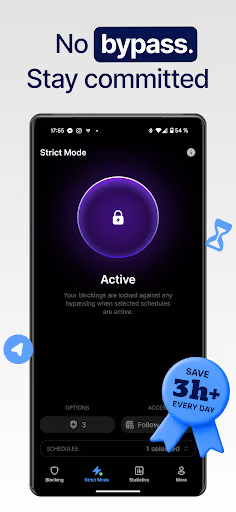
A schedule can be defeated with a simple phone-settings timezone change, and third-party "unlock" utilities can disable the block entirely — undermining the app's one job.
A good app as a normal one-off purchase but core functionality (eg allow-list) is denied to early supporters who bought it and is only turned on for subscribers. Not cool. Docked stars for ethics.
I also figured out a way to by pass everything. I can just go into my settings and change the timezone im in to unlock certain schedules. I dont like the idea of blocking all of my phones settings that have nothing to do with my blocked apps.
- Grandfather what one-time buyers already own. Never move a feature an early supporter already paid for behind a new subscription.
- Make payment-to-premium activation bulletproof. A user who paid but can't log in isn't an edge case — it's the core promise failing at the worst possible moment.
- Harden against basic circumvention before adding features. A timezone-change bypass documented in the single most-upvoted review here undermines the entire product.
Build complexity
Estimated, not derived: one developer, part-time, no funding and no paid acquisition, built on Android's usage-access/accessibility APIs rather than custom infrastructure.
| Workstream | Weeks |
|---|---|
| Core blocking engine (apps, websites, keywords) | 2.5 |
| Scheduling + focus sessions | 1.5 |
| Anti-bypass hardening (settings/uninstall protection) | 1.5 |
| Billing + reliable account/login activation | 1.5 |
| Total | 7.0 |
Expected revenue
Assumes a $2.99/month subscription, reached without paid acquisition inside a category with a 10M-install incumbent already proving people pay for this.
| Month 12, monthly | ||
|---|---|---|
| Installs | 35,000 | |
| Activated | 17,500 | 50% |
| Retained 30d | 7,000 | 20% |
| Paid | 1,400 | 4% |
| Revenue | $4,200 |
Biggest challenges
Not the initial build — anti-circumvention is an ongoing arms race, and the Android APIs this category depends on face increasing platform scrutiny.
Bypass-proofing never finishes
Motivated users will keep finding new workarounds (as the top-upvoted review here already did) — this demands continuous hardening, not a one-time fix.
Platform API risk
Usage-access, accessibility, and device-admin permissions this category depends on are increasingly restricted by Android policy — a solo builder has to track and adapt to changes that could break the core feature.
AI angle
AI enables a capability the incumbent's rule-based blocking doesn't offer at all: real behavioral friction at the moment someone tries to bypass a block, not just a pass/fail timer.
Without AI
A simple scheduled block a user can defeat once and for all with a settings change or a third-party unlock app, as documented above.
With AI
A lightweight on-device check requires a short written reason before granting temporary access, and flags bypass-pattern signals (rapid timezone/settings changes near a scheduled block) to reassert it — a behavioral speed bump current rule-based blocking can't provide.
Conclusion
Build it. This is the clearest evidence of a working product in this batch — the incumbent is losing trust to billing bait-and-switch and a documented bypass, not to the idea of app blocking.
7 weeks
Time to v1
$2.99/mo
Features never re-gated for early buyers
$4,200
Revenue at month 12
262
Upvotes on a review documenting a working bypass