Abstract
U-Haul’s app is free, has 7,248,534 installs, and still sits on a 3.0★ lifetime rating, but recent reviews describe a critical workflow failure: users are being pushed into mobile pickup, return, ID, photo, GPS and chat flows that repeatedly break on moving day. The opportunity is not to clone U-Haul’s fleet; it is to build a reliable self-service pickup and return layer that smaller rental operators can trust, with web fallback, pre-verification and resilient photo upload. Build it if you stay narrow; skip it if you think you are building a full U-Haul replacement.
Background
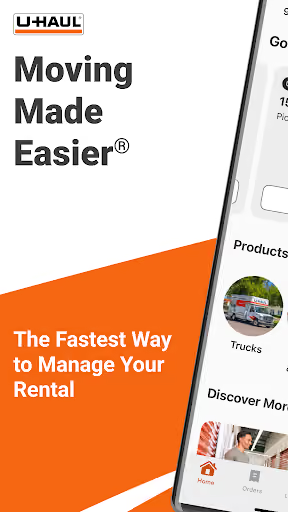
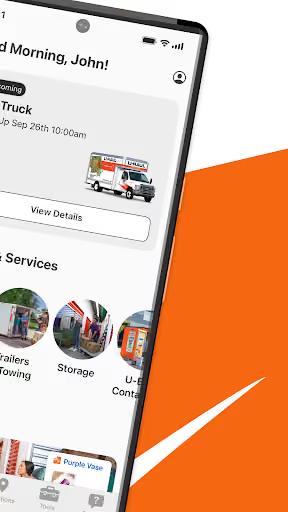
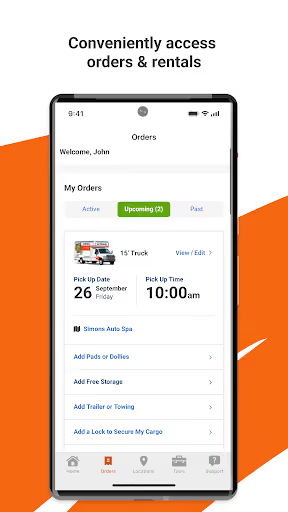
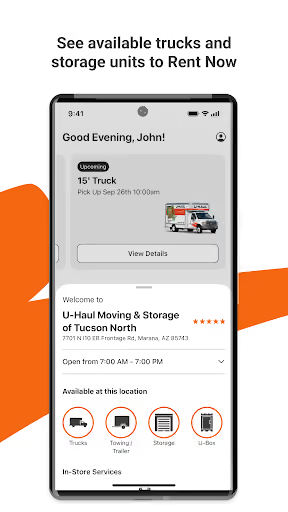
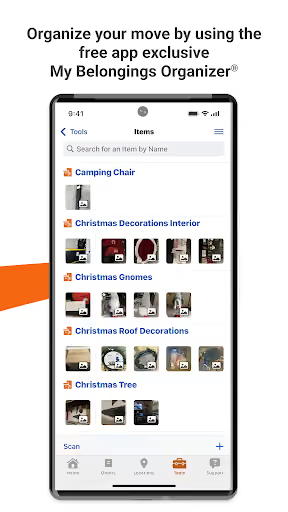
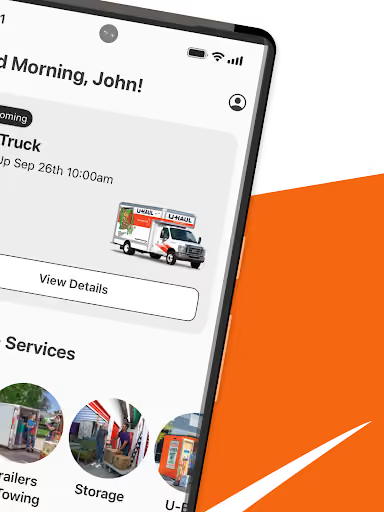
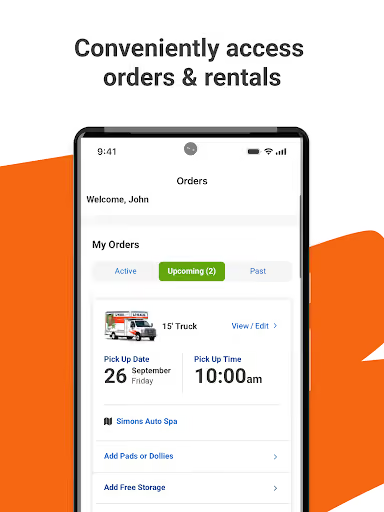
U-Haul is the mobile front door for quotes, reservations, order management, rental pickup and return, live chat, support resources and location search. The store promise is convenience: pick up and return a rental with a few taps, skip the counter, manage orders, and find locations from a phone.
What it does
It combines booking, account sign-in, instant quotes, order history, pickup, return, live chat, FAQs and location search into one free Android app.
What changed
The reviews show users being forced into the app for after-hours pickup, return, account access and reservation links, while those same flows crash, loop, lose photos, reject GPS, or fail sign-in.
Why it is soft
The broken part is a workflow, not the truck network. A solo builder cannot recreate U-Haul’s inventory, but can build the dependable pickup-and-return software that these reviews keep asking U-Haul to provide.
Strengths
This is not a weak incumbent. U-Haul still has a huge install base, a broad set of app features, local locations, support channels, and reviewers who separately praise staff, customer service, rates, and the basic convenience of having reservations, check-in and rental management in one place.
Real demand
People are not rejecting mobile rental management as a concept. Several complaints explicitly say the idea is convenient, but the execution fails when they need the truck.
Service still works
Positive and mixed reviews mention helpful employees, good local establishments, straightforward reservations, and the ability to use the website when the app fails.
Habit and trust to overcome
A new entrant must beat more than software: U-Haul has brand recognition, locations, and 7,248,534 installs. The wedge has to be reliability, not breadth.
Market gap
The recurring complaints group into a clear product spec: users want the same self-service rental flow, but with fewer forced dead ends and more ways to finish the job when the app misbehaves.
Pickup and return collapse
The most common complaint is the app failing at the exact moment it matters: check-in, return, photos, odometer and fuel uploads, GPS confirmation, and final submission loop, freeze or restart.
Sign-in and verification fail
A recurring cluster says users cannot create accounts, receive codes, log in, verify licenses, or get through required identity checks, even when the rental is already scheduled.
Forced app, weak fallback
Users repeatedly object to being forced into the Android app by text links, after-hours return rules, or counter processes, then being left with phone holds, chat issues, or no working web alternative.
Reservation truth is shaky
A smaller but important cluster reports unavailable equipment, changed pickup or drop-off locations, wrong location data, closed locations, bad gate-code sequencing, and unclear confirmation after a request.
Stop forcing people to use the app when it doesn't work!!! At least provide a web version! I made a reservation, and I got a text. The link redirects to the play store, even though I have the app. The app won't let me create an account either. I literally don't know how to access my reservation and the truck is reserved for tomorrow morning!
This app is terrible. You guys need to fix this ASAP. I had to schedule a 2 hour move in window to move into a new apartment and missed the window because the app was not scanning my drivers license. It kept telling me to re-scan the back of my DL over and over again and was not allowing me access. This set my move back by an hour and completely ruined my move in today. You need to set it up so that ID is verified before hand upon booking. Unacceptable.
- Make it web-first, with Android as a wrapper. The forced-app cluster is the opening: every pickup, return and reservation link should work in a browser, in the app, and from a simple SMS fallback, so a broken install never blocks a rental.
- Pre-verify identity before moving day. The ID and account complaints are painful because they happen in the parking lot. Let renters scan license, add payment, confirm contact details and resolve edge cases when the reservation is made.
- Treat photos and GPS as unreliable inputs. The return-flow complaints call for offline drafts, retryable uploads, visible progress, manual location override, and a final receipt that proves the return was completed.
Build complexity
Estimate only: one developer, part-time, no funding, no paid acquisition. This assumes a narrow v1 for independent rental operators: web-first renter flow, Android shell, operator console, photo/GPS return records, pre-verification, and manual fallback—not a full rental marketplace or fleet business.
| Workstream | Weeks |
|---|---|
| Renter web flow + Android wrapper | 2 |
| Pickup/return checklist, camera, GPS and upload retry | 3 |
| Account, contact, license and payment pre-check | 2 |
| Operator console, confirmations and manual override | 2 |
| QA, Play listing, billing and onboarding docs | 1 |
| Total | 10 |
Expected revenue
Estimate only: free for renters, $80/location/month paid by rental operators that want self-service pickup and return without building their own app. The month-12 funnel below assumes organic outreach and search, not paid acquisition.
| Month 12, monthly | ||
|---|---|---|
| Installs | 1,200 | operator and staff installs |
| Activated | 240 | created a fleet workspace |
| Retained | 110 | still active after trial |
| Paid | 75 | $80/location/month |
| Revenue | $6,000 | monthly recurring revenue |
Biggest challenges
Operator trust
A solo builder has to sell reliability to rental operators with no brand, no fleet, and no store-review history, while the incumbent already has a huge install base and local-location habit.
Moving-day QA burden
The app must survive the exact edge cases users complain about: weak reception, GPS mismatch, photo upload failure, login loops, after-hours lots, and renters switching between screens under time pressure.
Liability and support
Pickup and return records affect charges, damage disputes, license checks, fuel, odometer and access to the vehicle, so a part-time builder can get stuck providing audit trails, manual overrides and urgent support without a team.
AI angle
Vision and OCR models can automate two things this report prices as manual build effort: reading a driver's license and verifying odometer/fuel/return photos actually show what they claim — a real capability edge over the incumbent's brittle scan-and-freeze flow.
Without AI
A rules-based OCR/photo pipeline needs hand-tuned parsers per document type and still fails on glare, angle or wear — close to what keeps failing at check-in today.
With AI
A vision-model API reads the license and checks the return photos in one call, with a confidence score that asks for a retake instead of freezing — folds into the existing pickup/return checklist estimate rather than adding a research phase.
Conclusion
Build it. Do not try to out-U-Haul U-Haul; build the narrow software layer its reviews are begging for: reliable self-service pickup and return, web fallback, pre-verification, and proof that photos, GPS and return status actually saved.
10 weeks
Time to v1
$80/location/month
Price and model
$6,000
Revenue at month 12
Forced app
The deciding fact