Abstract
The gap is real: users complain that a basic SMS app is now crowded with ads, confusing defaults, phantom notifications, and payment friction. But this is a hard solo-builder category because an SMS replacement asks for sensitive permissions, must become the default messaging app, and has to earn trust before users will hand over their inbox.
Background
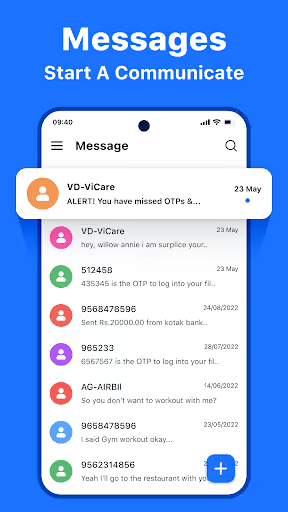
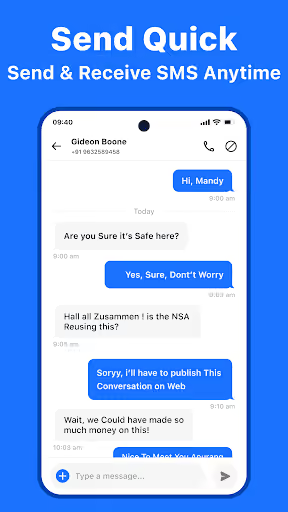
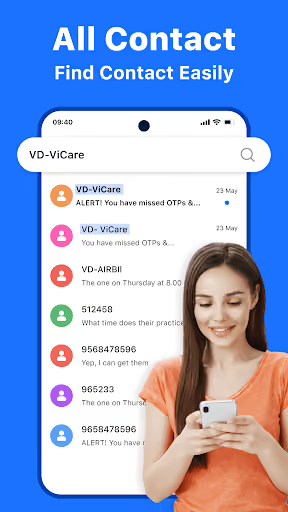
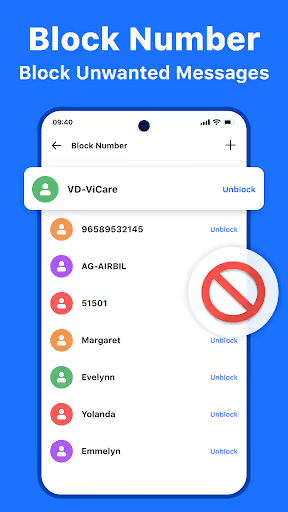
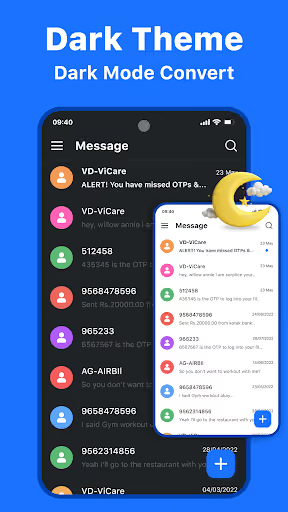
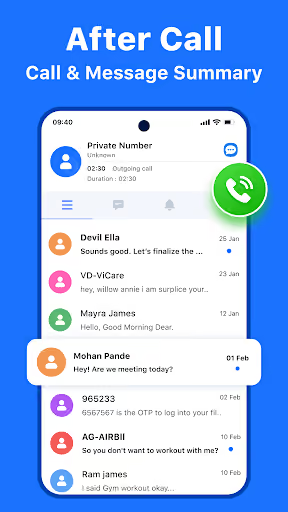
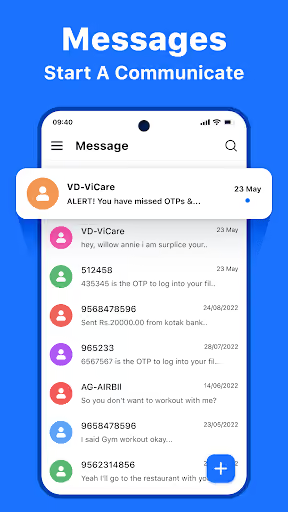
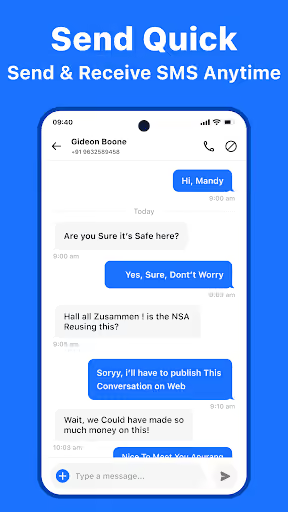
Messenger : Text Messages is a free Android SMS app with a 4.1★ lifetime rating and 2,771,993 installs as of 2026-08-03. The listing promises offline access, themes, blocking, archive, search, multiple languages, and an after-call summary.
What it does
A replacement SMS inbox for sending, receiving, searching, archiving, blocking, deleting, and styling text conversations.
What changed
Recent reviewers repeatedly describe ads inside the core texting flow, payment prompts, and a version that feels worse than the older ad-free experience.
Why it is soft
SMS is a utility: users want boring, fast, private, and legible. Ads, confusing setup, and permission anxiety create room for a calmer alternative.
Strengths
This is not a no-demand niche. The incumbent has millions of installs, a still-positive lifetime average, and some users still praise it as fast or useful for connecting with family and friends. A competitor would be borrowing a familiar product shape, not inventing behavior from zero.
Utility habit
Texting is opened many times a day, so a reliable default app can become sticky if it does not annoy users.
Known feature set
Inbox, search, themes, blocking, archive, delete, notifications, drafts, and contact names are clear enough to spec from user complaints.
Incumbent distribution
The 2,771,993-install footprint proves Android users still install third-party SMS utilities.
Market gap
The most common complaint is not missing novelty; it is that a basic communication tool feels noisy, intrusive, and harder to trust. The review themes cluster into four practical product gaps.
Ads blocking texts
Reviewers describe bottom banners, video popups, ads before reading messages, and accidental install links interfering with normal phone use.
Broken messaging basics
Several users report delayed send/receive, no reply support, unread-message notifications with nothing new, and an update after which the app stopped responding.
Confusing setup and UI
People complain about being forced to make it default, tiny fonts, similar icons, messy screens, hard deletion, and drafts they cannot find.
Trust and billing anxiety
A few reviews mention file permissions, exposed account details, malware-like behavior, a useless AI support bot, and a paid fee that did not remove payment prompts.
This app is terrible the old version without ads was so much better. The font is too small. I have downloaded WhatsApp which does not have annoying ads. I just purchased this android and am seriously thinking about going back to apple if I hear their messenger is better. Sad that you pay good money for a phone and then they want to charge you more for ad free service that should be free without ads.
I have paid your ridiculously high fee, the transaction completed successfully and still I am forced to deal with your app demanding payment! I am disgusted and dissatisfied! Fix the bloody thing! 😠
This app has way too many ads. I cannot even read one, go back to the inbox to read a second text, and open the second text without waiting to 'X' out of ads. I am un-installing now.
- No ads in the inbox, ever. The wedge is calm utility: do not monetize the exact moment someone is trying to read a text.
- Build for older, annoyed Android users. Large font controls, clear icon colors, obvious delete/archive, visible drafts, and a one-screen default-app setup would directly answer the confusion cluster.
- Use a simple one-time unlock. A free basic app plus a transparent $4.99 Pro unlock for themes and convenience features fits the ad backlash better than another subscription or aggressive prompt.
Build complexity
Estimated, not derived: one developer, part-time, no funding, and no paid acquisition. A basic SMS messenger is straightforward in UI shape, but Android default-SMS behavior, MMS edge cases, device fragmentation, and Play permission review make it heavier than a normal CRUD app.
| Workstream | Weeks |
|---|---|
| Default SMS role, permissions, and inbox import | 2.0 |
| SMS send/receive, drafts, delivery states, notifications | 2.5 |
| MMS, group threads, contact names, attachments | 3.0 |
| Inbox UX: delete, archive, block, search, themes, font size | 2.0 |
| One-time Pro unlock, settings, privacy disclosures | 1.0 |
| Device testing, Play policy review, listing | 2.5 |
| Support, crash reporting, release hardening | 1.0 |
| Total | 14.0 |
Expected revenue
Estimated, not derived: no paid acquisition, a free core app, no ads, and a $4.99 one-time Pro unlock for themes, extra customization, and power-user conveniences. The month-12 funnel is intentionally modest because SMS trust is hard to earn and the category is crowded.
| Month 12, monthly | ||
|---|---|---|
| Installs | 2,000 | |
| Activated as default SMS | 1,100 | 55% |
| Still on at 30d | 600 | 30% |
| Paid one-time unlocks | 340 | 17% |
| Estimated revenue | $1,200 | after store fees |
Biggest challenges
The hardest part is not drawing a prettier inbox; it is convincing people to make an unknown app their default SMS handler while satisfying Google Play’s sensitive-permission rules and surviving the messy realities of Android devices, carriers, MMS, and notifications.
Cold-start trust
A zero-review app asking to read and send SMS starts at a trust deficit, especially when reviewers already fear malware-like behavior.
Play review risk
SMS permissions are sensitive; a solo developer must keep the scope narrow and the privacy disclosures clean.
Protocol edge cases
MMS, group chats, dual SIM, delivery reports, contact sync, and notification quirks can turn a small app into a support burden.
AI angle
There is no strong AI angle here. The user pain is ads, reliability, default-app friction, legibility, and trust; AI does not materially reduce Android SMS permission work or carrier/device testing. Adding AI summaries or chat features would likely worsen the privacy story rather than close the actual gap.
Useful AI internally
AI can help draft support replies, translate listing copy, and categorize feedback, but that is workflow assistance, not a product moat.
Avoid AI in v1
The winning promise is local, boring, ad-free texting. Do not send message contents to a model unless users explicitly ask for that later.
Conclusion
Skip it. The market gap is obvious, but the solo-builder risk/reward is weak: a sensitive default SMS app takes about 14 weeks to reach a credible v1, faces trust and Play-policy friction, and realistically lands around $1,200/month without paid acquisition.
14 weeks
Time to v1
$4.99
One-time Pro unlock
$1,200
Revenue at month 12
2,771,993
Installs prove demand, not easy entry