Abstract
Polymarket’s Android reviews show a real product failure: users complain about waitlists, missing login paths, slow deposits and withdrawals, glitches during trades, weak support, and missing bet types. The market gap is large because the complaints are operational and trust-related, not just cosmetic. But a true trading competitor is not a solo-builder app: regulated trading, payments, custody, KYC, liquidity, and support are the hard parts. The buildable wedge is a paid companion for alerts, market comparison, education, watchlists, and safer decision workflows—not a full exchange.

Background
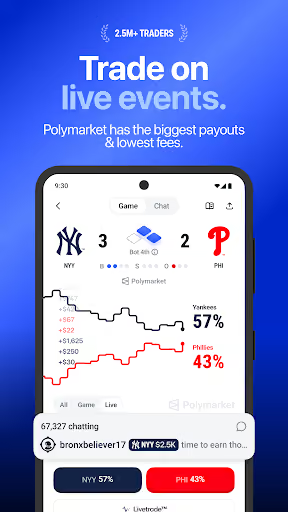
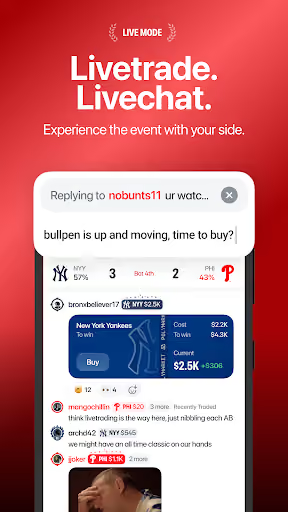
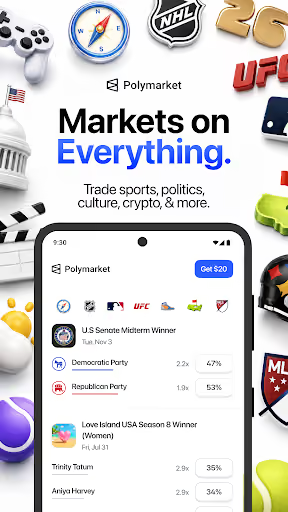
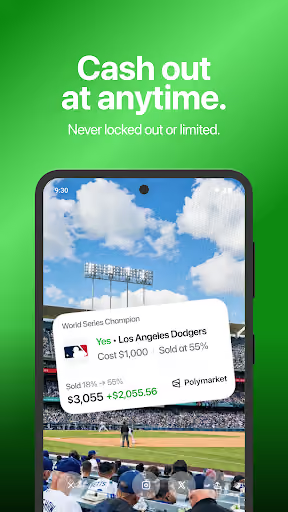
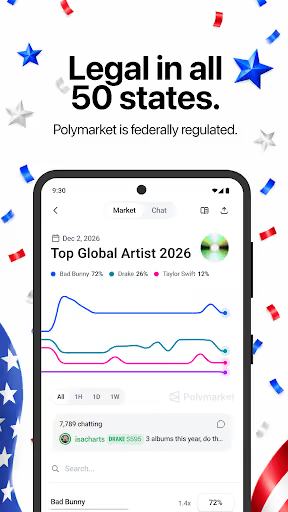
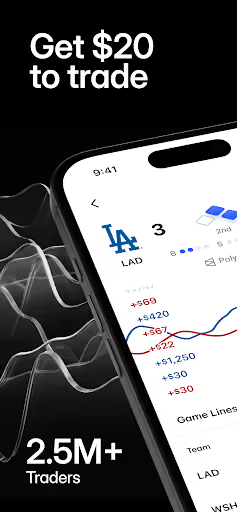
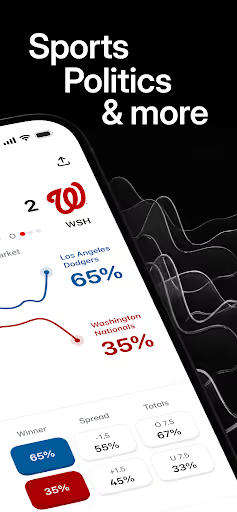
Polymarket is a free Android app for trading prediction markets across sports, politics, news, tech, culture, and other events. The listing says it is CFTC regulated in the United States, has over 30 million users globally, and has seen over $27 billion traded globally; the Play Store shows 873,057 installs and a 3.6★ lifetime rating. The reviews show the Android experience failing at the moments that matter most: getting in, funding, trading, cashing out, and getting help.
What it does
Lets users buy and sell shares tied to real-world outcomes, where prices are presented as probabilities and payouts depend on whether the event resolves correctly.
What changed
Early reviews are dominated by Android waitlist and login problems; later reviews shift heavily toward deposits, withdrawals, trading glitches, support, and missing product features.
Why it is soft
Prediction trading is trust-sensitive. If users believe deposits are slow, trades glitch, or support is unreachable, they look for alternatives even if the core market brand is strong.
Strengths
This is not a weak incumbent. Polymarket has a recognizable category position, a free app, a large Android install count, and a listing that emphasizes regulation, liquidity, low fees, and global scale. A few reviewers still describe the product as entertaining or compare it seriously against alternatives, which means the underlying demand for event trading is real; the opening is in execution, not in proving the category exists.
Market gap
Funds are not usable when the event matters
The most common complaint in the later reviews is that debit deposits, withdrawals, or winnings take days, even when users say money left their bank immediately. For time-sensitive sports and live markets, delayed funding destroys the use case.
Android access and login feel broken
A recurring early cluster says Android users are stuck on a waitlist, cannot enter invite codes, cannot log into existing accounts, or are sent back to the waitlist after being told they are in.
Trading UX fails under pressure
Reviewers describe freezes, timeouts, crashes, slippage errors, stale prices, and being unable to sell or cash out during fast-moving markets. That is exactly when a trading app must be most reliable.
Missing features and human support
A smaller but concrete ask is for parlay or combo bets, faster order editing, clearer market rules, and access to a real support person when money or identity verification is stuck.
NO OPTION FOR PARLAY (multiplie) BETS... IF THIS POLYMARKET IS GOING TO EVEN COMPETE WITH KALSHI; WE NEED ACCESS TO PARLAY BETS; MORE THAN JUST PLACING ONE BET AT TIME; HAVING NO OPTION TO PLACE MULTIPLE/PARLAY BETS.
inferior to Kalshi in every way. my deposit takes 4 business days. I cant quickly edit existing buy/sell orders. app is glitchy. @polymarket hire some Kalshi developers to fix your terrible mobile app if you want to be taken seriously
- Do not build a regulated exchange clone. The complaints are attractive, but the real product includes money movement, identity checks, rules, liquidity, dispute handling, and support. That is too much operational surface for one unfunded builder.
- Build the Android-first companion layer instead. Ship watchlists, live odds comparison, market reminders, deposit-timing warnings, rule summaries, position journaling, and alerts for markets users care about before they commit funds elsewhere.
- Make trust the differentiator. The copy should promise no custody, no deposits, no locked funds, no fake waitlist, clear education, and a support email answered by a human; that directly answers the review clusters without pretending to be an exchange.
Build complexity
Estimated, not derived: one developer, part-time, no funding, and no paid acquisition. This estimate is for a prediction-market companion app, not a licensed trading venue; the latter is outside a solo-builder scope.
| Workstream | Weeks |
|---|---|
| Market watchlists, search, and saved events | 3.0 |
| Live odds display, alerts, and notification rules | 4.0 |
| Position journal, rule notes, and risk checklist | 3.0 |
| Android polish, onboarding, and trust-focused UX | 2.5 |
| Subscription billing, support flow, and Play launch | 2.0 |
| Buffer for API changes, QA, and review fixes | 1.5 |
| Total | 16.0 |
Expected revenue
Estimated, not derived: price the companion at $12/month after a free trial, aimed at users who already trade or intend to trade elsewhere but want alerts, comparison, journaling, and cleaner market workflows. This is a narrow paid-tool funnel, not a mass-market exchange funnel.
| Month 12, monthly | ||
|---|---|---|
| Installs | 3,000 | |
| Activated | 1,200 | 40% |
| Retained | 500 | 17% |
| Paid | 150 | 5% |
| Revenue | $1,800 | $12/month |
Biggest challenges
Reliable data dependency
A companion lives or dies on timely odds, market rules, and alert delivery; a solo builder can avoid custody, but still has to keep data integrations stable when the underlying trading venues change.
Cold-start trust
Users are already angry about money, verification, glitches, and support, so a new app with no reputation has to look safer than the incumbent without overpromising anything it cannot control.
Regulatory boundary
The product must stay clearly on the education, journaling, comparison, and alerts side of the line; if it starts to look like a trading or betting app, Play review and compliance risk become too much for one part-time builder.
AI angle
Market rules and resolution criteria are usually long, inconsistent legal text; a language model can normalize them into a plain-language summary per market, cheaper than a person maintaining rule notes by hand — a modest edge that doesn't change the shape of the opportunity.
Without AI
Rule notes and risk checklists get written and updated manually per market, which doesn't scale past a handful of tracked events.
With AI
A summarization pass turns each market's raw rules into the plain-language notes the companion promises — inside the existing position-journal workstream, not new scope. The verdict below still turns on the regulated-money blocker, not this.
Conclusion
Skip it. Skip the full competitor exchange: the reviews reveal demand, but also prove that the hard parts are regulated money movement, support, liquidity, and reliability under live trading pressure. Build only the companion wedge if you want the opportunity without custody risk.
16 weeks
Time to v1
$12/month
Companion subscription
$1,800
Revenue at month 12
Regulated money
The fact that decided it