Abstract
Bloons TD 6 sits at a 4.8★ lifetime average on 6.9M installs, and the complaints in its reviews are the ordinary noise of a live-service game — microtransaction fatigue, occasional lag, an account-recovery gripe here and there — not a single fumbled feature a competitor could rally around. Ninja Kiwi ships several content updates a year to a decade-old franchise; a solo builder has neither the tower-defense design pedigree nor the years of asset production this category actually competes on. Skip it.
Background
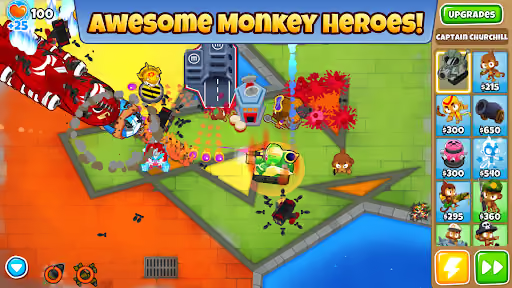
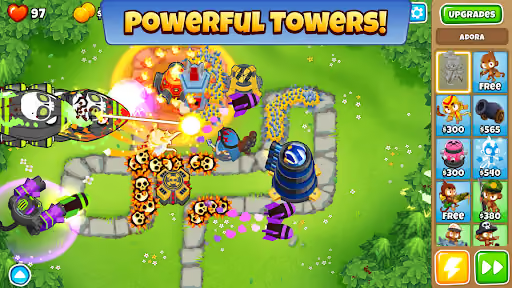
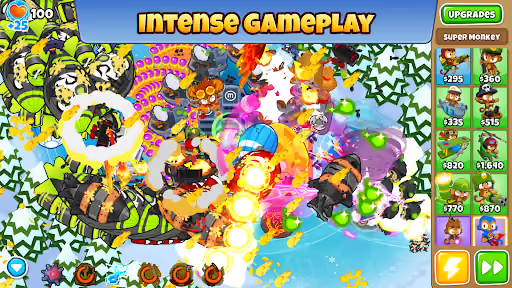
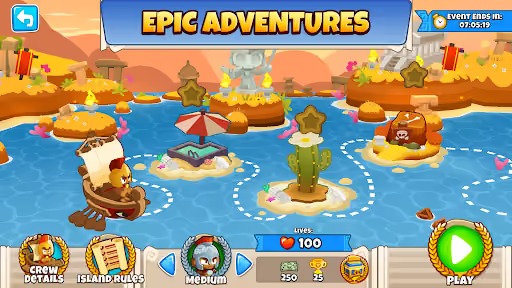
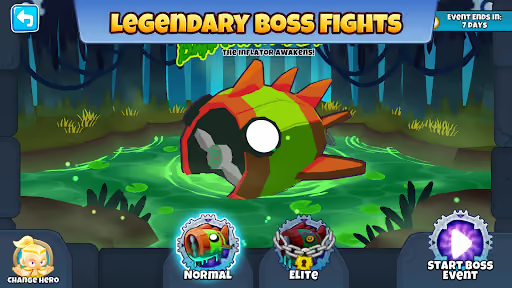
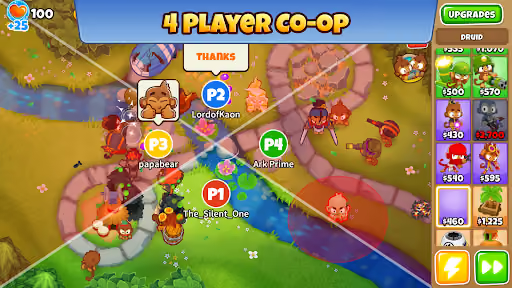
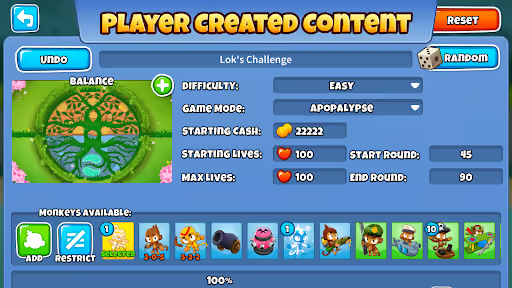
Since 2018, Bloons TD 6 has been the mobile tower-defense standard: 25 towers with three upgrade paths each, dozens of maps, boss events, and regular free content drops from a studio (Ninja Kiwi) that has shipped this franchise for over a decade.
What it does
A premium ($6.99) tower-defense game with cosmetic and progression-boosting in-app purchases layered on top of the upfront price.
What changed
Nothing broke. Reviewers gripe about grindy XP, DLC paywalls (Rogue/Frontier Legends), and lag on older devices, but the 4.8★ average hasn't moved.
Why it is not soft
The complaints are scattered across a dozen unrelated axes rather than clustering on one fixable gap, and the moat — 25 towers, 17 heroes, years of maps — is a content-production problem, not a code problem.
Strengths
The game is actively maintained, well-optimized enough to run offline, and beloved enough that reviewers routinely say they bought it twice across platforms. That kind of goodwill, built over a decade of shipped content, is exactly what a solo builder starts with zero of.
Market gap
The loudest recurring theme is monetization fatigue on a game people already paid for, but it never rises above a background grumble — most 1-star reviews are about crashes or lost accounts, not the paywalls.
DLC fatigue
A minority feel Rogue/Frontier Legends should have been free like earlier expansions.
Grind & lag
XP grind and device-dependent lag show up often but aren't tied to a specific broken feature.
just bad now was good a few years ago but now its just trash full of micro transactions every 3 seconds like actually more then gotcha games
- Don't clone the whole game. A tower-defense competitor needs 25+ towers and dozens of maps just to reach parity — that's a team's worth of content, not a solo sprint.
- If anything, target a sub-genre. A single-map, single-mechanic tower-defense toy could be a weekend project, but it competes on novelty, not on Bloons' complaints.
- Watch the DLC-fatigue cluster, not the crash reports. It's the only complaint that's about the business model rather than a bug, but it's too thin to build a company on.
Build complexity
Estimated for one developer, part-time, no funding. Reaching even a stripped-down parity with Bloons TD 6's tower variety and map count is a content-production timeline, not an engineering one.
| Workstream | Weeks |
|---|---|
| Core tower-defense engine | 8 |
| 12-15 towers, minimal parity | 20 |
| 6-8 maps + balancing | 8 |
| Store listing + IAP plumbing | 4 |
| Total | 40 |
Expected revenue
Assumes a $4.99 one-time price and a launch into a genre with no complaint-driven demand pulling installs toward a new entrant, so growth depends entirely on generic app-store discovery.
| Month 12, monthly | ||
|---|---|---|
| Installs | 1,800 | |
| Paid | 80 | 4.4% |
| Revenue | $400 |
Biggest challenges
Content velocity: Ninja Kiwi ships multiple tower/map updates a year with a studio behind it. A solo builder can't sustain that cadence, and tower-defense players notice when new content stops.
AI angle
No genuine angle. Tower and map design is a game-design problem, not a content-generation-at-scale problem AI meaningfully accelerates, and balancing 25+ interacting towers still needs human playtesting.
Conclusion
Skip it. A beloved, actively-updated AAA game with diffuse, non-fixable complaints and a content moat measured in years, not weeks.
40 weeks
Time to thin parity
$4.99
One-time, estimate
$400
Revenue at month 12
4.8★
Lifetime rating, unmoved