Abstract
MuseScore is a sheet-music reader and practice app claiming 3M+ free scores, with 11.6M+ installs. Recent reviews describe a billing flow that converts a one-time score purchase into a recurring subscription, charges renewals twice, and backs it all with a chatbot-only support line that can't process a refund — a trust problem sitting on top of a genuinely liked product.

Background
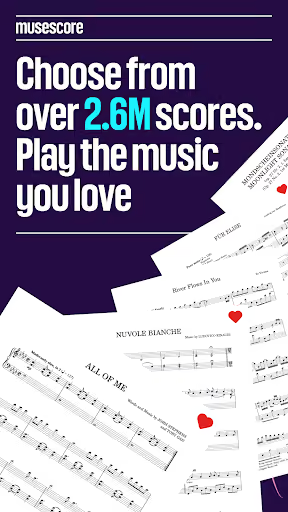
Built on a large catalog of scores across piano, guitar, and orchestral instruments, MuseScore: Music Chords & Tabs pairs a real notation library with a billing flow reviewers describe as deceptive.
What it does
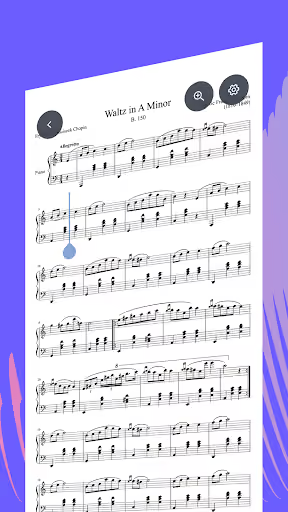
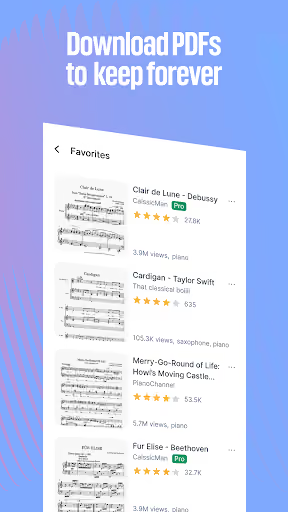
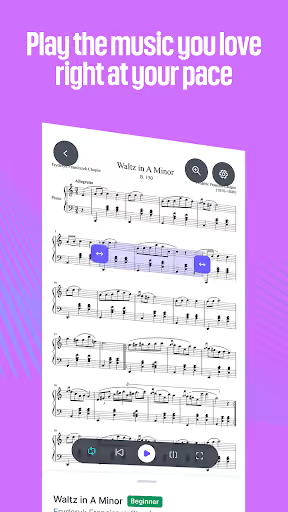
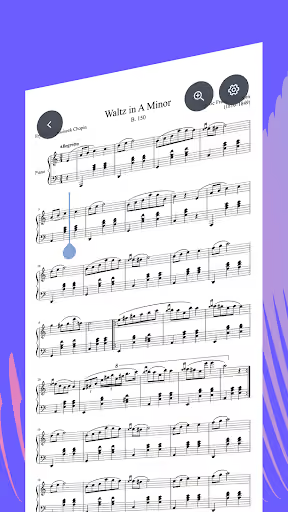
A sheet-music and tabs reader with practice tools across piano, guitar, and other instruments, mixing free scores with paywalled ones and a Pro subscription tier.
What changed
Nothing sudden — but a wave of recent reviews describes a single score purchase silently converting into a recurring subscription, annual renewals charged twice, and a support line that's only a scripted chatbot when any of it goes wrong.
Why it is soft
Reviewers with over a decade of playing experience still call it "a great help in finding sheet music" — the anger is aimed at billing and support, not at the notation reader or the catalog itself.
Strengths
The praise that survives alongside the complaints is specific and product-focused, not generic — a sign the core reader has real habit-forming value worth taking share from.
A trusted practice tool
Long-time musicians describe using it to find and sight-read new pieces across instruments — a genuine practice habit, not a one-off download.
11.6M+ installs
A large existing base proves demand for a combined score-library-plus-practice-tool app well beyond a niche.
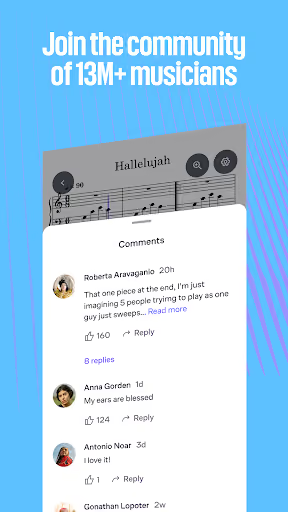
musescore has been a great help in finding sheet music. I've been playing piano for 11 years but just recently realized I don't actually know how to sight read, Ive only been playing by ear or doing jazz improv. So I've found pieces that I liked and practiced reading.
Market gap
The recurring complaints, grouped into named clusters, most-common first:
Billing converts or renews without clear consent
By far the largest cluster: a single score purchase turning into a recurring "lite" subscription, a free trial converting without the usual notice, and annual plans charged a second time on top of an existing one.
Paid content still gated or lost
Purchases that don't restore on a second device, a Pro tier that stops working after payment, and scores that still ask for payment after subscribing.
No human when billing breaks
Refund and billing disputes are routed to a scripted chatbot with preset replies, with no email or human escalation path reviewers can find.
somehow accidentally signed up for the premium lite version when I wanted to buy a piano song for $0.99. I thought oh well might as well make the most of it but lite subscription just gives you a discount for other scores you want?? extremely scammy behavior.
Steer clear of subscriptions! I was offered to renew my PRO+ annual subscription at half the price which I did. A month later they charged me ANOTHER annual subscription for the same tier!
- Never convert a one-time purchase into a subscription, or renew silently. Every charge should require its own explicit confirmation — this is the single most-repeated complaint above.
- Make purchases and Pro access follow the account, not the device. Restore-purchases has to work on install, every time, before anything else.
- Put a real refund/billing escalation path in the app, not just a scripted bot. Even a simple email queue beats a chatbot that can't act on a billing dispute.
Build complexity
Estimated, not derived: one developer, part-time, no funding and no paid acquisition. The notation engine is real software work; the catalog can start from public-domain sources rather than a licensing deal.
| Workstream | Weeks |
|---|---|
| Notation rendering (MusicXML/MIDI import + display) | 3.0 |
| Public-domain score catalog + search | 2.0 |
| Honest billing: one-time unlocks, working restore-purchases | 2.0 |
| Practice tools (tabs/chords view, playback) | 2.0 |
| Polish + store listing | 1.0 |
| Total | 10.0 |
Expected revenue
Assumes a $4.99/month subscription, reached without paid acquisition inside a category with an existing 11.6M-install audience to draw switchers from.
| Month 12, monthly | ||
|---|---|---|
| Installs | 40,000 | |
| Activated | 16,000 | 40% |
| Retained 30d | 4,800 | 30% |
| Paid | 1,200 | 25% |
| Revenue | $6,000 |
Biggest challenges
Not the honest billing — building a real notation-rendering engine, and sourcing a large enough legitimate catalog to feel complete without infringing anyone's copyright.
Notation rendering is specialized software
Correctly displaying and playing back MusicXML/MIDI scores across instruments is genuine, non-trivial engineering, not boilerplate CRUD.
Catalog sourcing without a licensing budget
A 3-million-score catalog isn't reachable alone — a public-domain-first strategy (classical repertoire, expired copyright) has to substitute for a licensing deal a solo builder can't afford.
AI angle
Something already needed above — growing the catalog — is markedly cheaper to build with AI than by manual transcription or licensing.
Without AI
Manually transcribing or licensing every score in the catalog — a cost and labor bar a solo builder can't clear.
With AI
An optical-music-recognition model converts a user-uploaded sheet-music photo or PDF into a playable, transposable digital score automatically, turning catalog growth into a crowdsourced ingestion pipeline instead of a transcription team.
Conclusion
Build it. 11.6M installs and reviewers who still call it a great practice tool are souring on billing trust, not on the idea of a sheet-music reader.
10 weeks
Time to v1
$4.99/mo
Explicit confirmation on every charge
$6,000
Revenue at month 12
69/100
Recent reviews cite billing/subscription problems