Abstract
Logos has a huge, loyal, high-rated Bible study audience, but recent reviews expose a real mobile opening around stability, simpler reading plans, trustworthy highlights, and not taking away features from people who already paid; the catch is that a solo builder cannot clone Logos’s library, licensing, or 30+ years of desktop-grade tooling.
Background
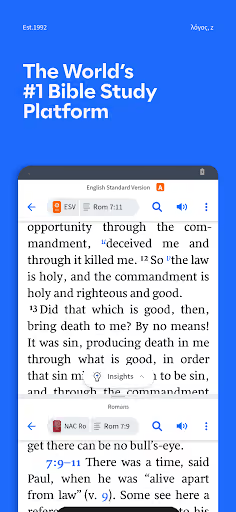
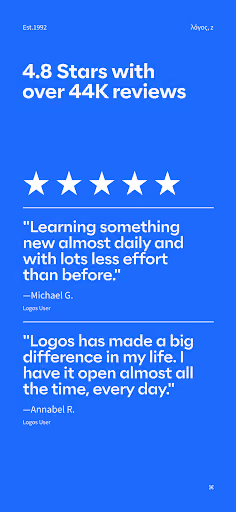
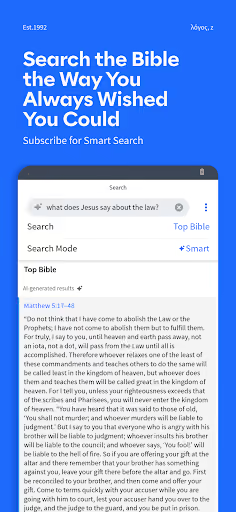
Logos: Deep Bible Study is a free Android app for deep Bible study, with Scripture search, commentaries, notes, reading plans, sermon tools, offline downloads, optional Logos Premium, 2,284,443 installs as of 2026-08-03, and a current lifetime average of 4.8★.
What it does
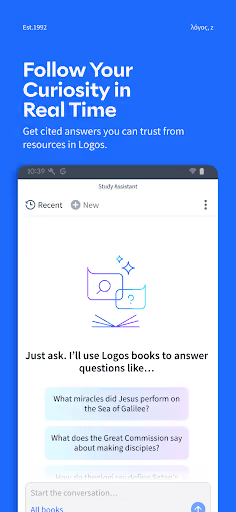
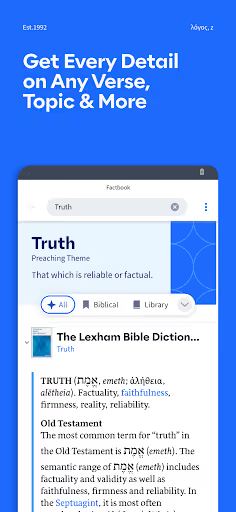
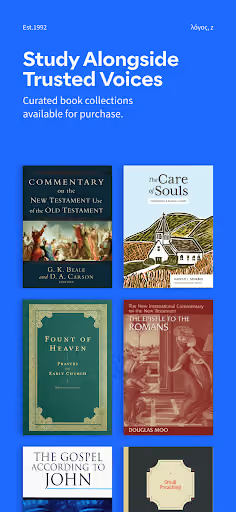
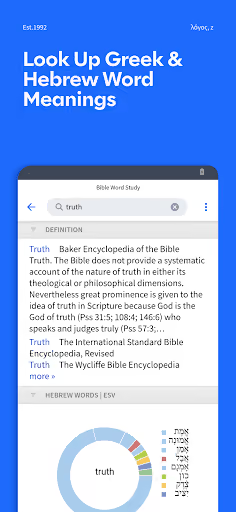
It puts Bibles, commentaries, notes, cross-references, original-language tools, reading plans, sermon prep, offline books, and AI-powered search into one account-backed study platform.
What changed
Some longtime users now complain about lost features under the subscription model, upgrade prompts, recent regressions, crashes, reading-plan friction, and a mobile interface that feels desktop-centric.
Why it is soft
The soft spot is not deep scholarship; it is a simpler, stable, mobile-first daily study workflow for users who do not need Logos’s whole commercial library.
Strengths
This is not an easy incumbent to attack: reviewers repeatedly praise Logos for depth, cross-references, multiple Bibles, commentaries, free resources, original-language study, offline access, notes, and carrying a large purchased library in a pocket. The 4.8★ lifetime average and the description’s 750K+ monthly Christian users mean a new entrant starts without the trust, content catalog, or study habits Logos already owns.
Library gravity
Several reviewers describe years of purchases, large libraries, and cross-device use; that makes switching painful even for unhappy customers.
Deep study tools
Word studies, commentaries, parallel translations, cross-references, and search are the reasons positive reviewers still call it the best Bible study app.
Free value
Many users say the free version is already useful, which limits how much pain a competitor can monetize.
Market gap
The negative reviews cluster around mobile execution, not the idea of deep Bible study itself. The opportunity is a focused app that does fewer things than Logos, but makes daily reading, notes, highlights, simple study, and reading plans feel reliable on Android.
Instability and regressions
The most repeated product pain is freezing, crashing, buffering, losing reading position, and paid resources not loading after updates.
Complex mobile UX
Tabs, layouts, search exits, reading-plan flows, and small commands confuse users who otherwise like the content.
Subscription trust
A smaller but commercially sharp group says features they previously used now feel pushed into subscriptions or upgrade prompts, despite prior purchases.
Study workflow rough edges
Highlighting, reading plans, bulk downloads, typo fixes, narration quality, reminders, and accessibility requests show room for a calmer daily-study tool.
Lots of bugs, freezing, and crashes. The multi-tab interface is not user friendly. frequent loading/buffering required, even for books that are fully downloaded. This is where my digital library is held, so I have no choice, but it's not a particularly enjoyable app experience.
I'm rating as a customer that spent several thousands of dollars on resources prior to Logos subscription model. Many features of the app no longer work as they are pushing their subscription. I use to worry my investment would no longer be accessible due to Logos going out of business or the antichrist shutting it down yet here we are. I will not buy a subscription to use features I use to have via the app. Sad but not surprised. note: I still have access to the resources I purchased.
With the June 2 update, the app no longer holds your reading position on your reading plans if you minimize the app, or switch to another app, then come back. This has had such a detrimental effect on the experience I have to give it 2 stars now. Should be a simple fix - hopefully the folks at Logos are already on it
- Build the mobile study loop, not Logos. Focus v1 on fast Bible reading, notes, highlights, simple search, offline public-domain resources, and reading plans that never lose position.
- Make trust the product promise. No ads inside owned content, no surprise feature removals, local export for notes and highlights, and clear separation between free local tools and paid cloud features.
- Win beginners and frustrated mobile users. Do not chase seminary-grade libraries first; ship an easy mode for daily reading, lightweight study, and lesson prep on a phone.
Build complexity
Estimated, not derived: one part-time solo Android developer, no funding, no team, and no paid acquisition. This estimate is for a focused mobile-first Bible study notebook, not a Logos clone with licensed commercial books.
| Workstream | Weeks |
|---|---|
| Reader shell, navigation, tabs, layouts | 3.0 |
| Bible text ingestion, public resources, search | 3.0 |
| Offline notes, highlights, reading plans | 3.0 |
| Accounts, sync, billing | 2.5 |
| AI-assisted search with citations | 2.0 |
| QA, performance, Play listing | 2.5 |
| Total | 16.0 |
Expected revenue
Estimated, not derived: no paid acquisition, free local reader and notes, then an optional $4.99/month plan for sync, backup, and AI study search. The funnel assumes the app wins people searching for a simpler Logos alternative, not Logos’s whole installed base.
| Month 12, monthly | Users | Assumption |
|---|---|---|
| Installs | 3,000 | Organic store/search/community |
| Activated | 1,200 | Open, read, save first note |
| Retained | 600 | Still using after 30 days |
| Paid | 240 | $4.99/month optional plan |
| Revenue | $1,200 | Rounded MRR |
Biggest challenges
The hard part is not making a Bible reader; it is earning trust in a category where users care about theology, translation quality, purchased libraries, and long-term access. A solo builder also cannot legally or commercially match Logos’s paid catalog without licensing deals.
Content licensing
Popular modern translations and commentaries are not automatically available; v1 likely needs public-domain or otherwise available resources.
Cold-start trust
Logos has years of reviews, installed users, and purchased-library lock-in; a new app must look reliable before pastors and students put notes into it.
Doctrinal and AI risk
Search answers need citations and restraint; hallucinated theology would damage trust quickly in this niche.
AI angle
There is a real but limited AI angle: Logos already advertises AI-powered search and several reviewers like its AI, so AI is not a clean differentiator. It does, however, make a solo builder’s semantic search and Q&A over a small public-resource corpus much faster to ship than building Bible-topic search entirely by hand.
Useful
Use retrieval with verse and source citations to answer questions, find related passages, summarize notes, and suggest study outlines.
Not a moat
The incumbent already has AI, so the app must still win on simplicity, stability, exports, and pricing clarity.
Conclusion
Skip the full clone; build only if you accept a narrow wedge. A solo builder should not try to out-Logos Logos, but there is a modest opening for a calmer Android study notebook that fixes the mobile pain without pretending to replace a 30+ year Bible study platform.
16 weeks
Time to v1
$4.99/mo
Optional sync + AI plan
$1,200
Month-12 revenue
4.8★
Incumbent trust is the blocker