Abstract
CashHoop has real demand and a large install base, but the reviews repeatedly describe a trust failure: users expected an instant cash advance, then felt routed into lender forms, credit-score paywalls, subscription traps, spam calls, and data-sharing they did not understand. The gap is clear, but a solo builder should not try to become a lender; the realistic wedge is a privacy-first, brutally transparent eligibility and lender-comparison app.
Background
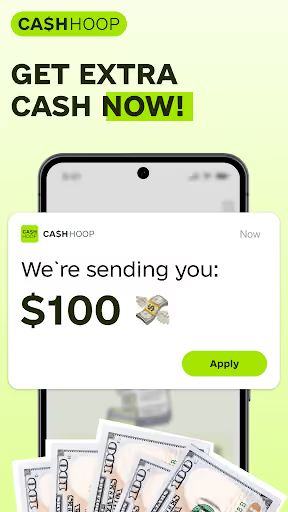
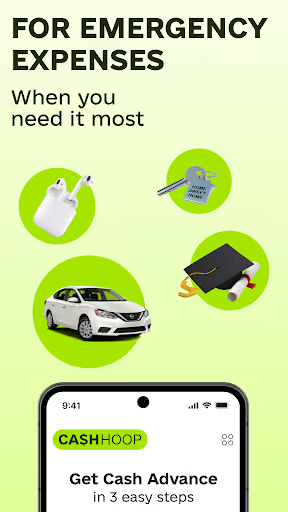
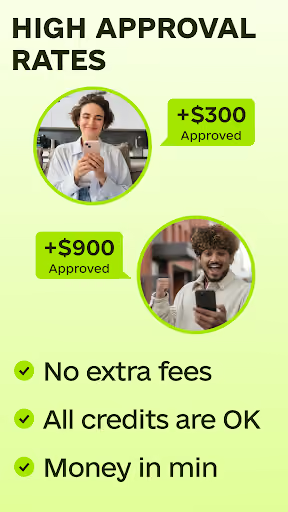
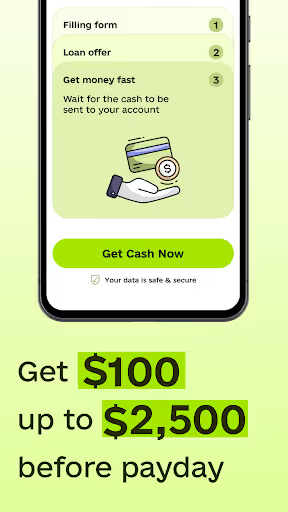
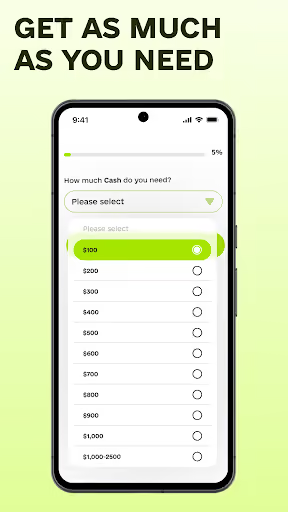
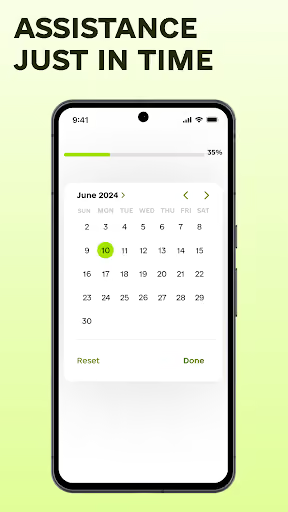
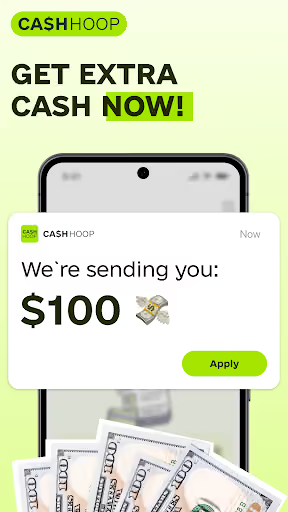
Instant Cash Advance: CashHoop is a free Google Play app advertising fast access to cash advance loans, quick responses, upfront loan terms, and flexible repayment. It had 1,208,083 installs on 2026-09-18 and a 4.6★ lifetime average, but the supplied review sample is full of recent users saying the product is not what the title led them to expect.
What it does
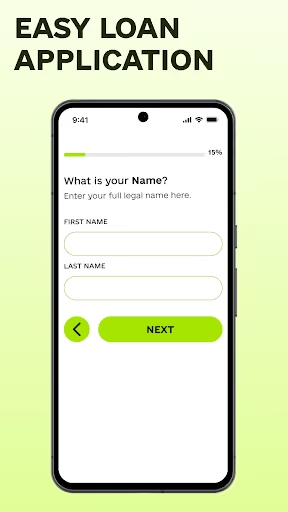
Collects borrower details, then routes users toward loan or credit-related third parties rather than clearly acting as a direct cash-advance provider.
What changed
This is not a single broken release; the fumble is expectation-setting. Reviewers say the app presents itself like instant cash, then behaves like lead generation.
Why it is soft
Trust is badly damaged in the reviews. A competitor can win on disclosure and privacy, but only if it avoids pretending to lend money it cannot actually provide.
Strengths
CashHoop is not a strawman: it sits in a painful, high-intent category where users need money urgently, has passed 1.2M installs in the provided timeline, and still carries a 4.6★ lifetime average. A few reviewers say they hope it helps, that the idea is useful for people paid every two weeks, or that it was quick and easy. Any new entrant starts without that store trust, search visibility, or evidence of borrower demand.
Demand is obvious
The reviews describe rent, food, motels, bills, gas, and emergency expenses — not casual browsing.
Install base is real
Installs rose from 1,101,912 on 2026-08-04 to 1,208,083 on 2026-09-18.
Simple product surface
The visible app flow appears to be forms, eligibility routing, disclosures, and partner handoff — not a complex consumer finance suite.
Market gap
The complaints cluster around trust, not polish. The most common theme is that users thought they were getting an instant cash advance, but instead felt their information was routed to third parties.
Not a lender
Reviewers repeatedly object that the app is a middleman, loan search, or lead-generation form rather than a direct cash-advance product.
Spam and data sharing
Many users say calls, texts, and emails started after entering personal information, and some explicitly accuse the app of selling data.
Credit-score paywalls
A recurring complaint is being pushed to paid credit-score checks, $1 trials, subscriptions, or card-entry screens before any useful result.
Broken or tedious flow
A smaller cluster mentions redirects, page crashes, state restrictions discovered late, inability to skip lenders, and having to re-enter information.
horrible app. they will sell your information The Truth About Cash HoopYou should avoid Cash Hoop entirely. It is not a legitimate cash advance app like Dave or Cleo.Instead, Cash Hoop is a copycat "lead generation" app. They do not lend money directly. If you put your information into an app like that, they package your data and sell it to high-interest personal loan lenders and payday lenders. This leads to an influx of spam calls, text messages, and offers for loans with massive APRs (35%)
A LOAN is not A CASH ADVANCE. A cash advance is a quick instant borrow from your next paycheck. a loan is a time approved credit based investment that must be paid back with interest over a period of time. This is a LOAN app. LOAN HOOP should be the title, but they get more clicks and algorithm favor by calling it a Cash "Advance" app. Don't trust a company that's trying to be manipulative.
- Do not pretend to be a lender. The first screen should say whether the app lends, brokers, compares, or only educates; that single disclosure addresses the loudest complaint.
- Make privacy the product. Collect minimal data, show who receives it before handoff, and never ask for SSN or card details inside the app unless legally necessary and clearly explained.
- Show eligibility before deep forms. Ask state, bank compatibility, requested amount, and product type up front so users are not rejected after handing over sensitive information.
Build complexity
Estimated, not derived: one part-time solo developer, no funding, no team, and no paid acquisition. This assumes the builder does not lend money and instead ships a transparent cash-advance finder with disclosures, eligibility filtering, partner pages, and manual partner onboarding.
| Workstream | Weeks |
|---|---|
| Android form flow, onboarding, and result screens | 2.5 |
| Eligibility rules: state, amount, bank, product type | 2.0 |
| Privacy disclosures, consent logs, and data minimization | 2.0 |
| Partner directory CMS and manual offer pages | 2.0 |
| Compliance review, Play listing, analytics, support | 2.0 |
| QA, edge cases, launch iteration | 1.5 |
| Total | 12.0 |
Expected revenue
Estimated, not derived: revenue should come from clearly labeled partner referrals or a small paid privacy upgrade, not from hidden credit-score subscriptions. With no paid acquisition and weak initial trust, the month-12 base case is modest.
| Month 12, monthly | ||
|---|---|---|
| Installs | 3,000 | Organic only |
| Activated | 1,200 | Complete basic eligibility |
| Retained | 450 | Return or finish comparison |
| Paid | 120 | Referral or upgrade events |
| Revenue | $1,200 | Month 12 |
Biggest challenges
The hard part is not coding forms; it is operating in a sensitive finance category where users are desperate, Play review risk is real, and a solo builder cannot fund advances or negotiate many trustworthy partners quickly.
Cannot actually lend
Real cash advances require capital, underwriting, repayment handling, bank connections, and compliance — far beyond a part-time unfunded build.
Trust cold start
The category is full of users who already feel tricked, so a new app with no reviews will be presumed guilty until proven otherwise.
Partner quality
The product only works if the listed lenders or advance providers behave better than the third parties users complain about.
Store-policy exposure
Loan, credit, and personal-data claims will be scrutinized; sloppy wording could recreate the same misleading-positioning problem.
AI angle
There is only a minor AI angle. AI can help parse partner terms, summarize APR and repayment disclosures in plain English, and flag wording that sounds like a direct-loan promise. It does not solve the core moat: lending capital, compliance, partner trust, and acquisition.
Useful AI assist
Turn dense partner disclosures into user-facing summaries and warn the builder when copy overpromises instant cash.
Not a defensible wedge
AI cannot make a solo app a lender, prevent partner spam by itself, or remove the need for careful consent and compliance.
Conclusion
Skip it. Build only if you are comfortable making a transparent comparison tool, not a true cash-advance competitor. The user pain is obvious, but the honest solo-builder version is a low-revenue trust product in a regulated, spammy category.
12 weeks
Time to v1
Referral / upgrade
Transparent model
$1,200
Revenue at month 12
Not a lender
Deciding fact