Abstract
Hugi has real reach — 1,175,904 installs on 2026-10-21 and a 4.2★ lifetime rating — but recent long reviews describe the same broken promise: advertised free local connection becomes subscriptions, paid gifts, blurred contact info, suspected bots, and little support. The gap is clear, but a solo builder should not underestimate the brutal cold start of a dating marketplace.




Background
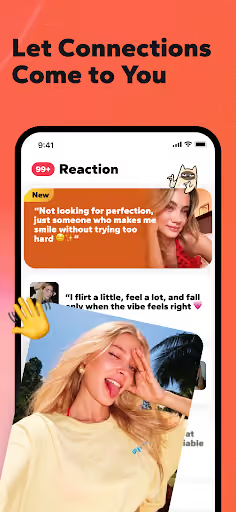
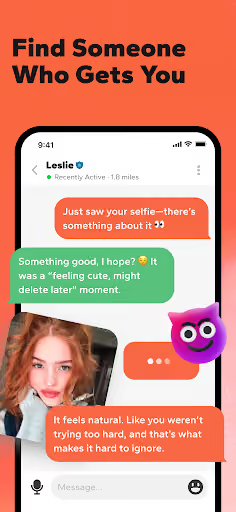
Hugi: Meet Real Local People is listed as a free app for authentic profiles, smooth conversations, smart prompts, and local connection. The review trail says the product promise breaks at the moment users try to keep chatting, exchange contact details, or arrange a meeting.
What it does
Profiles, prompts, local discovery, chat, and relationship-building mechanics for companionship, dating, or friendship.
What changed for users
Reviewers say the free experience quickly turns into a trial ending, subscriptions, paid photos, paid gifts, and paid unlocks for contact or location details.
Why it is soft
The anger is not about missing swipes; it is about trust. A rival that truly allows chat and meetup planning would have a sharply different promise.
Strengths
Hugi is not a strawman: it has crossed a large install base, still shows a 4.2★ lifetime rating, and several negative reviewers admit the first minutes feel engaging, easy, or full of interest. A new entrant would have to build the hardest asset — local dating liquidity — from zero.
Initial engagement
Many complaints begin with users chatting quickly or believing they had found a match before the paywall appeared.
Clear user intent
The reviews are from users actively trying to chat, trade contact details, view photos, or meet — the demand is obvious.
Scale moat
Over one million installs gives Hugi more marketplace density and store trust than a solo competitor can buy.
Market gap
The complaints group into a few repeated clusters. The biggest opening is not a feature clone; it is a dating app whose economic model does not fight the user’s goal of meeting someone.
Free promise, paid reality
The most common complaint is bait-and-switch: ads or expectations of free chat, followed by trial expiry, subscriptions, paid messages, paid photos, and paid gifts.
Meetup blocking
Reviewers repeatedly say phone numbers, addresses, socials, bars, restaurants, or meetup plans are blurred, censored, locked, or priced behind expensive unlocks.
Bot and fake-profile suspicion
Many users believe they are talking to bots, AI profiles, paid chatters, stolen-photo accounts, or profiles whose local distance is unreliable.
Support and billing trust
A smaller but serious cluster mentions unanswered support, refund demands, cancellation confusion, or charges users believe continued after cancellation.
I would give it zero Stars if I could. the ads that you have for your app are complete and other lies. the ads say that it's free unlimited chatting. it is not. only until the free trial ends. that you don't even know that you're in until it says that it's the end of it. you guys need to stop being scumbags and putting out predatory apps like this.
This was one of the worst apps. The girls look good and they say they want to meet. But then the app team steps in and be like in order to meet they you have to buy perfume, or a peach something so you pay for the gift to that person and they send you something back and then they should be able to read your information but they can't because the app blocked it you can pay upwards of $200 to $300 dollars and you still can't get a date.
Update: I got one of the AI bots to admit it was a bot, and the app is controlling it. I'd like my money back. This is the most fraudulent app I've ever seen. Every interaction is by app bots that pretend to be matches. They block conversations and try to convince you to pay to unblock them. This fraudulence is committed by the app itself. I'm contacting the government to get this taken down.
- Make messaging and contact exchange genuinely free. The strongest wedge is the exact inverse of the complaint: if two adults match and want to meet, the app must not sell their phone number, address, or restaurant name back to them.
- Monetize only non-essential upgrades. Use optional boosts, extra filters, or a supporter badge; never charge per message, per photo, per unlock, or per relationship level.
- Launch city-by-city with verified humans. The bot and locality complaints mean a thin global marketplace is worse than no marketplace; start narrow enough that real local density can be checked.
Build complexity
Estimated, not derived: one part-time developer, no funding, no team, and no paid acquisition. This is a bare Android-first MVP, not a full trust-and-safety organization.
| Workstream | Weeks |
|---|---|
| Profiles, prompts, onboarding, and local discovery | 2.0 |
| Auth, photo upload, and basic verification flow | 3.0 |
| Matching, chat, and free contact exchange | 3.0 |
| Moderation, reporting, blocking, and admin tools | 3.0 |
| Transparent optional billing | 1.5 |
| QA, Play listing, privacy, and launch hardening | 2.0 |
| Seed-city controls and lightweight community ops tooling | 1.5 |
| Total | 16.0 |
Expected revenue
Estimated, not derived: assume free matching, free chat, and free contact exchange, with a clearly optional $4.99/month supporter or boost plan. Because the product promise rejects aggressive paywalls, month-12 revenue stays modest without paid acquisition.
| Month 12, monthly | Users | Assumption |
|---|---|---|
| Installs | 1,800 | Organic search, reviews, and local launch only |
| Activated | 700 | Completed profile and sent a first message |
| Retained | 220 | Still active after 30 days |
| Paid | 100 | $4.99/month optional plan |
| Revenue | $500 | Rounded monthly recurring revenue |
Biggest challenges
The hard part is not copying profiles and chat. It is building a safe, trusted, locally liquid dating marketplace without the growth budget, moderation staff, support coverage, or brand trust users expect after being burned.
Marketplace cold start
A dating app with no nearby people feels dead, even if the software is better and fairer.
Trust and safety workload
Fake profiles, harassment, explicit content, reports, refunds, and abuse reviews become a daily operations job.
Store trust risk
A new dating app will be judged against scammy category behavior; one bad moderation miss can poison early reviews.
AI angle
There is a real but limited AI angle: AI can help flag scam language, duplicate bios, suspiciously generated photos, and unsafe messages for review. It cannot solve the core marketplace problem, and using AI chatbots as “members” would recreate the exact trust failure users are complaining about.
Useful AI
Risk scoring for profiles, image checks, moderation triage, and prompts that help real users write better bios or openers.
Do not use AI for this
Synthetic matches, auto-flirty bots, or fake engagement loops would destroy the only defensible differentiation: human trust.
Conclusion
Skip it. Hugi’s review gap is real and ugly, but a solo builder is not just building software; they are building local liquidity, safety operations, verification, support, and trust in a category where users already expect scams.
Time to v1
Optional plan, free core chat
Month-12 revenue
Incumbent scale to overcome