Abstract
Hoopla users are clearly frustrated by borrow limits, daily collective caps, playback bugs, lost audiobook position, offline failures, and weak search, but the core pain is tied to library licensing and budgets rather than a simple app feature a solo builder can replace.
Background
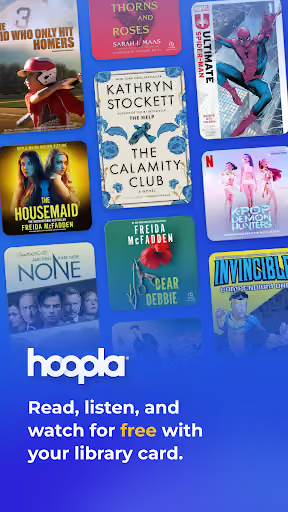
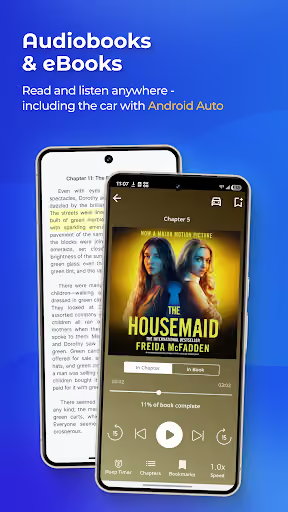
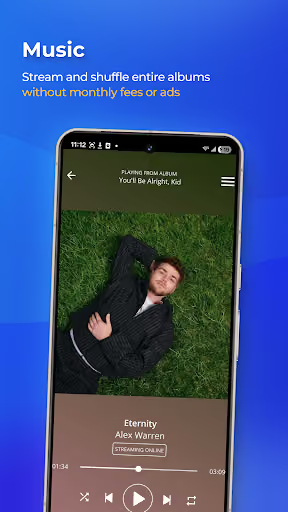
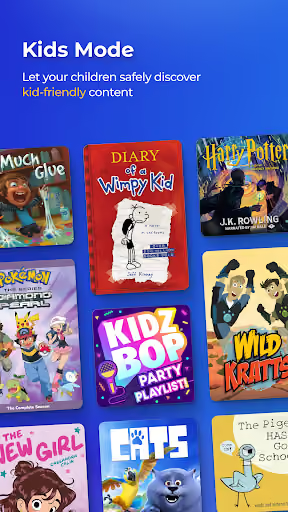
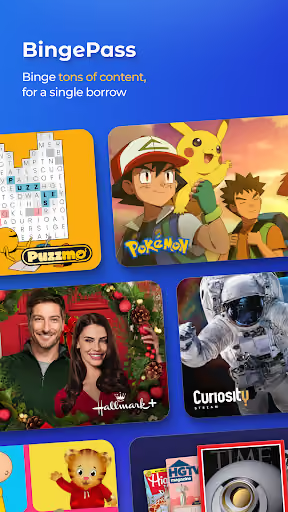
Hoopla: Your Library, Anywhere is a free library-card app for audiobooks, ebooks, comics, movies, TV, music, magazines, BingePasses, offline downloads, Android Auto, and multiple device types. It shows a 4.7★ lifetime rating and 6,485,308 installs, so the complaint signal is not that nobody likes the product; it is that loyal users are hitting limits and reliability problems inside a service they otherwise value.
What it does
Lets patrons borrow digital library media with no consumer subscription, using a participating library card.
What changed
Recent reviews complain about smaller monthly limits, collective daily caps that reset at midnight, blank screens, login issues, and worse playback behavior.
Why it is soft
The soft spot is user experience around limits and playback, not demand for the catalog itself; a solo builder cannot easily replicate the licensed library network.
Strengths
Hoopla still has major retained advantages: free access through libraries, years of user habit, broad media types, no ads, no consumer subscription, offline downloads when they work, and reviewers who say they use it daily, on commutes, while driving, while crafting, and as an Audible or Kindle alternative.
Catalog breadth
Even critical reviews often admit Hoopla has books, comics, movies, music, or titles they cannot find elsewhere.
Library economics
The app is free to patrons because libraries fund access; a new entrant would need institutional contracts, not just a better Android client.
Habit and trust
The install base and 4.7★ lifetime rating mean a competitor starts far behind on trust, even if recent reviews reveal pain.
Market gap
The market gap is real but awkward: the loudest complaints are about borrow rules and caps, followed by playback position bugs, offline/login failures, and discovery problems. A solo builder can address planning, reminders, external search, and backup bookmarks; it cannot promise more Hoopla borrows or the same licensed content.
Borrow limits and midnight races
The most common complaint is not understanding or accepting monthly limits, daily collective limits, and limits that do not reset when an item is returned.
Playback loses place
Several audiobook users describe restarts, stuttering when the screen turns off, lost bookmarks, and scrubbing back through long books.
Offline and account brittleness
A smaller but serious cluster reports blank screens, repeated sign-ins, deleted downloads, low-signal failures, and account-card migration problems.
Search and catalog visibility
Users want better filters, title availability visibility, series completeness, narrator samples, language grouping, and search that finds known titles.
Updated review: Please get my library off of this app! Its dropped from 10 books a month to 5 to 2. Now it tells me at 8 am in the morning that the library borrowing maximum for the day has been reached and I'll have to order after midnight. What is going on with this app?!
Constantly restarts, losing your place. 13 hours into an audiobook, and every so often I'll open the app and it will start playing it again from the beginning. I have to scrub through to try and figure out where I was. Exasperating.
there's a lot of good content here. I pay attention to reviews when I'm making my borrow selections. But I no longer attempt to use the Hoopla search engine because trying to search by title is fruitless. Instead I use my library's search engine and save selections to a list for future borrowing.
- Do not build a full Hoopla clone. The catalog and borrowing rights are the product, and those come from library participation and licensing, not Android engineering.
- Build a borrow-limit planner instead. Let users track monthly limits, daily reset times, series order, return dates, and “try later” reminders without pretending you can change the library cap.
- Add backup bookmarks and discovery lists. A companion app can solve the parts users control: remembering audiobook position, keeping a wishlist, finding series gaps, and routing searches to Hoopla, Libby, or the library catalog.
Build complexity
Estimated, not derived: one developer, part-time, no funding, and no paid acquisition. This is for a companion app that tracks limits, lists, reminders, and backup progress manually; a true licensed media competitor is outside this estimate.
| Workstream | Weeks |
|---|---|
| Borrow-limit tracker, reset reminders, and series queue | 2.0 |
| Manual catalog lists, search helpers, and deep-link style routing | 2.0 |
| Backup bookmarks, audiobook progress notes, and offline storage | 2.0 |
| Account-light sync, paywall, Play billing, and settings | 2.0 |
| Polish, accessibility, testing, listing, and support docs | 2.0 |
| Total | 10.0 |
Expected revenue
Estimated, not derived: assume a $1.99/month Pro companion for cloud backup, unlimited lists, reset reminders, and cross-device sync. Conversion is deliberately low because Hoopla users are anchored to free library access and the companion cannot unlock more licensed content.
| Month 12, monthly | ||
|---|---|---|
| Installs | 1,500 | ASO and organic complaint search |
| Activated | 650 | Set up a library app list or limit tracker |
| Retained | 300 | Still using reminders or backup notes |
| Paid | 151 | $1.99/month |
| Revenue | $300 | Expected MRR |
Biggest challenges
The hard part for a solo builder is positioning: users want a better Hoopla, not another list app. Without official Hoopla access, library content rights, or the ability to alter borrow limits, the product must be very clear about what it can and cannot fix.
No official content access
You cannot stream Hoopla’s licensed books, movies, or music, and you should not imply that the companion increases borrows.
Free-user willingness to pay
The audience values free library access; even useful reminders and backup notes will have thin paid conversion.
Android reliability burden
If you promise better progress tracking, background behavior, notifications, and offline state need to work across many devices.
AI angle
There is a modest AI angle, but it does not change the build or revenue estimate: AI can make discovery and organization better by turning a user’s wishlist, authors, series names, and narrator preferences into cleaner queues and search suggestions. It cannot solve the real constraint: borrow limits and licensed library content.
Useful AI
Normalize messy title searches, infer series order from user-entered books, suggest similar genres, and summarize why an item is in the queue.
Not useful AI
No model can create legal access to Hoopla’s catalog, bypass a library’s collective daily cap, or replace institutional licensing.
Conclusion
Skip it. Do not build a direct Hoopla competitor as a solo developer; the complaints are painful, but the decisive constraint is controlled by libraries, licensing, and budgets. If you still want to serve this audience, build the smaller companion app and expect a small business, not a breakout replacement.
10 weeks
Time to v1
$1.99/mo
Companion Pro model
$300
Revenue at month 12
Library-controlled
Fact that decided it