Abstract
2ndLine has a real user backlash: recent reviews repeatedly complain about broken selfie/ID verification, login loops, reassigned numbers, call reliability, and support failures. The gap is obvious, but a solo competitor in telecom is costly and compliance-heavy, so this is only a cautious build.
Background
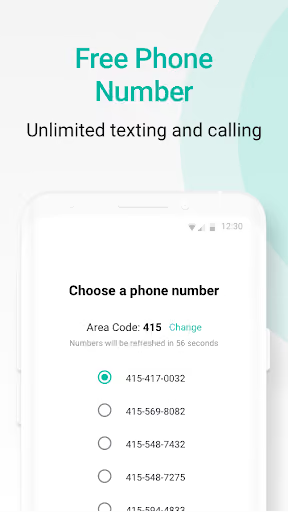
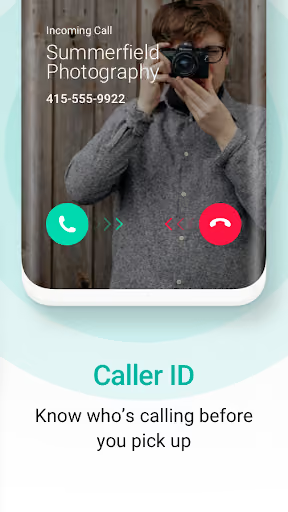
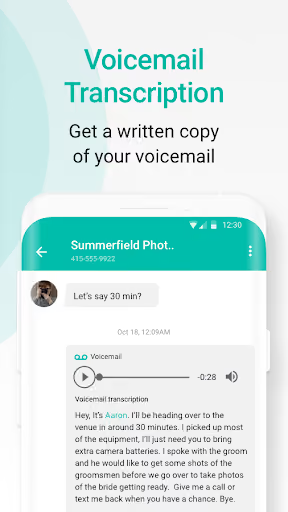
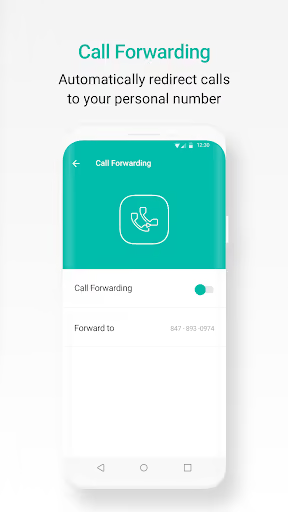
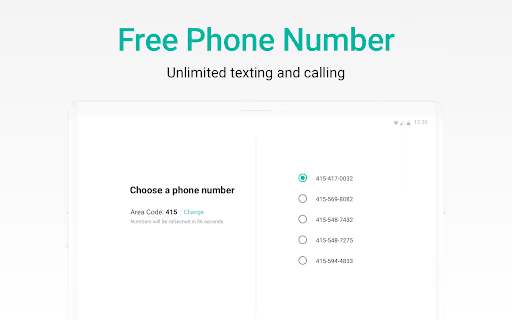
2ndLine - Second Phone Number is a free Wi-Fi calling and texting app for a second US or Canadian phone number, with 18,753,745 installs and a 4.1★ lifetime rating. Its store copy still promises free calling, free texting, local numbers, MMS, caller ID, customization, and optional ad removal.
What it does
Gives users a second number for personal privacy, small-business contact, Wi-Fi calling, texting, MMS, and occasional international calling.
What changed
Recent reviewers describe a new or harsher identity flow: selfie, face scan, ID checks, press-and-hold verification, and loops that block sign-in or signup.
Why it is soft
The frustrated users are not asking for a new social app; they want the old utility back: stable number, reliable calls/texts, transparent billing, and less invasive verification.
Strengths
This is not a dead product. Several reviewers still call it reliable, free, easy to use, or better than alternatives, and some have used the same number for years. That habit is powerful: a challenger must overcome the pain of changing a phone number, not just ship a cleaner UI.
Proven demand
A free second number is a broad, proven need for business, privacy, tablets, Wi-Fi-only phones, and users without paid minutes.
Retained habit
Some unhappy reviewers say they have not switched because contacts already know the number, which protects the incumbent even during a bad release.
Still works for some
Positive reviews still mention crisp calls, free use, few ads, and no points or videos required, so a competitor cannot assume every user is ready to leave.
Market gap
The biggest visible opening is not “another free phone app”; it is a boring, trustworthy second number that does not trap users in verification, surprise them with number loss, or make paid users beg support to recover access.
Verification blocks access
The most common complaint in this sample is the press-and-hold, selfie, face scan, or ID flow looping after verification or sending users back to the email screen.
Number ownership feels unsafe
Multiple long-time users say numbers were reassigned or accounts restricted without useful warning, which is especially painful for work lines and login recovery.
Core calling/texting reliability
Reviewers mention dropped calls, one-way audio, missed rings, failed texts, voicemail access issues, and verification-code delivery problems.
Trust, privacy, and support
The selfie/ID requirement has become a trust problem, and support complaints are sharper when the user is already paying or locked out.
I'd rate zero stars if an option existed. Download. Give email. Agree. Take selfie. Turn head twice. Rinse. Repeat. No functionality on either phone, or Chromebook. This process is stuck in a loop no matter what you're on or what email you use to try to sign up. Literally worse than useless.
customer service is useless. They resigned my number [using for 3 years] without any previous notification, I was disconnected one day to another, even I keep using this number. I asked for review of my call log and messages so they see I actually using the line actively. however the Customer service just said "we can give you another number". I worked with this number for years and I was good with the service. This is completely unacceptable and unfair. My number is not assigned yet.
- Do not compete as free. A solo builder cannot safely subsidize calls and abuse handling with ads. Sell a paid, reserved second number and be explicit about what is included.
- Make verification transparent and recoverable. Use email, payment, device risk checks, and clear support paths before any invasive ID step; if ID is ever required, explain why and never loop silently.
- Guarantee number-retention rules in plain English. The switcher promise should be: paid numbers are reserved, cancellation rules are clear, warnings arrive before release, and support can restore mistakes.
Build complexity
Estimated, not derived: one developer, part-time, no funding, no team, and no paid acquisition. A v1 can use a CPaaS provider for numbers, SMS, and voice, but telecom compliance, abuse prevention, billing, and support make this much harder than a normal CRUD app.
| Workstream | Weeks |
|---|---|
| Android calling/texting UI | 3 |
| Backend accounts, number assignment, message storage | 3 |
| Voice/SMS provider integration | 3 |
| Billing, reserved-number lifecycle, cancellation warnings | 2 |
| Abuse controls, compliance, support tooling | 3 |
| QA, Play listing, device edge cases | 2 |
| Total | 16 |
Expected revenue
Estimated, not derived: price the competitor at $6.99/month for a reserved second number, with no free calling tier beyond a short trial. The month-12 figure is gross MRR before telecom usage costs, chargebacks, taxes, and support time, so the real take-home could be thin.
| Month 12 funnel | Users | Assumption |
|---|---|---|
| Organic installs/month | 1,800 | No paid acquisition |
| Activated | 540 | 30% try a number |
| Retained active accounts | 240 | Useful after first month |
| Paid subscribers | 172 | $6.99/month |
| Revenue | $1,200 | Gross MRR |
Biggest challenges
The hardest part is not designing a prettier inbox; it is running a small telecom product without becoming the same kind of support, verification, and abuse machine users are complaining about.
Telecom abuse and compliance
Second-number apps attract spam, fraud, and verification-code abuse. A solo builder still needs blocking, rate limits, carrier rules, and account review.
Unit economics
Calls, SMS, MMS, number rental, and support are variable costs. Heavy users can erase a cheap subscription unless limits are clear.
Cold-start trust
Users are already scared of face scans and data harvesting. A new app with no review base must earn trust before asking for payment or phone permissions.
Verification-code expectations
Reviewers want login codes to arrive, but many services block VoIP numbers. A solo app should not promise universal code delivery.
I've had this app for years and it used to be great. Now it's terrible. My calls drop, they can't hear me or I can't hear them. Now I'm experiencing that if I don't keep my screen active or if I go outside the app while on the phone the call will drop. the quality has declined tremendously. I haven't switched yet cause so many people have this number.
AI angle
There is only a modest AI angle. AI can help classify spam reports, summarize support tickets, detect unusual sending patterns, and draft clearer explanations for account restrictions, but it does not remove the need for telecom infrastructure, compliance, or human judgment.
Useful AI
Support triage, abuse pattern summaries, onboarding copy, and privacy-policy explanations can be faster for a solo builder with LLM help.
Not a moat
AI should not be used to fake KYC, promise better code delivery, or replace carrier-grade anti-abuse systems. The product still wins or loses on reliability and trust.
Conclusion
Skip it unless you know telecom. The market gap is real and the incumbent’s reviews are painful, but a part-time solo developer is walking into carrier costs, fraud, compliance, and support. Build only if you can target a narrow paid niche, not a free 2ndLine clone.
16 weeks
Time to v1
$6.99/mo
Paid reserved number
$1,200
Gross MRR at month 12
Face loop
Complaint that opens the door