Abstract
The complaint is unusually clear: users want radar, alerts, and local weather, but feel tricked when the app replaces their launcher, rearranges their phone, injects ads, and becomes hard to uninstall. A solo builder can ship a trustworthy, US-focused NOAA radar alternative, but the weather category is crowded and reliable alerts are harder than the angry reviews make them look.
Background
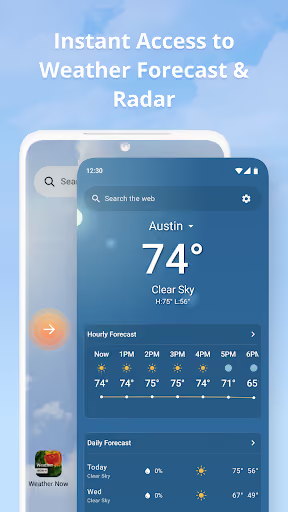
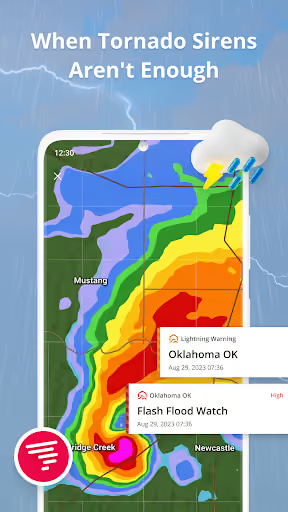
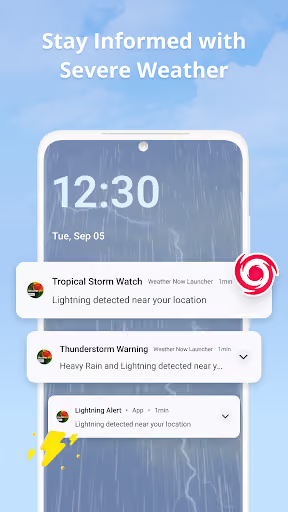
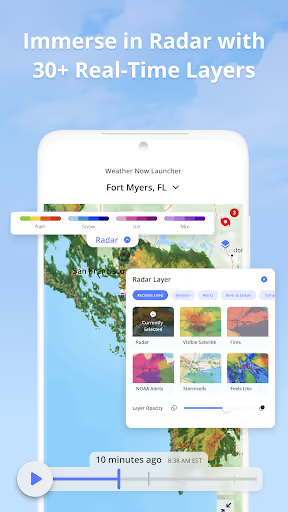
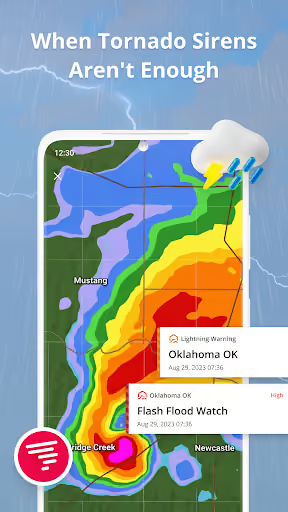
Weather Now Launcher - Radar is a free Android weather app that advertises NOAA/National Weather Service radar, storm tracking, tornado and hurricane tools, widgets, notifications, and a homescreen search experience that changes search to Yahoo. Its current lifetime rating is 4.0★, and the install line shown here reaches 7,103,384 on 2026-10-07.
What it does
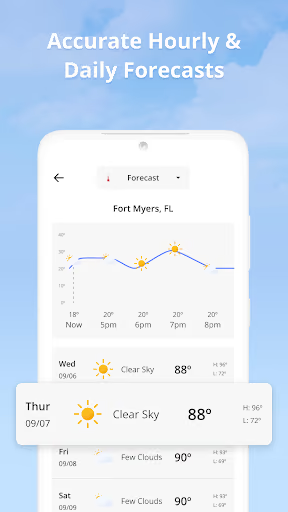
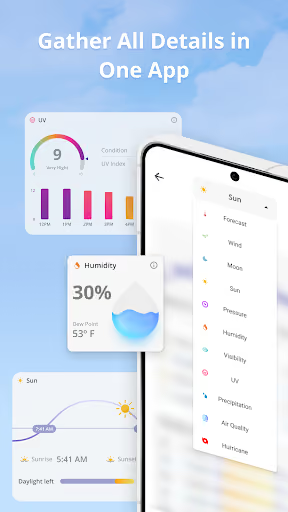
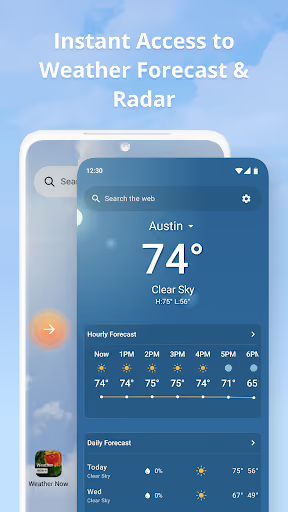
Weather radar, local forecasts, storm tracking, alerts, widgets, and homescreen weather access.
What changed
Recent reviewers repeatedly say the app replaced their launcher, reorganized icons and folders, changed search/home behavior, added ads, and was hard to remove.
Why it is soft
The gap is not exotic forecasting science; it is trust, disclosure, and a weather app that behaves like a normal app instead of a phone takeover.
Strengths
This is not a useless product with no demand. A few reviewers still praise the storm visibility, tornado usefulness, or radar quality, and the install base is large enough that many users clearly arrive looking for this exact job during severe weather. The hard part for a challenger is not proving people want radar; it is earning trust in a category where users already name alternatives like MyRadar, AccuWeather, The Weather Channel, RadarScope, and Radar Omega.
Real emergency use
Several complaints happen during tornado warnings or incoming storms, which means users are installing with high urgency and clear intent.
Some retained product value
Even negative reviewers sometimes say the radar or weather part was good, useful, or accurate enough to make the launcher requirement the deal-breaker.
Distribution proof
The listed installs are over seven million, so the demand signal exists; a solo builder would still have to win store visibility without paid acquisition.
Market gap
The review pattern is unusually consistent. The main opportunity is a “normal weather app” promise: no launcher, no search hijack, no hidden uninstall path, and no ads on the phone shell.
Launcher hijack
The most common complaint is that the app changes the home screen, folders, icons, layout, app drawer, search bar, or default launcher when users expected weather radar.
Hard to uninstall
Many reviewers describe hunting through settings or the Play Store to remove it, with some saying they feared malware or considered a factory reset.
Ads and trust
Ads on the homescreen, forced ad clicks, Yahoo search changes, and bloatware language make users doubt the app’s intent, even when they only wanted a storm map.
Weather basics still shaky
A smaller but important cluster mentions wrong location, inaccurate forecasts, slow radar, missing exact-town selection, and notifications that appear only after opening the app.
I installed this during a tornado warning because I thought it was a weather app. Instead, it completely took over my phone and rearranged everything into an unrecognizable mess. I couldn't find what I needed during an actual emergency. If an app is going to fundamentally change how a phone looks and operates, that should be impossible to miss before installation. This was completely unacceptable.
I've used this app before and it was great. when I installed it to check a big storm in my area, it completely took over my phone. It changed apps, changed my the e, set up notifications, made a separate search bar and app drawer. I even had ads at the top of any search on my phone... not on the internet... but on my phone. I had to delete it to make it go back to the way it was. I will never download this again.
Weather notifications now only show up, blocking the map, when I open the app. This fundamentally negates the entire idea of notifications in the first place, so I turned them all off. I mean, just what is the point of that? Ridiculous! This was once the best weather app ever, let's hope they fire whoever is doing this and pull their heads out. "We have a tornado warning for you, but you have to decide to open the app to see it." It would be funny if it wasn't so stupid and dangerous.
- Make “not a launcher” the product promise. The first screen, Play listing, onboarding, and permissions copy should explicitly say it never changes the home screen, default search, icons, or app drawer.
- Start US-only with NOAA/NWS sources. The incumbent’s own description leans on NOAA and NWS; a solo v1 should avoid pretending to be a global forecasting company.
- Charge for trust, not ad tricks. A simple paid ad-free tier is easier to defend than homescreen ads, forced search changes, or anything that looks like device hijacking.
Build complexity
Estimated, not derived: one developer, part-time, no funding, and no paid acquisition. This assumes a US-focused Android v1 with radar map, location search, current/hourly/daily weather, NWS alerts, widgets, and paid ad-free unlock — not a full RadarScope-class product.
| Workstream | Weeks |
|---|---|
| Android app shell, permissions, onboarding, non-launcher proof | 1.5 |
| NOAA/NWS weather, alerts, and location lookup | 2.0 |
| Radar map, layers, geolocation, and caching | 2.5 |
| Push notifications, widgets, and alert settings | 2.0 |
| Billing, QA, Play listing, privacy copy, launch support | 2.0 |
| Total | 10.0 |
Expected revenue
Estimated, not derived: because weather is a crowded free category and the solo builder has no paid acquisition, assume a free app with a $2.99/month ad-free and reliable-alerts upgrade. The month-12 funnel below is deliberately modest.
| Month 12, monthly | ||
|---|---|---|
| Installs | 3,000 | |
| Activated | 1,500 | opens and sets location |
| Retained | 700 | still useful after first storm |
| Paid | 300 | $2.99/month |
| Revenue | $900 |
Biggest challenges
The trap is thinking “no launcher” is enough. A solo builder still has to ship dependable weather UX, survive Play review scrutiny around alerts and location permissions, and earn trust in search results next to well-known weather brands without buying installs.
Cold-start trust
Users burned by a phone-takeover app will scrutinize permissions, reviews, screenshots, and uninstall behavior before trusting a new radar app.
Alert reliability
If tornado or severe-weather notifications are late, hidden, or noisy, the app fails at the moment users care most.
Crowded category
Reviewers already name trusted substitutes, so the solo app needs a narrow trust wedge rather than a generic “better weather” pitch.
AI angle
There is no strong AI moat here. AI can help write plain-language alert summaries or onboarding copy, but it does not replace radar data, location accuracy, push reliability, or the trust problem. Do not market this as an AI weather app unless the core non-AI experience is already dependable.
Useful but secondary
Summarize NWS alert text into “what changed / what to do / when it expires,” with the original alert always one tap away.
Not the wedge
The review gap is launcher behavior and ads, not missing AI forecasting; AI should not change the build-time or revenue estimate.
Conclusion
Build a narrow version, not a full competitor. The pain is real and obvious, but the category is brutally competitive. A solo builder should ship a clean, US-only NOAA radar app positioned against launcher hijacking, not try to out-forecast every incumbent weather brand.
Time to v1
Free app with paid trust tier
Month-12 revenue
Fact that decided it