Abstract
Speaker Cleaner: Water Eject plays a calibrated tone to shake water or dust out of a phone speaker — a real, well-known technique with over a million installs behind it. But the app's own reviewers overwhelmingly complain about what stands between them and that one function: a wall of ads before the cleaner even loads, and a subscription trial that's hard to leave. The trick works often enough that people keep installing it; the wrapper around it is what's driving the rating down.
Background
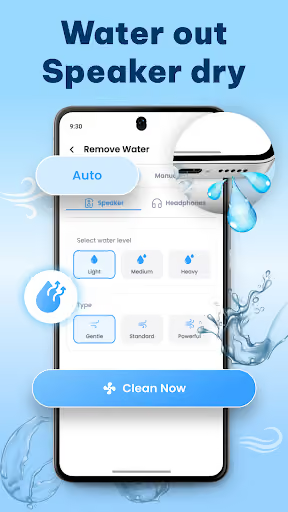
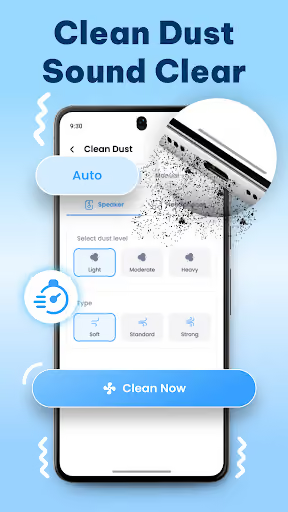
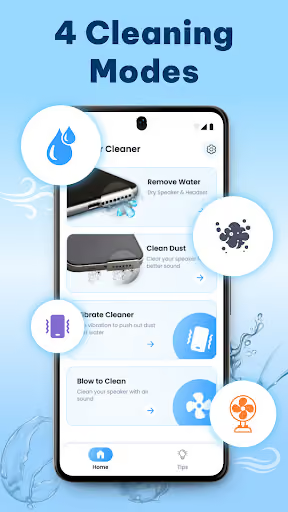
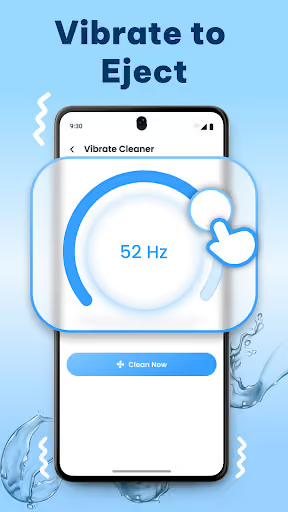
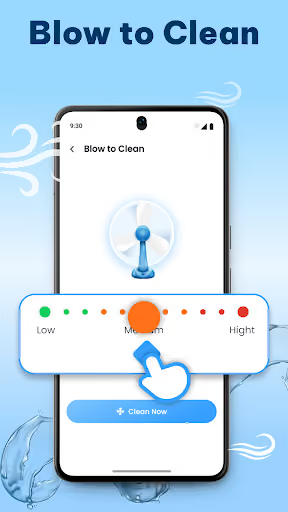
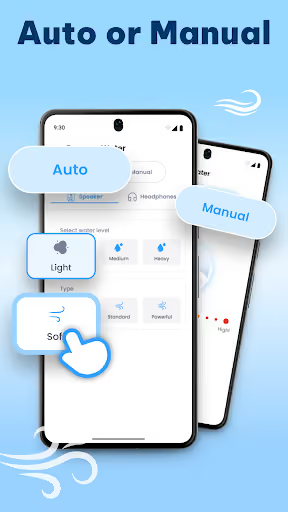
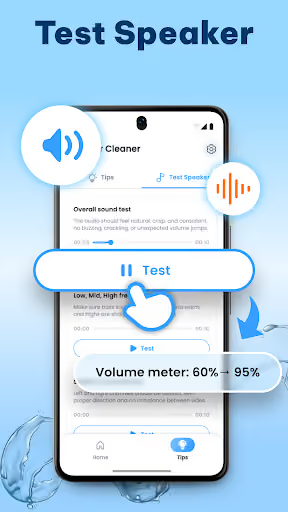
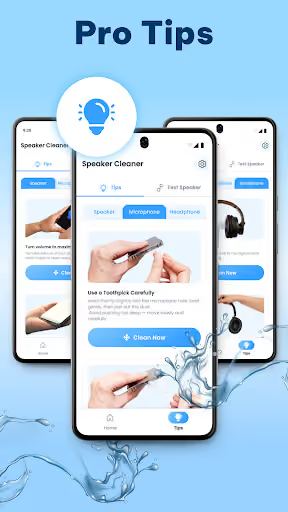
Sold on Google Play as Speaker Cleaner: Water Eject, the app's entire pitch is one tap: play a frequency sweep through the earpiece or speaker to vibrate trapped water or dust loose. It's a real, widely used trick (the same idea Apple built into watchOS), which is likely why the app has cleared a million installs despite a wave of one-star reviews.
What it does
Plays an optimized tone through the phone speaker to physically shake out water or dust, restoring volume and clarity — no hardware needed.
What blocks you
Reviewers describe a gauntlet of ads — some counting into the double digits — before they can even reach the button that starts the cleaning sound, then a forced free-trial screen that leads into a recurring subscription.
Why it's soft
The underlying mechanic isn't broken — plenty of reviewers confirm it worked for them. What's soft is trust: the monetization is front-loaded ahead of the value, and several reviewers question why a purely local audio function needs an internet connection at all.
Strengths
The core idea has real pull: this is a recognized fix people specifically search for, not a novelty. Reviewers who got past the ads and paywall report it doing exactly what it claims — restoring speaker volume after a water exposure or dust buildup.
Proven mechanic
Multiple reviewers independently confirm the tone genuinely cleared water or dust and fixed muffled sound, not just a placebo effect.
Category demand
Over a million installs show people actively look for this exact fix rather than stumbling onto it — a competitor doesn't need to create the demand, just earn it.
Well goddamn, it actually worked... only four stars tho, stupid ads taking half the screen...
Market gap
Complaints cluster into three groups, most common first.
Ads before the function. By far the most common complaint: reviewers describe having to sit through a stack of ads — several mention counts in the dozens — before they can even reach the cleaning button, turning a one-tap utility into an ad-viewing chore.
Ads are juiced to the max before you reach the content of the app and after reaching it, its gated by payment where you need to put your card to access it.
A hidden, hard-to-escape subscription. The next largest cluster: the app is advertised as free but funnels new users into a trial that converts to a recurring charge, with several reviewers saying they couldn't find an exit screen or a way to cancel, and describing failed attempts to get refunds.
they don't bother to mention it's going to be $5 a month to clean your speaker before you load the app on your phone
Permissions that don't match the job. A smaller but recurring cluster: reviewers question why a local audio-playback function needs network access at all, with a few explicitly calling it spyware- or trojan-like behavior.
- Let the cleaning tone run on first open, before any ad or paywall — the function is the trust-builder, not something to gate.
- Replace the recurring subscription with a single honest one-time purchase to remove ads, with a visible cancel/refund path if a trial is offered at all.
- Ship the core cleaner fully offline, with zero network permission — it directly answers the spyware suspicion reviewers keep raising.
Build complexity
Estimated for one part-time solo developer with no funding and no team. This is a small, self-contained utility — no backend, no accounts, no data pipeline.
| Workstream | Weeks |
|---|---|
| Audio engine (frequency sweep + speaker output handling) | 0.5 |
| One-tap UI, cleaner running before any ad | 0.5 |
| Ad SDK (rewarded/interstitial, shown after value) + one-time unlock IAP | 0.5 |
| Device testing across speaker hardware + store listing | 0.5 |
| Total | 2 |
Expected revenue
Assumes free with light rewarded/interstitial ads plus a $2.99 one-time "remove ads" unlock, no recurring subscription. Organic installs only — no paid acquisition.
| Installs | Activated | Monthly actives | Paid unlock | Month-12 revenue |
|---|---|---|---|---|
| 40,000 | 32,000 | 4,000 | ~950 cumulative | ~$1,800/mo |
This is an estimate, not a forecast — the category is inherently low-frequency (most people use it once or twice, not daily), which caps ad revenue per install regardless of execution quality.
Biggest challenges
The incumbent already owns the search terms this category lives on, with a year-plus head start on store ranking and reviews — a solo builder is fighting for scraps of that traffic through ASO and word of mouth, not creating a new market.
The technique's efficacy is genuinely disputed even among the incumbent's own users — a new entrant has to be careful not to overclaim in its store listing, or it risks the exact same "does nothing" backlash that's dragging the incumbent's rating down.
Because the use case is inherently rare per device, there's no natural lever for repeat engagement or habit — retention and lifetime ad revenue per install will stay thin no matter how clean the execution is.
AI angle
No genuine AI angle here. The core function is deterministic signal generation, not a language, personalization, or content problem — nothing in the market gap above (ad load, subscription trust, permissions) is something AI makes cheaper or faster to fix; those are execution and pricing decisions. A device-agnostic auto-stop using the microphone to detect when the speaker is clear is a reasonable technical polish item, but it's basic audio feedback, not a real AI capability or moat.
Conclusion
Build it. It's cheap enough to ship and test in two weeks, the underlying trick has real, reviewer-confirmed pull, and the gap is squarely an execution and trust problem — not a hard technical one. Temper expectations on revenue: this is a thin-margin, low-frequency utility, not a recurring-engagement product.
2 weeks
time to v1 (solo, part-time)
Free + $2.99 unlock
pricing / model
$1,800/mo
expected revenue at month 12
Ads, not the trick
what reviewers actually complain about